













Related News

13
2026
-
04
How Cake Pan Coating Lines Achieve Uniform Coating and High Yield Rates
Author:
Chuangzhi Coating
In the modern manufacturing industry for baking cookware, the cake pan coating line is playing an increasingly vital role as a key piece of automated production equipment. Driven by the continuous growth of the baking market and rising consumer demands for food safety and product quality, efficient, eco-friendly, and stable coating processes have become a core focus for the industry's development.
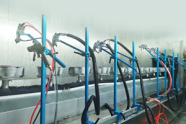
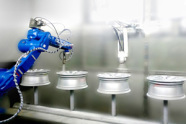
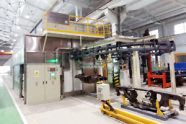
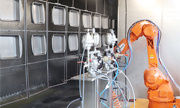
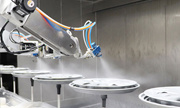
Cake pans typically utilize aluminum alloy or carbon steel as their base materials, while the coating process directly determines the product's release properties, corrosion resistance, and service life. Through a multi-stage process involving automated spraying, curing, and cooling, a cake pan coating line achieves uniform coating coverage across the surface of the pans. Common coating materials include non-stick coatings, PTFE coatings, and ceramic coatings; these materials effectively prevent cakes from sticking during baking while simultaneously enhancing ease of cleaning.

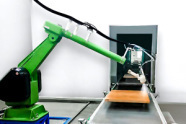
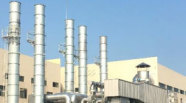
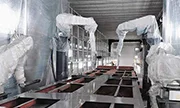
Compared to traditional manual spraying methods, modern cake pan coating lines offer significant advantages. First, they enable highly automated production, substantially boosting manufacturing efficiency and reducing labor costs. Second, by precisely controlling coating thickness and curing temperatures, the equipment ensures uniform and consistent coating on every single product, thereby guaranteeing stable product quality. Furthermore, these production lines are typically equipped with exhaust gas treatment and dust recovery systems, helping to minimize environmental impact and aligning with modern trends in green manufacturing.
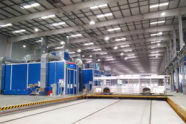
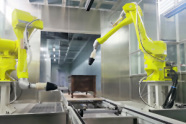
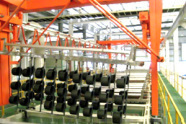
In practical applications, cake pan coating lines can be flexibly configured to meet diverse production requirements. For instance, smaller lines are suitable for customized or small-batch production, whereas large-scale continuous lines are better suited for mass manufacturing enterprises. Some advanced production lines also integrate intelligent control systems capable of real-time monitoring of spraying parameters, temperature profiles, and operational status, thereby enabling digital management and remote control capabilities.
As the global baking market continues to expand—driven particularly by the rapid growth of both home baking and commercial baking sectors—the demand for high-quality cake pans continues to rise. This, in turn, has further accelerated the technological upgrading and innovation of cake pan coating lines. In the future, this equipment is expected to evolve toward higher levels of automation, greater energy efficiency and environmental friendliness, and increased intelligence. Examples include the introduction of AI-driven control systems to optimize spraying paths, or the adoption of novel eco-friendly coating materials to meet increasingly stringent food safety standards.

The cake pan coating line serves not only as a core piece of equipment in the manufacturing process of cake molds but also as a vital guarantee for enhancing both product quality and production efficiency. Driven by the dual forces of market demand and technological advancement, this industry continues to hold broad prospects for growth and will continue to play a pivotal role within the global baking supply chain.


Contact Us
No.2 Yingbin Avenue, High-tech District, Zhaoqing City, Guangdong Province, China.
Online Message