











Related News
06
2026
-
05
How to Procure an Auto Bumper Coating Line
Author:
Chuangzhi Coating
As a critical production system in automotive component manufacturing, the procurement of an auto bumper coating line involves not only the equipment itself but also considerations regarding process compatibility, capacity planning, and long-term operational stability. Therefore, the procurement process requires a systematic evaluation across multiple dimensions, rather than relying solely on price or a single technical parameter as the basis for decision-making.
Prior to procurement, it is essential to first define capacity requirements based on the company's production plan—specifically, factors such as single-shift output, cycle time requirements, and potential for future capacity expansion. Concurrently, the specific process route must be determined—for instance, whether to adopt a 3C1B or 3C2B coating process—as different processes correspond to distinct equipment configurations and investment levels. An ill-chosen process can easily lead to mismatches between production efficiency and quality during subsequent operations.

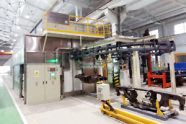
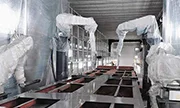
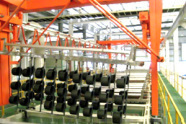
An auto bumper coating line typically comprises multiple stages, including pre-treatment, spraying, leveling, curing, and inspection; it is imperative that these various systems are highly integrated and compatible. For example, pre-treatment directly impacts coating adhesion, while the cycle times for spraying and curing determine the overall efficiency of the production line. Consequently, when procuring, priority should be given to comprehensive "whole-line" solutions rather than assembling disparate standalone units, in order to ensure system consistency and stability.
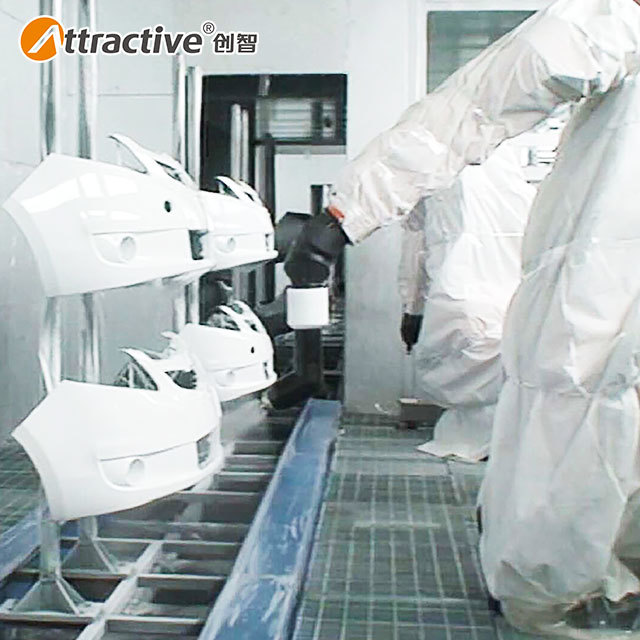
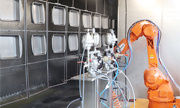
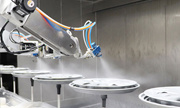
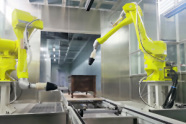
Since bumpers are predominantly made of PP plastic, they demand a high level of surface cleanliness; even minute dust particles or static electricity can result in coating defects. Therefore, the coating line must feature a robust dust removal system, a clean spraying environment, and automated spraying capabilities. The integration of robotic spraying and intelligent control systems can effectively enhance consistency and minimize human error.
A coating line is a piece of continuously operating equipment, and its stability directly impacts the production line's overall utilization rate. During procurement, key areas of focus should include the structural design of the equipment, the brands of core components, and the efficiency of the thermal energy system. Furthermore, energy consumption—such as the electricity or natural gas costs associated with the curing system—constitutes a significant cost factor in long-term operations.
Established suppliers of coating lines typically possess comprehensive project design capabilities and extensive industry experience. By reviewing their previously completed automotive component coating projects, one can gain a more intuitive assessment of their technical maturity and delivery capabilities. In particular, a proven track record of delivering projects in accordance with automotive industry standards serves as a crucial reference indicator.
As the automotive industry moves toward lightweighting and faces increasingly stringent environmental regulations, coating processes are continuously evolving. Therefore, during the procurement phase, it is advisable to incorporate provisions for future expansion and upgrades—such as room for automation enhancements, the capacity to integrate advanced environmental control systems, and the potential for capacity expansion—in order to minimize the costs associated with future modifications.
The procurement of an automotive bumper coating line is a complex, systemic undertaking that requires a comprehensive evaluation across multiple dimensions—including process design, equipment, automation, and long-term operating costs. Only by selecting a solution characterized by a high degree of compatibility and robust system integrity can the long-term stability of both production efficiency and product quality be guaranteed.
SEO:


Contact Us
No.2 Yingbin Avenue, High-tech District, Zhaoqing City, Guangdong Province, China.
Online Message