



























Related News
25
2026
-
05
How Electrostatic Painting Lines Address the Problem of "Dead Spots"
Author:
Chuangzhi Coating
In industrial coating processes, workpieces with complex geometries—such as those featuring grooves, corners, internal cavities, and deep holes—are often prone to "dead spot" issues, where coating coverage is insufficient. This not only compromises the product's aesthetic appeal but may also reduce its corrosion resistance and service life. Compared to traditional coating methods, Electrostatic Painting Lines leverage the principle of electrostatic attraction to offer distinct advantages in resolving these dead spot issues; consequently, they are widely adopted across industries such as automotive, home appliances, hardware, and new energy.
The core principle of an Electrostatic Painting Line involves utilizing a high-voltage electrostatic field to impart an electric charge to paint particles, causing them to be attracted to and adhere to the workpiece surface under the influence of the electric field. Because these charged particles are subject to electrostatic forces, the paint does not merely coat the front-facing surfaces of the workpiece but also extends to cover side surfaces and partially concealed areas—a phenomenon commonly referred to as the "wrap-around effect." Compared to conventional air spraying, electrostatic spraying effectively minimizes instances of missed spots and significantly improves coating coverage in areas with complex structural features.

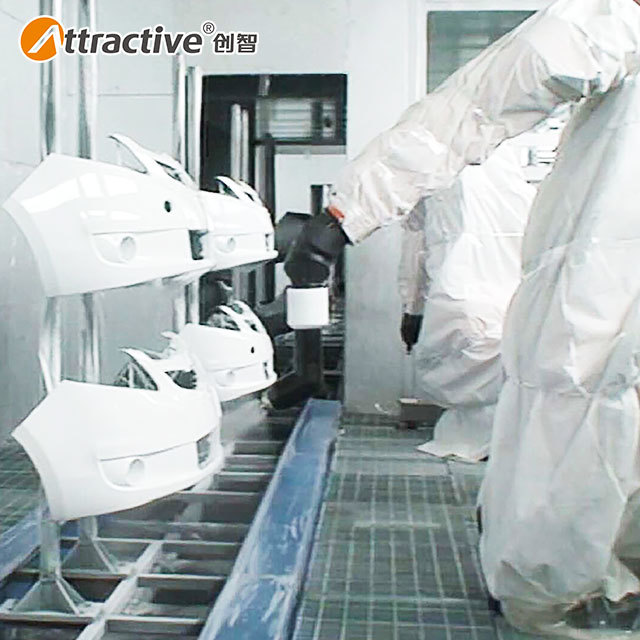
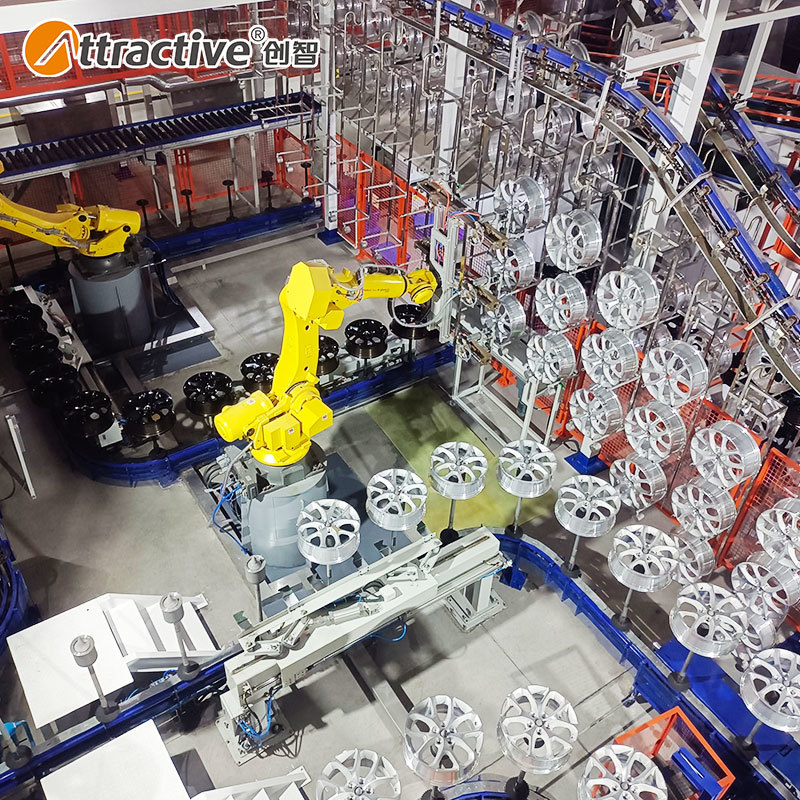
To further mitigate dead spot issues, Electrostatic Painting Lines typically incorporate optimized spray gun layouts. Traditional unidirectional spraying methods often result in certain localized areas failing to receive adequate paint coverage; conversely, multi-angle automatic spray gun systems can adjust their spraying trajectory according to the workpiece's geometry, thereby ensuring a more uniform distribution of the coating. For products with particularly intricate structures, reciprocating sprayers or robotic coating systems may be employed to utilize precise trajectory control and enhance coating efficacy within dead spot zones.
The quality of the workpiece's grounding is another critical factor influencing the outcome of electrostatic coating. If the grounding is unstable, the distribution of the electrostatic field becomes compromised, leading to diminished electrostatic attraction in specific areas and the subsequent formation of coating blind spots. Therefore, during the operation of an Electrostatic Painting Line, manufacturers typically prioritize enhancing the conductivity of the conveyor chain and ensuring the stability of the workpiece's grounding to guarantee that the electrostatic charge is distributed uniformly across the entire surface of the workpiece.
Furthermore, the precise adjustment of coating parameters constitutes a vital strategy for resolving dead spot issues. Parameters such as spray gun distance, electrostatic voltage, air pressure, and paint flow rate all exert a direct influence on the trajectory of the paint particles. For instance, if the electrostatic voltage is set too high, it may trigger the "Faraday cage effect," making it difficult for paint particles to penetrate and coat deep grooves or recessed areas. By judiciously lowering local voltage and adjusting the spray angle, the powder or paint deposition rate in recessed areas can be effectively enhanced.
With the advancement of smart manufacturing, an increasing number of electrostatic painting lines are incorporating automated inspection and intelligent control systems. These systems are capable of automatically adjusting spray paths and parameters based on the geometry of the workpiece, thereby minimizing human error and improving coating consistency for complex parts.
Through the utilization of electrostatic attraction, the "wrapping effect," automated spray gun configurations, and intelligent control technologies, electrostatic painting lines effectively mitigate the issue of "dead spots"—or uncoated areas—often encountered in traditional spraying processes. This not only elevates the aesthetic quality of the finished products but also significantly boosts the overall efficiency and stability of industrial coating operations.


Contact Us
No.2 Yingbin Avenue, High-tech District, Zhaoqing City, Guangdong Province, China.
Online Message