











Related News
20
2026
-
09
Several Key Technology Directions for Energy Saving and Consumption Reduction in Coating Lines
Author:
Chuangzhi Coating
In the total lifecycle cost of a coating line, energy consumption typically accounts for 25%-35%, making it the largest single cost after the initial equipment purchase. With fluctuating energy prices and tightening environmental regulations, reducing energy consumption while ensuring coating quality has become a practical issue that coating shop managers must address. This article reviews the main technology directions in energy saving and consumption reduction in the coating industry from three levels: equipment design, process optimization, and intelligent control, and analyzes them with actual application data.

1. Energy Consumption Distribution: Finding the Target for Energy Saving
Before discussing energy-saving technologies, it is necessary to clarify the energy consumption structure of a coating line. For a typical automatic coating line, energy consumption is mainly concentrated in the following areas:
| Energy Consumption Area | Share (Typical) | Main Energy Form |
|---|---|---|
| Curing/Drying System | 40%-55% | Natural gas/electric heating |
| Exhaust Gas Treatment System | 15%-25% | Combustion + fans |
| Spray Booth HVAC System | 10%-18% | Cooling/heating/air supply |
| Conveyor System | 5%-10% | Electric drive |
| Compressed Air System | 3%-8% | Electric drive |
| Others | 2%-5% | Lighting, control, etc. |
The curing/drying system and exhaust gas treatment system together account for 60%-80% of total energy consumption, making them the key areas for energy-saving retrofits.
2. High-Efficiency Energy-Saving Ovens and Curing Technologies
The oven is the largest energy consumer in a coating line. The main technology paths in oven energy saving in the industry today include:
High-Efficiency Insulation Structure. Using high-quality insulation materials and optimized oven sealing design can reduce heat loss by 30%-60%. Specific measures include: double-layer insulation structure, thermal bridge-free design, automatic rapid lifting insulation doors, etc., to reduce heat leakage through door openings.
Precise Temperature Control and Zoned Heating. PLC and SCADA systems enable independent temperature control for different oven zones. Combined with variable frequency drive fans, airflow and circulation ratios are dynamically adjusted based on temperature demand, avoiding constant high-power operation.
Low-Temperature Curing Technology. New coating formulations that cure at 140-190°C can significantly reduce oven energy consumption compared to traditional curing temperatures of 224-232°C. Some UV/EB curing technologies can even achieve room-temperature curing.
Heat Recovery and Reuse. Installing gas-to-gas heat exchangers in oven exhaust ducts preheats fresh air using hot flue gas, recovering 15%-30% of exhaust heat loss.
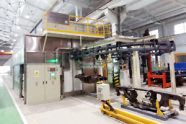
Taking the bridge drying furnace as an example, the full-bridge furnace body design effectively reduces heat leakage. The direct combustion heating method saves 20%-30% of thermal energy loss compared with traditional methods, with fast heating and good insulation. The high-temperature curing oven achieves stable furnace temperature profiles (accuracy ±3°C) through infinitely adjustable line speed, automatic constant temperature control, and interlocking protection between the burner and high-temperature mixing fan, reducing energy consumption while ensuring curing quality.
3. Energy-Saving Optimization of Exhaust Gas Treatment Systems
Exhaust gas treatment systems are both a regulatory necessity and a major energy consumer. The core of energy-efficient design lies in balancing "volume reduction" with "high efficiency."
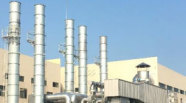
Concentrator Rotor + RTO Combined Process. Zeolite concentrator rotors concentrate low-concentration, high-volume VOCs exhaust into high-concentration, low-volume streams before they enter the Regenerative Thermal Oxidizer (RTO) for combustion. This significantly reduces RTO fuel consumption and fan power. RTO thermal efficiency can reach over 95%, and when concentration is slightly higher, secondary waste heat recovery can also be performed.
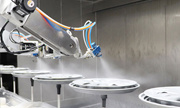
Source Reduction. By improving spray transfer efficiency, overspray and VOCs generation are reduced at the source. Electrostatic spraying can increase paint utilization from 40%-60% to 70%-85%, significantly reducing the load on the exhaust gas treatment system.
Pre-Treatment Exhaust Gas Condensation No-Exhaust Device. This is a technology direction worth noting. Traditional pre-treatment exhaust gas devices use acid-base neutralization, which involves exhaust emissions, wastewater generation, and chemical consumption. The condensation no-exhaust device uses two-stage condensation technology to achieve zero emissions of gas and sewage, eliminating the need for end-of-pipe environmental equipment while reducing energy consumption. Based on actual operating data, the operating cost of a traditional pre-treatment exhaust gas device is about $2.74/hour (including electricity, water, wastewater treatment, and chemicals), while the condensation no-exhaust device is only $1.81/hour, saving about $0.93 per hour. Calculated at 20 hours/day and 300 days/year, this saves about $5,583 annually.
4. Application of Closed-Loop Dehumidification and Drying Technology
In the moisture drying stage after workpiece cleaning, traditional natural gas heating drying has problems such as high energy consumption and furnace gas emissions. The closed-loop dehumidification and drying unit uses multi-stage condensation dehumidification and low-temperature drying technology, reducing external emissions through a closed-loop air circulation process to achieve energy saving and environmental protection.
From the operating cost comparison, traditional natural gas heating drying (calculated at 100,000 kcal power) costs about $6.89 per hour (including electricity and natural gas), while the closed-loop dehumidification and drying unit requires only $2.74 per hour (electricity only), saving about $4.15 per hour. Calculated at 20 hours/day and 300 days/year, this saves about $24,875 annually. In addition, the closed-loop dehumidification and drying unit requires no natural gas, eliminating the risk of gas leakage, and its footprint is only 1/10 that of the traditional solution.
5. Intelligent Control and AI Energy Efficiency Optimization
Digital technologies offer new possibilities for energy saving in coating lines. By collecting real-time data on temperature, pressure, flow, humidity, etc., AI models can dynamically adjust oven temperature setpoints, fan speeds, and exhaust treatment parameters to achieve "on-demand energy supply."
Virtual Sensing Technology. Without flow and differential pressure sensors, real-time pipe resistance is estimated through algorithm models, reducing hardware costs and maintenance requirements.
Efficiency Optimization Technology. According to operating conditions and the principle of minimum energy consumption, the system always operates in the high-efficiency zone.
Multivariable Control Technology. Through coordinated adjustment of multiple parameters, real-time pipe resistance is saved and efficiency is improved.
Digital Control Technology. Precisely eliminates excess and reduces losses.
Industry practice shows that AI energy efficiency optimization systems can achieve 10%-20% overall energy savings. These technologies have been applied in some projects. For example, on a new energy vehicle parts coating line, AI algorithms were used to optimize spraying parameters and energy configuration in real time, verifying significant energy-saving benefits.
6. Economic Comparison of Dry Spray Booths and Paint Mist Treatment
The choice of paint mist treatment method for spray booths also affects operating costs. Calculated based on one 4.5-meter-long spray booth, the annual comprehensive operating cost comparison between a dry spray booth and a water curtain cabinet + washing tower is as follows:
| Item | Dry Spray Booth | Water Curtain Cabinet + Washing Tower |
|---|---|---|
| Monthly Comprehensive Operating Cost | $1,403 | $2,048 |
| Annual Comprehensive Operating Cost | $16,840 | $24,578 |
The dry solution saves about $7,738 per year compared with the water curtain cabinet solution, a saving of 31.5%. The dry spray booth uses a dry filtration system, generates no wastewater, produces less paint residue, and has low energy consumption and operating costs. After dry separation, the paint mist does not affect the operation of the downstream VOC treatment equipment. The water curtain cabinet solution has problems such as wastewater treatment, water pump power consumption, and chemical consumption. In addition, after water washing, the air humidity is high, which is not conducive to the operation of downstream activated carbon or zeolite rotors.
7. Comprehensive Benefits of Energy-Saving Technologies
With the integrated application of the above technologies, the overall energy consumption of a coating line can be reduced by 25%-40%. Although the initial investment of a high-efficiency energy-saving solution may be 10%-25% higher than traditional solutions, the substantial annual operating cost savings yield a payback period typically between 1.5 and 2.5 years. Over its subsequent 15-20 year service life, the cumulative energy savings will be several times the initial investment difference.
Taking a coating shop with an annual output of 2 million standard metal parts as an example, the integrated application of high-efficiency insulation ovens + low-temperature curing, concentrator rotor + RTO + heat recovery, AI energy efficiency optimization control system, electrostatic spraying, and other technologies can save $270,000-$550,000 per year, with a payback period of about 1.5-2.5 years.
Conclusion
Energy saving and consumption reduction in coating production lines is a systematic engineering effort involving coordinated optimization across multiple areas, including oven design, exhaust gas treatment processes, control systems, and spraying technology. Scattered "energy-saving components" cannot deliver system-level efficiency improvements. The energy-saving concept must be integrated into the overall solution from the design stage.
Guangdong Chuangzhi Intelligent Equipment Co., Ltd. (Attractivechina) has over 30 years of experience in the coating equipment field. It is a national-level "Little Giant" enterprise integrating pre-sales factory planning, independent R&D, design, manufacturing, installation, commissioning, and after-sales service, and has been recognized as the "Guangdong Province Automation Coating Complete Equipment Engineering Technology Research Center." The company has a 54-person R&D team and has accumulated key technologies in intelligent control of coating equipment, flexible multi-channel systems, high-efficiency coating exhaust gas treatment equipment, and waste heat recovery and reuse. It currently holds over 200 patents in the coating equipment and environmental protection equipment fields, with CE/EAC certification. It has multiple patented technologies and practical application cases in oven insulation structures, heat recovery systems, intelligent control algorithms, exhaust gas condensation no-exhaust devices, and closed-loop dehumidification and drying units. Its products are exported to Thailand, Vietnam, India, Indonesia, Iran, Bangladesh, Singapore, Russia, Pakistan, the United States, Mexico, and other countries and regions. For further discussion on coating line energy-saving solutions, please feel free to contact our engineering technical team.


Contact Us
No.2 Yingbin Avenue, High-tech District, Zhaoqing City, Guangdong Province, China.
Online Message