












08
2026
-
10
Aluminium Powder Coating Line for Efficient and Consistent Metal Finishing
Author:
Chuangzhi Coating
As manufacturers continue to look for more efficient and environmentally responsible surface finishing solutions, the aluminium powder coating line has become an important choice for aluminum plates, metal components, building materials, cabinet parts, doors, windows and other industrial products. Compared with traditional manual painting processes, an automated powder coating line can integrate surface preparation, powder spraying, curing, conveying and quality control into a coordinated production system. This helps manufacturers achieve more consistent coating results while improving production efficiency and reducing unnecessary material and labor costs.
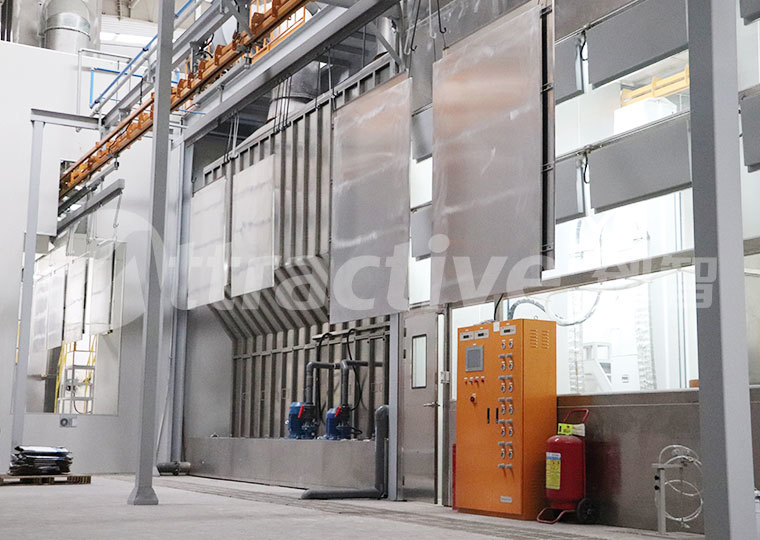
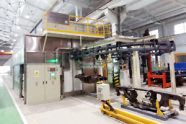
The aluminium powder coating line provided by Attractivechina is designed around the practical requirements of modern metal finishing. The system combines automatic conveying technology, electrostatic powder spraying equipment, intelligent control and curing processes to create a continuous coating workflow. The equipment can be configured according to the customer's workpiece dimensions, production capacity, coating material and factory layout, making it suitable for both standard production and customized industrial projects. The product page also identifies aluminum plate spraying and metal electrostatic powder coating as key applications of the system.
Why Choose an Aluminium Powder Coating Line?
Aluminum products are widely used in construction, transportation, electrical equipment, furniture, appliances and industrial manufacturing. Their surfaces may require additional protection against corrosion, wear, weather exposure and daily mechanical contact. At the same time, customers increasingly expect attractive and consistent surface finishes.
A modern aluminium powder coating line addresses these requirements through controlled and repeatable coating processes. Powder is electrostatically charged during spraying, allowing it to adhere to the prepared metal surface. The coated workpiece then enters a curing stage where heat melts and bonds the powder into a continuous finish.
This process can provide several production advantages. Automated spraying reduces variations caused by manual operation, while controlled conveying helps maintain a stable distance and movement speed between the workpiece and spraying equipment. A properly designed curing system can also help achieve consistent coating performance across different batches.
For manufacturers processing aluminum plates or other metal components in large quantities, process consistency is particularly important. A coating line is therefore not simply a collection of spray machines. It is an integrated production system designed to coordinate material handling, surface treatment, coating application, curing and inspection.
Integrated Production Process
The exact configuration of an aluminium powder coating line depends on the product and coating specification. However, a typical production workflow can include loading, pretreatment, drying, powder spraying, curing, cooling and unloading.
Loading and Conveying
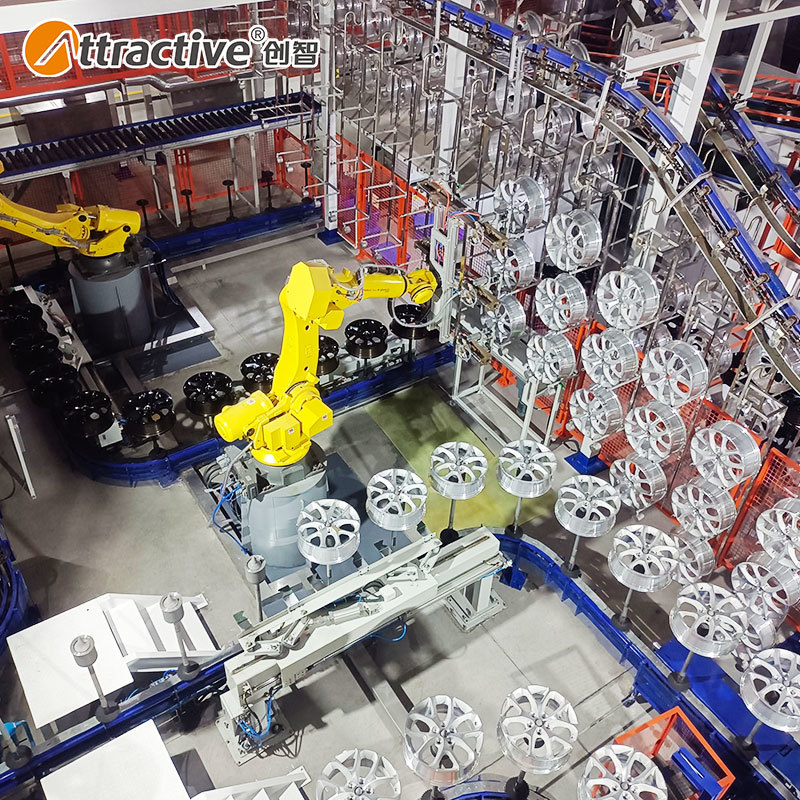
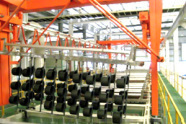
At the beginning of the production cycle, aluminum plates or other metal workpieces are loaded onto the conveying system. The overhead suspension conveyor transports products through different processing zones at a controlled speed.
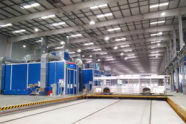
The equipment described on the product page uses a 250-type double-guide-roller conveyor chain. The conveyor speed is adjustable, with a reference range of 2,000 to 5,000 mm/min and a standard reference speed of 4,000 mm/min. The line length is approximately 363 meters, although the final design can be adjusted according to factory conditions and production requirements.

A stable conveying system is essential because coating quality is closely related to workpiece positioning, spraying distance and processing time. By automating material movement, manufacturers can reduce unnecessary manual handling and maintain a more consistent production rhythm.
Surface Preparation
Before powder spraying, the aluminum or metal surface needs to be properly prepared. Surface contaminants such as oil, dust and residues can negatively affect coating adhesion and final appearance.
Depending on the workpiece material and required finish, the pretreatment section may include cleaning, degreasing, rinsing, drying and other surface preparation stages. The actual process should be determined according to the substrate, powder formulation, environmental conditions and required coating performance.
Good pretreatment provides a stable foundation for the subsequent powder coating process. For industrial manufacturers, investing in appropriate pretreatment equipment can therefore be just as important as selecting the spraying equipment itself.
Electrostatic Powder Spraying
After pretreatment and drying, the workpiece enters the powder spraying section. Electrostatic spraying is one of the key technologies used in modern powder coating production.
During the spraying process, powder particles receive an electrostatic charge and are attracted to the grounded metal workpiece. This allows the powder to form a relatively uniform layer over the target surface.
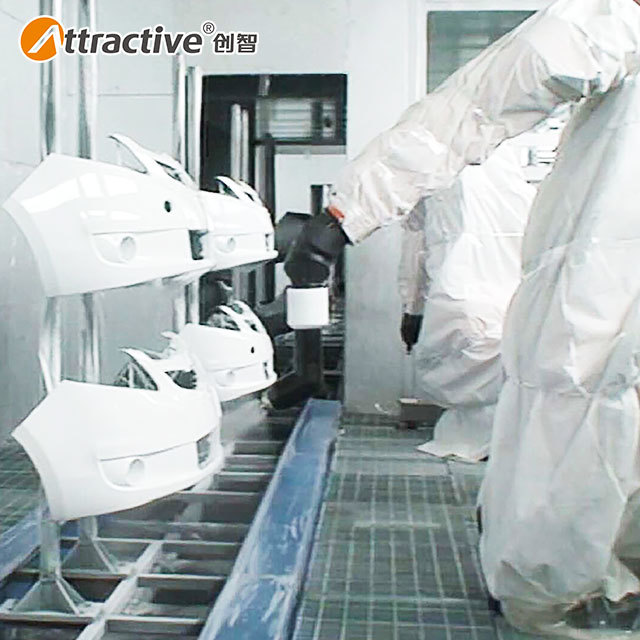
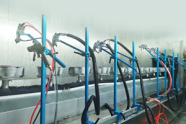
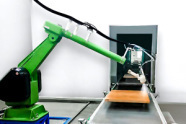
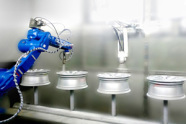
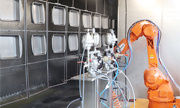
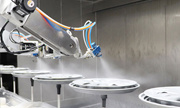
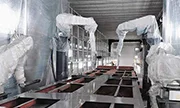
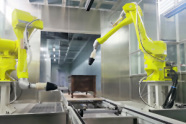
The aluminium powder coating line described by Attractivechina can combine robotic spraying, manual powder spraying and reciprocating equipment according to production requirements. This configuration provides flexibility for different workpiece shapes and production volumes.
For large flat aluminum plates, automated spraying can help maintain consistent coating coverage. For areas with complex geometries or special coating requirements, manual or flexible spraying stations can complement the automated equipment.
Curing for Durable Surface Performance
Powder spraying is only one part of the complete coating process. After powder application, the coated workpiece must pass through a curing stage.
During curing, controlled heat causes the powder to melt, flow and form a continuous coating film. Correct curing temperature and time are essential for achieving the required mechanical and appearance properties.
An industrial coating line therefore needs to coordinate conveyor speed, oven temperature, workpiece characteristics and powder specifications. If these parameters are not properly matched, the final coating may suffer from insufficient curing, uneven appearance or inconsistent performance.
For this reason, an aluminium powder coating line should be designed as a complete process rather than purchased as isolated equipment. The conveyor, spray booth, powder recovery system, curing oven, electrical controls and environmental equipment should work together.
Powder Recovery and Material Efficiency
One important advantage of modern powder coating technology is the possibility of recovering unused powder from the spraying process.
During spraying, not all powder particles will adhere to the workpiece. A properly designed recovery system can collect suitable overspray material, helping reduce material waste and improve powder utilization.
The product information for this aluminium plate coating line highlights an efficient recycling system intended to minimize coating waste and reduce production costs.
Material efficiency becomes particularly important in high-volume production. Even a small reduction in coating waste can produce meaningful savings when thousands of workpieces are processed over an extended operating period.
Automation and Production Efficiency
Automation is another major consideration when manufacturers invest in a powder coating production line.
Manual coating can involve differences in spray distance, movement speed, powder application and operator technique. These variations may result in inconsistent coating thickness or surface appearance.
An automated aluminium powder coating line can coordinate conveying, spraying and curing according to predetermined process parameters. This improves repeatability and allows manufacturers to establish a more stable production cycle.
According to the reference specifications for this system, the maximum reference production capacity can reach 68 pieces per hour, with a conveyor speed of up to 5,000 mm/min depending on the actual configuration. The maximum reference suspended workpiece size is 3,000 mm in length, 1,000 mm in width and 1,800 mm in height. These figures are reference values rather than universal production guarantees, because the final system must be calculated according to the customer's workpieces and process requirements.
This distinction is important when evaluating coating equipment. Production capacity should always be considered together with workpiece dimensions, coating specifications, curing requirements, line utilization and factory layout.
Designed for Customized Industrial Applications
Not every aluminum product requires the same coating process. A manufacturer producing flat aluminum panels may have very different requirements from a factory processing cabinet components, doors, windows or irregular metal parts.
The reference system can be used for a range of metal products, including doors, windows, steel cabinets, building materials, cabinet components and sheet metal parts. Its configuration can be adjusted according to the customer's production requirements.
Customization may involve conveyor dimensions, spraying equipment, curing capacity, recovery systems, factory layout, production speed and control systems.
This approach is especially useful for manufacturers expanding an existing factory or establishing a new coating workshop. Instead of adapting production around a standard machine, the complete coating system can be planned around the customer's actual workpieces and available space.
Energy and Environmental Considerations
Energy consumption is an important part of the operating cost of an industrial coating line. Heating systems, curing ovens, ventilation equipment, compressors and conveying systems all contribute to overall energy consumption.
The product information highlights an advanced heat recovery system as one of the design advantages, with a reference energy-saving figure of 25% compared with traditional configurations. Actual savings depend on the production schedule, heating source, factory environment, equipment configuration and operating conditions.
Powder coating can also help manufacturers reduce the use of solvent-based liquid coating systems in applications where powder technology is appropriate. Combined with powder recovery and controlled spraying, the overall process can help improve material utilization and production management.
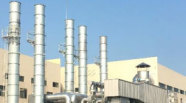
However, environmental performance should always be evaluated according to local regulations and the actual coating material being used. Proper ventilation, filtration, powder collection and waste management remain important parts of responsible coating production.
Intelligent Control for Stable Production
Modern coating lines increasingly rely on centralized electrical and intelligent control systems. Operators can monitor conveying speed, spraying operations, curing conditions and other production parameters through the control system.
Stable process control can make production easier to repeat from one batch to another. When product specifications change, parameters can be adjusted according to the new workpiece and coating requirements.
For factories serving multiple customers or producing several product models, this flexibility can be particularly valuable. A well-designed control system can help reduce setup time and improve production organization.
Selecting the Right Aluminium Powder Coating Line
Before purchasing an aluminium powder coating line, manufacturers should evaluate several factors.
First, consider the dimensions and weight of the workpieces. The maximum product size determines the required conveyor configuration, booth dimensions and curing capacity.
Second, evaluate the expected production volume. A line designed for small-batch production will have different requirements from a system operating continuously at high volume.
Third, determine the required coating type and finish. Powder characteristics, color changes, coating thickness and curing temperature can affect the design of the spraying and curing sections.
Fourth, consider the available factory space. An overhead conveyor line may require substantial vertical clearance, while the layout of pretreatment, spraying and curing equipment must allow safe and efficient material flow.
Finally, after-sales service should be considered as part of the investment. A coating line is a long-term production system, so installation support, commissioning, spare parts, maintenance and process optimization can directly affect the equipment's operating performance.
A Complete Solution Rather Than a Single Machine
The value of an aluminium powder coating line comes from the coordination of the entire production process. Pretreatment prepares the surface, conveying moves the workpieces, electrostatic spraying applies the powder, recovery equipment improves material utilization, and the curing oven creates the final coating film.
Attractivechina presents itself as a turnkey coating line supplier with more than 30 years of experience and provides customized solutions based on workpiece parameters and coating requirements. The referenced product also indicates that overseas engineering service and after-sales support are available.
For manufacturers planning a new aluminum coating workshop or upgrading an existing production line, this integrated approach can simplify equipment coordination and process management.
Conclusion
An aluminium powder coating line can provide a practical solution for manufacturers that need consistent surface quality, stable production efficiency and better control of coating materials. By integrating conveying, pretreatment, electrostatic powder spraying, powder recovery, curing and cooling into one coordinated system, manufacturers can establish a more repeatable metal finishing process.
The automatic aluminum plate coating system referenced here is designed for customized industrial applications and provides adjustable conveying speeds, automated spraying options, curing processes and production configurations. Its actual capacity and technical parameters should be determined according to the customer's workpiece dimensions, production targets, coating requirements and factory conditions.
For companies investing in aluminum plate finishing, the right coating line should not simply be judged by equipment price or maximum output. Process compatibility, coating consistency, energy consumption, material utilization, maintenance requirements, factory layout and long-term technical support are equally important. A properly engineered aluminium powder coating line can therefore become an important part of a stable and scalable metal finishing operation.


Contact Us
No.2 Yingbin Avenue, High-tech District, Zhaoqing City, Guangdong Province, China.
Online Message