












Related News

03
2026
-
11
Wood Furniture Coating Line for Smooth and Consistent Surface Finishing
Author:
Chuangzhi Coating
Wood furniture coating line solutions help furniture manufacturers improve surface quality, maintain consistent finishes, and organize multiple coating stages into an efficient production process. For solid wood furniture, veneer panels, and medium-density fiberboard products, a well-designed coating line can support reliable finishing results while reducing repetitive manual work.

1. What Is a Wood Furniture Coating Line?
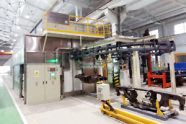
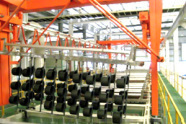
A wood furniture coating line is an integrated finishing system designed to apply primers, color coatings, and topcoats to wooden workpieces. Depending on production requirements, it can combine surface preparation, automatic or manual spraying, wiping, drying, inspection, and unloading into a coordinated workflow.
Typical applications include beds, dining tables, chairs, cabinets, musical instruments, decorative panels, and other wooden furniture components. The equipment configuration depends on workpiece dimensions, material characteristics, coating specifications, and the required production capacity.
2. How Reciprocating Spray Technology Improves Coating Quality
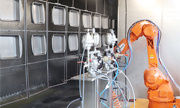
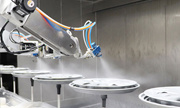
The reciprocating spray machine is an important component of the furniture coating system. Its controlled movement helps distribute paint evenly across suitable workpiece surfaces, supporting a consistent appearance and reducing variations caused by manual spraying.
Spray paths and operating parameters can be adjusted according to product size and shape. This flexibility is useful for manufacturers processing different furniture models or handling small batches with frequent product changes. Efficient nozzle atomization also helps achieve a smooth finish when the coating material, spray settings, and application conditions are properly matched.
Quick-change functions can reduce setup time between production runs. For factories managing varied orders, this helps improve workflow flexibility without requiring the same equipment configuration for every product.
3. A Coordinated Process from Primer to Topcoat
A wood furniture coating line can be configured around the complete finishing process. A representative workflow may include loading, first and second primer spraying, adhesive application where required, wiping, additional priming, dry brushing, color tinting, topcoat application, inspection, final drying, and unloading.
Not every project requires all these stages. The final sequence should be determined by the furniture material, coating system, surface appearance, and curing requirements. Proper coordination between spraying and drying is particularly important because it affects surface smoothness, coating adhesion, production rhythm, and the risk of defects.
An integrated process also makes it easier to establish repeatable operating procedures. When coating parameters and handling steps are clearly defined, operators can maintain more consistent results across different production batches.
4. Flexible Configuration for Different Wood Materials
Different furniture materials require different coating approaches. Solid wood may have natural grain variations and uneven absorption, while veneer and particleboard surfaces can require specific preparation and coating procedures. A suitable wood furniture coating line should therefore be designed around the actual workpieces rather than relying on a single standard configuration.
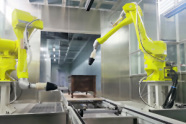
The equipment described for this application supports solid wood, medium-density fiberboard, and veneered particleboard. Depending on the project, manufacturers can select manual or robotic spraying, suitable conveying arrangements, and appropriate drying methods. Water-based, oil-based, and certain specialty coatings can also be considered according to material compatibility and process requirements.

5. Improving Production Efficiency and Resource Utilization
Manual finishing can create challenges when production volumes increase or several furniture models share the same workshop. Differences in operator technique, repeated handling, and inconsistent spraying conditions may lead to uneven finishes and additional rework.
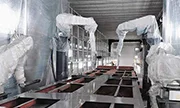
An integrated furniture coating line helps organize these operations into a more structured process. Automated reciprocating spraying can reduce repetitive manual spraying tasks, while coordinated material handling can minimize unnecessary movement between workstations. Appropriate drying and heat-management systems may further improve energy utilization.
Actual productivity and operating costs depend on workpiece geometry, coating consumption, line speed, drying conditions, and maintenance practices. Manufacturers should evaluate these factors together when planning an investment, rather than judging performance by equipment speed alone.
6. Key Factors When Selecting a Wood Furniture Coating Line
Before choosing a system, buyers should assess the maximum workpiece dimensions and weight, expected daily output, coating types, required finish quality, and available factory space. Workshop temperature, humidity, compressed-air quality, and heating energy are also important considerations.
The spraying area should maintain suitable environmental conditions for the selected coating process. Conveyor speed and drying capacity must be matched to the coating's application and curing requirements. For facilities with frequent product changes, adjustable spray programs and accessible maintenance points can help simplify daily operation.
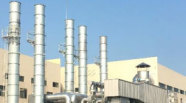
Environmental controls should also be considered during project planning. Suitable ventilation, paint-mist collection, and treatment systems can help manage emissions and improve working conditions, subject to local regulations and the selected coating materials.
7. Customized Solutions and Long-Term Support
A practical wood furniture coating line should reflect the manufacturer's production goals, product range, and future capacity requirements. Attractivechina presents a furniture coating solution featuring reciprocating spray equipment, coordinated coating processes, and customized system design. Its product information also describes technical support, maintenance services, spare-parts supply, and process upgrades.
For manufacturers planning a new finishing workshop or upgrading an existing production line, sharing representative workpiece drawings, material specifications, coating requirements, and target output can help determine a suitable configuration.
The goal is not simply to install spraying equipment, but to establish a finishing process that delivers consistent appearance, manageable operating costs, and flexibility for changing furniture orders. With appropriate process planning and equipment integration, a wood furniture coating line can become a valuable part of a modern furniture manufacturing operation.Wood furniture coating line solutions help furniture manufacturers improve surface quality, maintain consistent finishes, and organize multiple coating stages into an efficient production process. For solid wood furniture, veneer panels, and medium-density fiberboard products, a well-designed coating line can support reliable finishing results while reducing repetitive manual work.


Contact Us
No.2 Yingbin Avenue, High-tech District, Zhaoqing City, Guangdong Province, China.
Online Message