














14
2024
-
12
Enhance Efficiency and Precision: The Future of non-stick pan spraying line Technology
Author:
Chuangzhi Coating
1. Introduction to Non-stick pan spraying line Technology
The world of cookware has evolved significantly over the years, with non-stick pans being a staple in kitchens worldwide. The coating technology that makes these pans "non-stick" plays a crucial role in their manufacturing. As industries strive for greater efficiency and precision, the methods employed in coating these pans are undergoing transformation. Innovative spraying technologies are emerging, paving the way for enhanced productivity and superior product quality.

2. Importance of Efficiency in Manufacturing Non-Stick Pans
Efficiency in manufacturing is paramount, especially in a market where competition is fierce. The ability to produce high-quality non-stick pans at a lower cost not only maximizes profit margins but also meets customer demands for durability and performance. Automation and advanced spraying technologies are essential to achieve these goals, ensuring that production lines operate smoothly without compromising on quality.

3. Current Trends in Non-Stick Pan Coating Techniques
The landscape of non-stick pan spraying technology is constantly evolving. Understanding the various techniques currently employed can provide insight into how manufacturers can enhance their processes.
3.1 Traditional Spraying Methods
Historically, the manufacturing of non-stick pans involved several manual processes. Traditional spraying methods, which often rely on air spray techniques, have been widely used. While effective, these methods can be inefficient, resulting in excessive overspray and waste of materials.
3.2 Innovative Advances in Spraying Technology
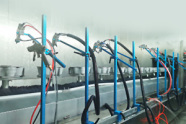
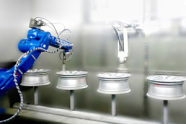
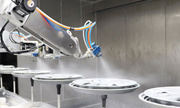
Recent advancements, such as electrostatic spraying and HVLP (High Volume Low Pressure) systems, have significantly improved the efficiency of non-stick coating processes. Electrostatic spraying uses charged particles to ensure an even coating, minimizing waste and reducing the amount of harmful VOCs (volatile organic compounds) released into the environment. HVLP systems, on the other hand, require less air pressure, which results in a finer spray and better adherence of the coating, leading to a more uniform finish.
4. Benefits of Enhanced Efficiency in Non-Stick Pan Production
The integration of advanced spraying technologies yields substantial benefits for manufacturers of non-stick pans.
4.1 Cost Reduction through Technological Integration
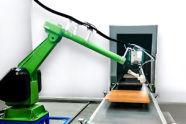
By adopting innovative spraying techniques, manufacturers can significantly reduce material costs. The reduction in overspray translates to lower consumption of coating materials, which can account for a substantial portion of production expenses. Furthermore, the efficiency of automated systems reduces labor costs, allowing companies to allocate resources more effectively.
4.2 Improved Product Quality and Longevity
Enhanced spraying technology not only improves efficiency but also elevates the overall quality of the non-stick pans produced. A more uniform coating contributes to better non-stick properties and durability, resulting in a product that meets consumer expectations. As a result, manufacturers can cultivate a stronger brand reputation and foster customer loyalty.
5. Future Prospects: What’s Next for Non-Stick Pan Spraying?
The future of non-stick pan spraying technology is bright, with ongoing research and development poised to introduce even more revolutionary approaches. One potential direction is the integration of smart technology into spraying systems, where IoT (Internet of Things) devices can monitor and adjust the spraying process in real time. This could lead to even greater efficiencies and customization of coatings based on specific product requirements.
Moreover, sustainability is becoming increasingly important in manufacturing processes. Future advancements may focus on eco-friendly coating materials that can still deliver the desired non-stick properties, ensuring that manufacturers can meet environmental regulations while also appealing to environmentally conscious consumers.
6. Frequently Asked Questions (FAQs)
What is non-stick pan spraying technology?
Non-stick pan spraying technology refers to the methods used to apply non-stick coatings to cookware, enhancing their surface properties for improved cooking performance.
How does efficiency impact non-stick pan production?
Efficiency allows manufacturers to produce higher-quality products at lower costs, ultimately leading to increased profitability and customer satisfaction.
What are the current trends in non-stick pan coating methods?
Current trends include the use of electrostatic spraying and HVLP systems, which improve coating application and reduce waste.
What are the benefits of advanced spraying technologies?
Benefits include cost reduction, improved product quality, reduced environmental impact, and enhanced production efficiency.
What does the future hold for non-stick pan spraying technology?
The future may see the integration of smart technologies and sustainable materials, paving the way for more efficient and eco-friendly manufacturing processes.
7. Conclusion
The future of non-stick pan spraying line technology lies in the continuous pursuit of efficiency and precision. As manufacturers embrace innovative techniques and technologies, they can enhance production processes, ensuring high-quality products that meet consumer demands. By adopting advanced spraying methods, businesses can not only improve their bottom line but also contribute positively to the environment, paving the way for a sustainable future in the cookware industry. Embracing change and innovation is not just an option; it is a necessity for those looking to thrive in a competitive market.


Contact Us
No.2 Yingbin Avenue, High-tech District, Zhaoqing City, Guangdong Province, China.
Online Message