











HOME
COATING LINE
Cookware Coating Line
Wood Coating Line
Auto Parts Coating Line
Metallic Coating Line
Industrial Equipment Coating Line
EQUIPMENT
Pretreatment Equipment
Coating Equipment
Curing Oven
Conveyor Equipment
Environmental Protection Equipment
Other Coating Equipment
VIDEOS
Cookware Painting Line
Wood Painting Line
Auto Parts Painting Line
Metallic Painting Line
Industrial Equipment Painting Line
Painting Line Environmental Equipment
CASES
NEWS
Company News
Industry News
Knowledge
FAQ
ABOUT US
Profile
Organization
History
Honor
Our Team
Partner
CONTACT US
Analysis of the Application of Electrostatic Coating Lines in Furniture Manufacturing
2026-06-22
Against the backdrop of the furniture manufacturing industry's continuous pursuit of quality upgrades and efficiency improvements, electrostatic coating lines have gradually become key equipment in the surface coating process. Utilizing the principle of electrostatic adsorption, coating particles adhere evenly to the furniture surface under the influence of an electric field, resulting in a finer, more stable, and more adhesive coating effect. This process not only improves the uneven thickness problem easily encountered in traditional spraying but also significantly enhances the overall visual texture of the product, making it particularly suitable for modern furniture products with high aesthetic requirements.
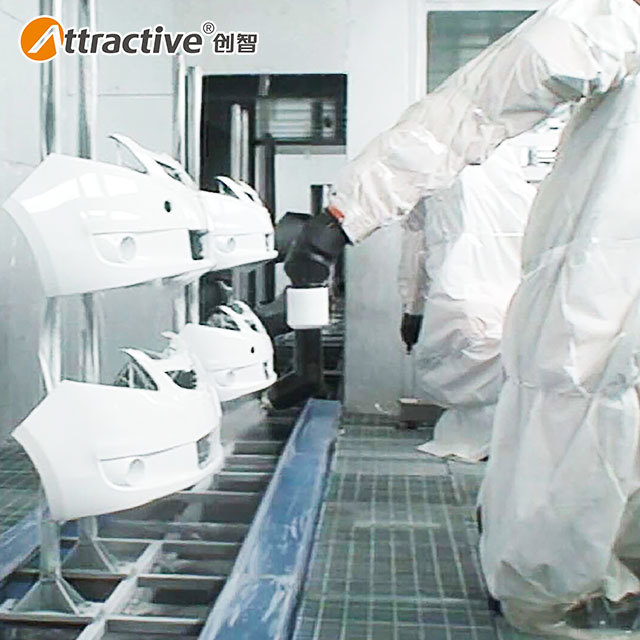
Electrostatic coating systems in automotive component painting
2026-06-16
In today's automotive manufacturing industry, as it advances toward intelligence and greening, surface coating is not only a process that imparts an aesthetic finish to components but also a critical defense line ensuring their corrosion and wear resistance. Faced with increasingly stringent environmental regulations and consumers' relentless pursuit of quality, establishing an efficient and precise electrostatic coating system has become the core solution for automotive component manufacturers.
Reducing Coating Waste with Electrostatic Coating Systems
2026-06-08
In industrial coating production, coating costs often constitute a significant portion of total manufacturing expenses. Traditional spraying methods frequently result in high material waste due to low atomization efficiency, substantial bounce-back losses, and excessive overspray. As the manufacturing sector shifts toward precision and green production, electrostatic coating systems have emerged as a vital technological solution for minimizing coating waste.
How to Enhance the Non-Stick Performance of Rice Cooker Liners Using a Coating Line
2026-06-01
The non-stick performance of a rice cooker liner directly impacts the user experience and the overall quality tier of the product. The consistent realization of this performance relies heavily on the process sophistication and control capabilities of the rice cooker liner coating line. From material selection to spraying, curing, and inspection, every stage influences the final non-stick effect.
How Electrostatic Painting Lines Address the Problem of "Dead Spots"
2026-05-25
In industrial coating processes, workpieces with complex geometries—such as those featuring grooves, corners, internal cavities, and deep holes—are often prone to "dead spot" issues, where coating coverage is insufficient. This not only compromises the product's aesthetic appeal but may also reduce its corrosion resistance and service life. Compared to traditional coating methods, Electrostatic Painting Lines leverage the principle of electrostatic attraction to offer distinct advantages in resolving these dead spot issues; consequently, they are widely adopted across industries such as automotive, home appliances, hardware, and new energy.
In What Ways Do Electrostatic Painting Systems Demonstrate Energy-Saving Advantages
2026-05-18
In the realm of modern industrial coating, energy conservation and environmental protection have emerged as key priorities for corporate upgrading. Due to its characteristics of high efficiency and minimal waste, electrostatic spraying technology is widely utilized across industries such as automotive manufacturing, home appliance production, and metal processing. The energy-saving advantages of electrostatic painting systems are primarily manifested in several key areas: paint utilization efficiency, energy consumption control, and enhanced production efficiency.