

















Related News

14
2025
-
02
E-Coating in Automotive Manufacturing: Benefits and Best Practices
Author:
Chuangzhi Coating
E-Coating in Automotive Manufacturing: Benefits and Best Practices
In the automotive industry, achieving a durable and uniform coating is critical for both aesthetics and corrosion resistance. E-coating (electrophoretic coating) has emerged as a leading technology in automotive manufacturing, offering unparalleled advantages in quality, efficiency, and sustainability. As a manufacturer with 30 years of experience in the coating industry, I will explores the benefits of e-coating and shares best practices to optimize its application.
What is E-Coating?
E-coating is an electrochemical process where charged paint particles are deposited onto a metal surface submerged in a water-based solution. This method ensures complete coverage, even in hard-to-reach areas, making it ideal for complex automotive parts like body frames, chassis, and suspension components.
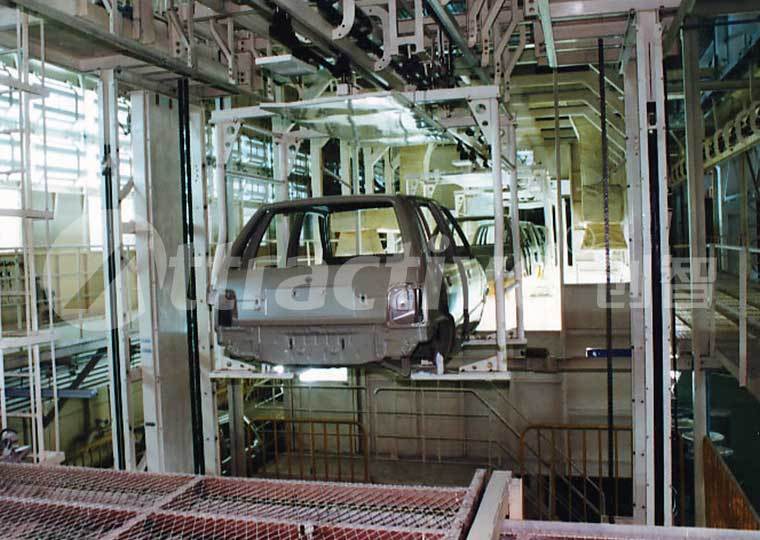
Benefits of E-Coating in Automotive Manufacturing
- Superior Corrosion Resistance
E-coating provides a uniform, high-quality layer that protects against rust and corrosion, extending the lifespan of vehicles. - Excellent Coverage
The process ensures complete coverage, including edges, seams, and cavities, which are often missed by traditional spray methods. - Environmentally Friendly
E-coating uses water-based paints with low VOC emissions, aligning with stringent environmental regulations. - Cost-Effective
The high transfer efficiency (up to 95%) minimizes paint waste, reducing material costs. - Enhanced Adhesion
The electrochemical bonding creates a strong adhesion between the coating and the substrate, improving durability.

Best Practices for E-Coating
- Surface Preparation
- Thoroughly clean and pretreat the metal surface to remove oils, dirt, and oxides.
- Use phosphate or zirconium-based pretreatment for optimal adhesion.
- Thoroughly clean and pretreat the metal surface to remove oils, dirt, and oxides.
- Process Control
- Maintain consistent voltage, bath temperature, and immersion time to ensure uniform coating thickness.
- Regularly monitor and adjust the pH and solid content of the e-coat bath.
- Maintain consistent voltage, bath temperature, and immersion time to ensure uniform coating thickness.
- Curing Optimization
- Follow the recommended curing temperature and time (typically 160-180°C for 20-30 minutes).
- Use infrared or convection ovens for efficient and even curing.
- Follow the recommended curing temperature and time (typically 160-180°C for 20-30 minutes).
- Quality Assurance
- Implement regular inspections using cross-cut adhesion tests and thickness gauges.
- Conduct salt spray tests to evaluate corrosion resistance.
- Implement regular inspections using cross-cut adhesion tests and thickness gauges.
- Sustainability Practices
- Recycle rinse water and reclaim overspray to minimize waste.
- Use energy-efficient equipment to reduce the carbon footprint.
- Recycle rinse water and reclaim overspray to minimize waste.
Why E-Coating is a Game-Changer for Automotive Manufacturing
E-coating not only enhances the durability and appearance of automotive parts but also supports sustainable manufacturing practices. By adopting e-coating, automotive manufacturers can improve product quality, reduce costs, and meet environmental standards.


Contact Us
No.2 Yingbin Avenue, High-tech District, Zhaoqing City, Guangdong Province, China.
Online Message