





















Related News
16
2026
-
07
A Comprehensive Guide to Coating Line Quality Control Systems: Ensuring Quality from Raw Material Inspection to Finished Product Delivery
Author:
Chuangzhi Coating
In the procurement decision-making process for coating lines, technical specifications and price are often the primary focus for enterprises. However, whether a coating line can consistently deliver stable, high-quality coated products over its 15 to 20 year service life depends on whether the supplier has established a comprehensive quality control system that spans the entire chain—from design and manufacturing to installation and operation. Quality control is not an isolated inspection step; it is a systematic engineering endeavor that begins with raw material selection, runs through every process in manufacturing, and ultimately manifests in the performance and appearance of every finished coated product.
This guide aims to provide procurement decision-makers with a systematic framework for evaluating coating line quality control, helping companies identify partners with robust quality assurance capabilities during the supplier screening phase. As a National "Little Giant" Enterprise and National Intellectual Property Demonstration Enterprise, Guangdong Chuangzhi Intelligent Equipment Co., Ltd. (brand: Attractivechina) has established stringent quality control standards across its entire workflow. This is underpinned by its ISO 9001:2015 Quality Management System Certification (Certificate No. DZ/CN/2308009Q), ISO 14001 Environmental Management System Certification, and ISO 45001 Occupational Health and Safety Management System Certification, combined with over 30 years of industry experience and the delivery of over 2,000 automated coating lines. This article will analyze the core elements of coating line quality assurance from five dimensions: raw material control, manufacturing process management, factory testing, installation and commissioning, and long-term operational support.

1. Why Quality Control for Coating Lines is Critical
Quality issues with coating lines often do not manifest immediately upon equipment delivery but gradually emerge months or even years after commissioning. These issues not only impact production efficiency but also directly affect the market competitiveness of the final product.
Typical Consequences of Weak Quality Control:
- Frequent Coating Defects: Defects such as orange peel, cratering, poor adhesion, and color difference lead to low first-pass yields, increasing rework and scrap costs. Industry data indicates that rework costs due to coating defects can account for 5%-10% of a paint shop's total operating costs.
- Premature Equipment Aging: Critical components (e.g., spray guns, fans, conveyor chains) fail prematurely due to manufacturing defects or substandard materials, leading to frequent unplanned downtime.
- Safety Hazards and Compliance Risks: Design or manufacturing flaws in electrical systems, exhaust treatment units, or curing ovens can trigger safety incidents or environmental penalties.
- Brand Reputation Damage: End products with inconsistent coating quality entering the market will directly impact the client's brand image and market trust.
Key Insight: Quality control for coating lines is essentially a trade-off between "prevention" and "remediation." Investing in quality control at the source is far less expensive than the production losses, rework costs, and customer attrition caused by quality incidents after commissioning.
2. The Five Core Pillars of Coating Line Quality Control
A robust quality control system should cover the complete value chain from raw materials to finished products. The following are the key quality control stages for coating lines and their evaluation points.
2.1 Raw Material and Component Inspection
The quality foundation of a coating line lies in the raw materials and core components used. Substandard materials are an inherent flaw that no amount of sophisticated design can compensate for.
| Control Stage | Key Inspection Items | Inspection Standards/Methods | Quality Risk Points |
|---|---|---|---|
| Steel/Structural Components | Material grade, thickness, strength, surface treatment (anti-corrosion) | Material certificates, spectrographic analysis, dimensional measurement | Use of non-standard steel leading to insufficient structural strength and premature rusting |
| Spray Guns & Spray Systems | Atomization effect, electrostatic performance (voltage/current accuracy), sealing | Factory test reports, trial spray verification | Poor atomization causing orange peel; unstable electrostatic performance leading to low transfer efficiency |
| Electrical Components | Brand authenticity, rated parameters, protection rating (IP code) | Brand authorization verification, parameter cross-checking, IP testing | Counterfeit electrical components causing short circuits and fire hazards |
| Fans/Motors/Pumps | Energy efficiency rating, noise, vibration, temperature rise | Energy efficiency label verification, on-site operational testing | Inflated energy efficiency ratings raising operational costs; excessive vibration reducing equipment lifespan |
| Control Systems (PLC/Sensors) | Brand, model, program integrity, I/O point testing | Official brand verification, program logic audit | Use of non-genuine or second-hand PLCs causing system instability and data loss |
Supplier Evaluation Points: Request a brand list and certificates of origin for core components from the supplier, and verify their incoming inspection records. Reliable suppliers (such as Attractivechina) establish strict supplier admission systems, selecting core components from internationally recognized brands like Schneider, Siemens, and SMC to ensure quality at the source.
2.2 In-Process Quality Control During Manufacturing
The manufacturing stage is critical for quality formation; process control during this phase is even more important than final inspection.
Key Control Points:
- Welding Quality: Does structural welding comply with AWS or ISO standards? Are there records of certified welders and non-destructive testing (NDT) (e.g., penetrant testing, magnetic particle inspection)?
- Surface Treatment: Is the anti-corrosion treatment for the equipment body (e.g., spray booths, oven housings) adequate? Has sandblasting and rust removal and primer coating been performed?
- Piping Installation: Have pressure tests and leak tests been 100% performed on paint, compressed air, and gas piping systems?
- Electrical Assembly: Is wiring standardized? Does it follow electrical installation standards such as wire numbering, grounding protection, and separation of high and low voltage lines?
- Process Records: Are complete Manufacturing Inspection Records (MIR) available? Are there established Hold Points for critical processes?
Supplier Evaluation Points: During a factory visit, focus on workshop management standards (e.g., 5S management), welding and assembly quality, and the completeness and traceability of in-process inspection records. Suppliers with their own modern manufacturing facilities (such as Attractivechina's 35,548 m² plant equipped with large-format laser cutters, press brakes, CNC machines, and other advanced tools) typically possess more stable process control capabilities.
2.3 Factory Acceptance Testing (FAT)
Factory Acceptance Testing (FAT) is the final quality gate before equipment delivery. 100% pre-delivery testing is a key indicator distinguishing reliable suppliers from average ones.
Core Elements of FAT:
| Test Item | Test Content | Acceptance Criteria |
|---|---|---|
| Functional Test | Integrated operation of all subsystems (conveying, spraying, curing, control) | All actions comply with design logic; no abnormal alarms |
| Safety Inspection | Emergency stop function, safety light curtains/fencing, electrical compliance in hazardous areas | 100% effective safety functions; compliance with CE/relevant standards |
| Trial Spraying Verification | Trial spraying using the customer's typical workpieces | Key metrics (film thickness, appearance, adhesion, etc.) meet specifications |
| Energy Consumption Test | Measure actual power consumption of equipment against design values | Actual consumption not exceeding 110% of design values |
| Seal Integrity Test | Spray booth negative pressure, oven insulation, piping air tightness | No leakage; stable pressure maintenance |
| Documentation Delivery | Operation manuals, maintenance manuals, electrical drawings, spare parts lists | Complete, accurate, and standardized documentation |
Supplier Evaluation Points: Request the supplier to provide a FAT report and send personnel to witness the test on-site. A detailed and transparent FAT report reflects the supplier's commitment to quality integrity.
2.4 On-Site Installation, Commissioning, and Site Acceptance Testing (SAT)
Once the equipment arrives at the customer's site, quality control during installation and commissioning is equally critical. Site Acceptance Testing (SAT) should follow standards equal to or higher than FAT.
Key Points of SAT:
- Installation Standards: Does equipment installation follow design drawings? Are foundations, anchor bolts, and levelness compliant?
- Integrated System Testing: Conduct continuous trial operation (typically 72 hours) under real production conditions to verify overall line stability.
- Actual Capacity Verification: Perform full-load operation at design capacity to verify key metrics like cycle time and first-pass yield.
- Operator Training: Does the supplier provide systematic operation and maintenance training? Does the training cover theory, hands-on practice, and fault simulation?
2.5 Long-Term Quality Assurance and Continuous Improvement
Quality control should not end with equipment delivery. A reliable supplier will establish a long-term quality tracking mechanism, using regular follow-ups, data analysis, and continuous improvement to ensure the equipment's quality performance throughout its service life.
Key Elements of Long-Term Quality Assurance:
- Rapid Response Within Warranty Period: During the 1-year standard warranty, quality issues should receive a response within 4 hours.
- Quality Data Traceability: Enable bi-directional traceability between coating quality and process parameters through MES systems or equipment operation data logs.
- Continuous Process Optimization: Continuously optimize process settings (spray parameters, curing profiles, etc.) based on operational data feedback.
- Spare Parts Quality Assurance: Ensure that subsequently supplied spare parts maintain the same quality as original components.
3. The Multi-Layered Assurance of Quality Certification Systems
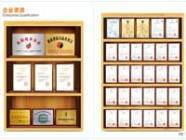
Certifications serve as an "external endorsement" of a supplier's quality control capability. Buyers should verify whether the supplier holds the following certifications and confirm their authenticity and validity:
| Certification Type | Certification Meaning | Value to the Buyer |
|---|---|---|
| ISO 9001:2015 | Quality management system certification covering the entire design and manufacturing process of coating equipment | Demonstrates the supplier's systematic capability to consistently provide compliant products |
| ISO 14001:2015 | Environmental management system certification | Demonstrates the supplier's commitment to environmental responsibility during production, reducing environmental risks |
| ISO 45001:2018 | Occupational health and safety management system certification | Demonstrates the supplier's commitment to employee safety and health, reducing labor-related risks |
| CE Marking | EU market access, confirming product compliance with Machinery Safety, EMC, and other directives | Product designs meet international safety standards, reducing export compliance risks |
| EAC Certification | EAEU market access | Products meet market access requirements for Russia and surrounding markets |
4. On-Site Audit Checklist for Supplier Quality Control Capability
Before making a final decision, buyers are advised to conduct a Factory Audit of shortlisted suppliers, with particular emphasis on the following quality control aspects:
- Quality Management System Documentation: Is it complete? Does it cover the entire process—design, procurement, manufacturing, inspection, and after-sales?
- Incoming Material Inspection Area: Is there a dedicated area and equipment for incoming inspection? Are inspection records complete?
- Work-in-Process (WIP) Management: Do semi-finished products have clear identification and status control? Is there a segregation and handling process for non-conforming products?
- Calibration of Testing Equipment: Are the inspection instruments used (e.g., film thickness gauges, hardness testers, multimeters) within their calibration validity period?
- Employee Quality Awareness: Do frontline staff understand the quality control points for their positions? Is there a quality reward and penalty system?
- Customer Complaint Handling: Is there a standardized process for handling customer complaints? Are past complaint records and corrective actions traceable?
5. Common Quality Misconceptions and Avoidance Suggestions
- Misconception 1: "Well-known brand components automatically guarantee high overall line quality."
- Fact: High-quality components are a foundation, but the system integration quality—including design fit, installation precision, and software control logic—is equally crucial. A top-tier spray gun installed improperly may perform worse than a mid-tier gun installed correctly.
- Misconception 2: "Passing factory testing means there will be no problems on-site."
- Fact: Factors during transport and installation (vibration, temperature changes, etc.) can affect equipment condition. Therefore, on-site SAT is as important as FAT; they are not interchangeable.
- Misconception 3: "Quality control is solely the supplier's responsibility."
- Fact: The buyer's clarity during the requirements definition phase and rigor during the acceptance phase directly impact the final delivered quality. A clear technical specification and acceptance criteria are vital inputs for effective quality control.
Conclusion
Quality control for coating lines is a systematic project spanning the entire equipment lifecycle. Oversights at any stage—from raw material selection, strict process control during manufacturing, comprehensive pre-delivery testing, meticulous on-site commissioning, to long-term operational support—can translate into future quality incidents and financial losses.
Choosing a supplier with a robust quality management system, rigorous process control, transparent testing procedures, and a commitment to continuous improvement is the cornerstone of ensuring a long-term, stable return on your coating line investment.
Guangdong Chuangzhi Intelligent Equipment Co., Ltd. (Attractivechina) , certified to ISO 9001, ISO 14001, and ISO 45001, and holding CE and EAC certifications, is a national-level "Little Giant" Enterprise that integrates quality control into every stage—from design to delivery. With 280 employees (including 54 R&D engineers), a 35,548 m² in-house manufacturing base, and a patent portfolio of over 300 patents (including 79 invention patents), we ensure that every coating line delivered undergoes 100% factory testing and is backed by our lifelong quality assurance services.
We sincerely invite you to visit our manufacturing facility for an on-site audit—to experience firsthand how our quality management system turns "quality commitment" into "delivered reality."
Previous


Contact Us
No.2 Yingbin Avenue, High-tech District, Zhaoqing City, Guangdong Province, China.
Online Message