






















Related News

11
2025
-
04
How Does Electrophoretic Coating Work? Which Industries Use It?
Author:
Chuangzhi Coating
Electrophoretic coating (E-coating) is a high-efficiency, eco-friendly surface treatment technology widely used in modern manufacturing. From smooth car bodies to rust-proof home appliances, it plays a vital role. This article explains its working principles and key applications in simple terms.
I. How Electrophoretic Coating Works: "Like a Magnet Attracting Iron"
The core principle relies on electric fields to deposit paint evenly on workpiece surfaces. The process involves four steps:
1. Electrolyte Preparation
Paint is diluted into a conductive water-based solution containing charged resin particles (e.g., epoxy or acrylic).
2. Electric Field Activation
The workpiece is immersed in the tank and connected to the positive (anodic) or negative (cathodic) electrode.
3. Particle Migration
Cathodic E-coating (common): Positively charged particles move to the negatively charged workpiece.
Anodic E-coating: Negatively charged particles move to the positively charged workpiece.
4. Deposition & Curing
Particles form a uniform film, which is rinsed and baked (typically 180°C for 20 minutes).
Simple analogy: Just like a magnet attracts iron filings, the electric field "pulls" paint particles onto the surface.
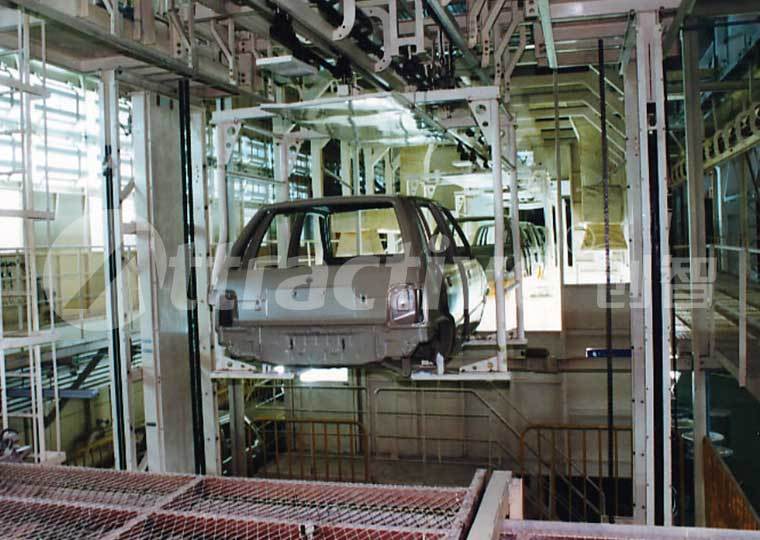
II. Four Key Advantages of Electrophoretic Coating
Uniform Coverage
Complex shapes (e.g., car frames) are fully coated, with thickness variation ≤±1μm.
High Material Efficiency
95%+ paint utilization, saving 30%-50% compared to spray methods.
Eco-Friendly
Near-zero VOCs emissions; wastewater is recyclable.
Superior Corrosion Resistance
Withstands 1,000+ hours in salt spray tests (vs. 300 hours for conventional coatings).
III. Key Industries & Case Studies
1. Automotive Manufacturing
Applications: Car bodies, chassis, engine parts.
Case: Tesla Model Y uses cathodic e-coating for 12-year anti-corrosion.
2. Home Appliances
Applications: Refrigerator shells, washing machine drums.
Case: Haier's FDA-certified food-safe coating for fridge interiors.
3. Hardware Tools
Applications: Wrenches, screwdrivers, gardening tools.
Case: Stanley tools tripled wear resistance with e-coating.
4. Building Materials & Furniture
Applications: Aluminum windows, metal furniture.
Case: IKEA's 10-year "zero peeling" warranty on coated shelves.
5. Emerging Fields
Battery Tech: Insulating coatings for EV battery casings.
Aerospace: Corrosion protection for aircraft landing gear.
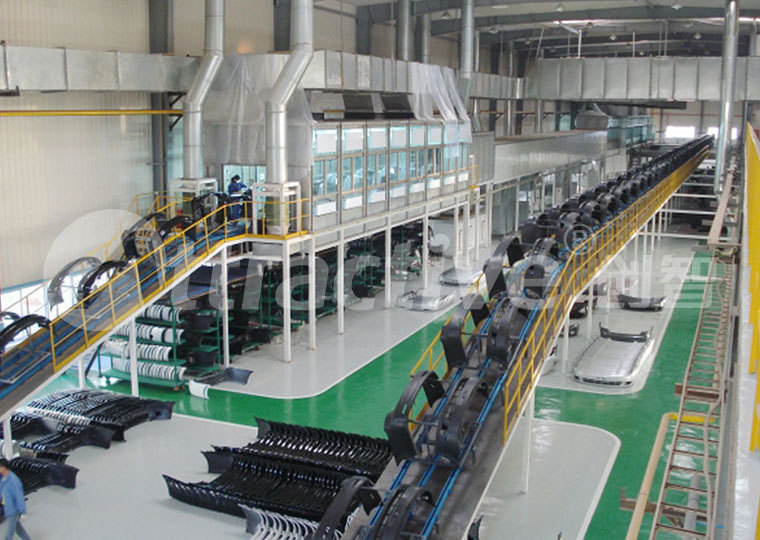
IV. Future Trends
Low-Temperature Curing
120°C-cure coatings cut energy use by 40% and suit plastic substrates.
Smart Control Systems
AI adjusts voltage/temperature in real time for ±0.5μm precision.
Bio-Based Paints
Plant-derived resins reduce carbon footprint by 50%.
V. Choosing the Right E-Coating Equipment
Small-Scale: Compact tanks (2-5m), 140K investment.
Mass Production: Automated lines handle 1,000 units/hour.
Special Needs: Custom paints for insulation/conductivity.
Conclusion
Electrophoretic coating combines uniformity, sustainability, and efficiency, making it ideal for modern industry. Whether boosting product lifespan or meeting environmental standards, it’s a proven solution.


Contact Us
No.2 Yingbin Avenue, High-tech District, Zhaoqing City, Guangdong Province, China.
Online Message