
















Related News

01
2025
-
12
Methods for Controlling Color Stability in Aluminum Powder Coating Lines
Author:
Chuangzhi Coating
In the aluminum profile surface treatment industry, powder coating is widely used due to its environmental friendliness, high adhesion, and excellent decorative properties. However, color stability remains a key factor affecting product appearance quality and brand image. Deviations, color differences, or unevenness in the sprayed color directly impact a product's market competitiveness. Therefore, achieving color stability control in aluminium powder coating lines is a crucial issue that manufacturers must focus on.
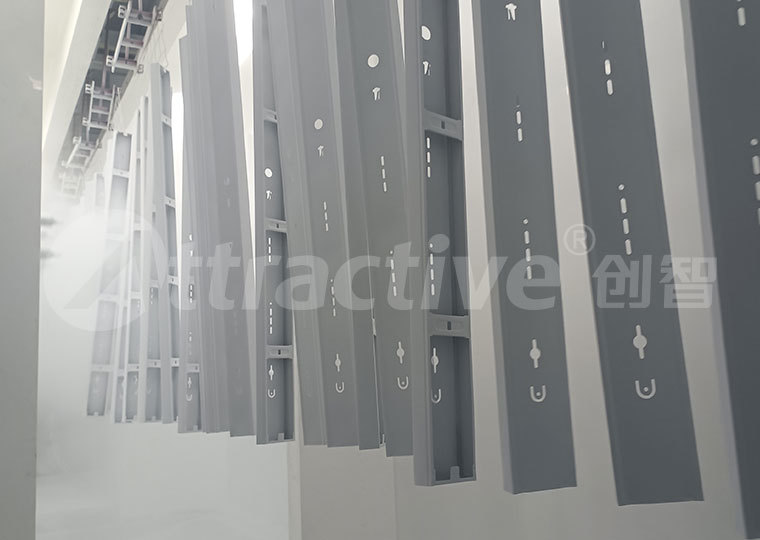
First, the quality of the powder coating is fundamental to color stability. Different brands and batches of powder coatings may differ in color powder ratios, particle size distribution, and resin formulations, all of which can lead to color variations. Therefore, companies should select powder coating suppliers with stable quality and high batch consistency, and conduct sampling inspections on each batch of powder. Furthermore, the use of mixed batches of coatings should be strictly avoided in the same production order to reduce the risk of color differences caused by component variations.
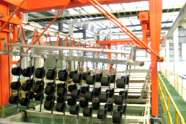
Pretreatment quality directly affects color presentation. The presence of oil, oxides, or uneven treatment on the aluminum surface can lead to decreased coating adhesion, thus affecting the consistency of the sprayed color. Enterprises should ensure the stability of pretreatment processes such as degreasing, rust removal, and chemical formation, including precise control of parameters such as bath concentration, temperature, and spray pressure. Simultaneously, pretreatment equipment should be regularly maintained to prevent poor treatment results due to equipment contamination.
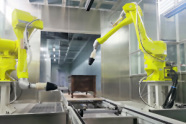
The stability of the aluminium powder coating line is crucial for maintaining consistent color. Parameters such as the voltage of the electrostatic spray gun, spraying distance, powder concentration, and conveyor speed can all affect coating thickness, and different coating thicknesses can produce visual color differences. Therefore, the spray guns need to be calibrated regularly to ensure stable powder atomization and electrostatic adsorption effects. The airflow speed and powder recovery system in the spray booth also need to be kept stable to reduce color fluctuations caused by powder contamination or changes in the proportion of recovered powder.
The curing process significantly affects color stability. The temperature uniformity, heating profile, and curing time of the powder curing oven directly affect the coating's gloss and final color. Excessively high oven temperatures may lead to darker colors and excessive resin cross-linking; excessively low temperatures may result in dull colors and incomplete curing. Therefore, the temperature in all areas of the curing oven should be kept stable during production, and a temperature recorder should be used for periodic calibration to ensure consistent curing results.
Environmental factors are also significant variables. Temperature, humidity, and air cleanliness in the spraying room can directly affect powder coating results and color performance. High humidity hinders powder charging, and high temperatures can cause premature powder agglomeration. Therefore, constant temperature and humidity conditions should be maintained in the spraying workshop, and the air filtration system should be ensured to be functioning properly.

Companies should establish a complete color testing and quality traceability system. A colorimeter should be used to monitor production samples in real time, recording powder batches, process parameters, and test results. Any anomalies can be addressed promptly by adjusting the process to ensure color stability.
Through end-to-end management from powder quality, pretreatment, equipment stability, curing processes to environmental control, aluminium powder coating lines can achieve high levels of color stability, providing reliable assurance for product appearance consistency and brand quality.
Previous


Contact Us
No.2 Yingbin Avenue, High-tech District, Zhaoqing City, Guangdong Province, China.
Online Message