











Related News

17
2025
-
12
How to Integrate Smart Monitoring into Your Coating Line
Author:
Chuangzhi Coating
In the era of smart manufacturing, coating lines play a pivotal role in surface finishing. Integrating smart monitoring systems enables real-time process optimization, defect detection, and end-to-end data traceability. Here's how to achieve it:

1. Build a High-Precision Sensor Network
Deploy advanced sensors to monitor critical parameters:
- Film thickness sensors (±1μm accuracy via eddy current/ultrasonic) ensure coating uniformity;
- Colorimeters (ΔE ≤ 0.5 via spectrophotometry) guarantee color consistency;
- 3D profilers measure surface flatness (0.01mm precision);
- IR thermography and humidity sensors stabilize environmental conditions.
These data are transmitted via IoT to a central control system for real-time analysis.
2. Integrate AI-Powered Machine Vision
High-resolution cameras (up to 25MP) with AI algorithms detect defects like sagging or orange peel. For example, a car coating line reduced inspection errors to 0.1% while boosting efficiency by 40%. 3D modeling and trajectory planning optimize spray painting robots, reducing overspray by 15%.
3. Automation and Flexible Production
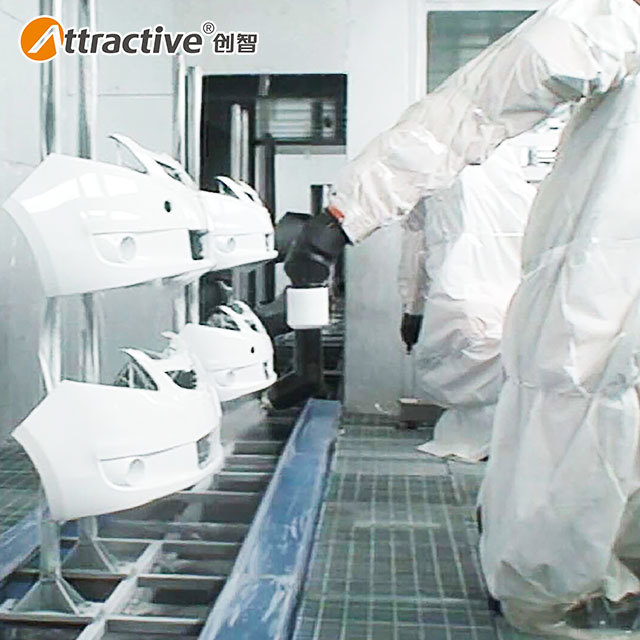
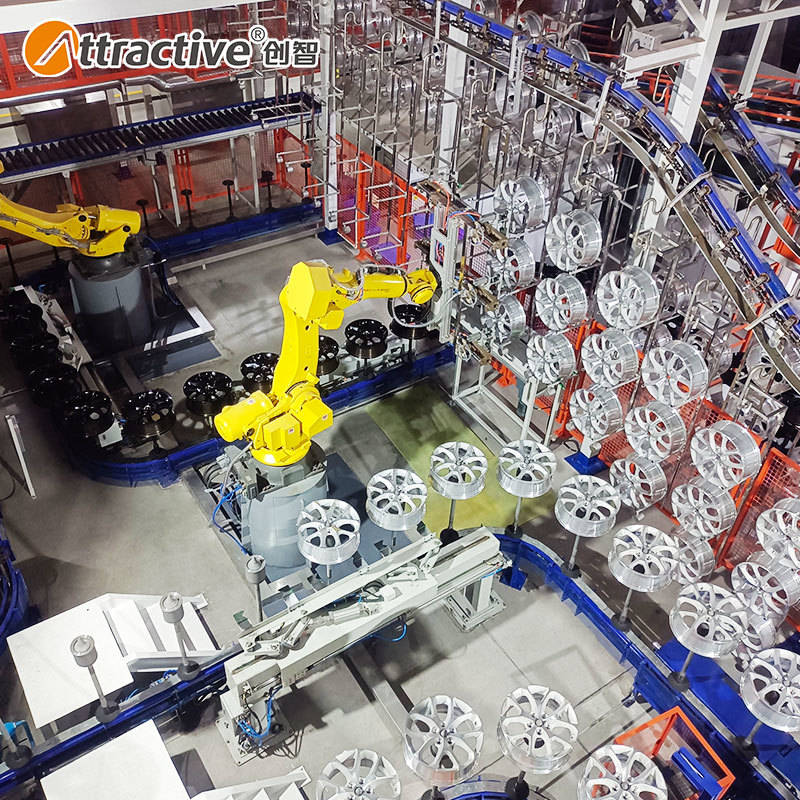
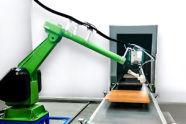
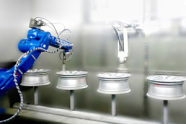
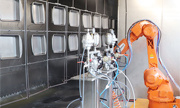
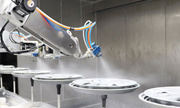
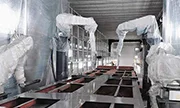
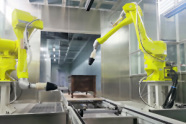
Spray painting robots are the core execution units. Offline programming and anti-vibration algorithms enable ±0.05mm repeatability. In an appliance manufacturing case, RFID tags enabled color switches within 45 seconds, cutting solvent waste by 30%. Servo-driven conveyors (±1mm positioning) and PID control ensure synchronized production.
4. Data-Driven Closed-Loop Optimization
Integrate smart monitoring with MES systems:
- Process parameters (e.g., electrostatic voltage 0-100kV) are automatically deployed;
- Quality data are uploaded in real-time for SPC analysis, generating optimization suggestions;
- Digital twin simulations validate new processes, shortening debugging time.
A new energy battery case improved coating adhesion from 92% to 99.5% via digital twins.
5. Intelligent Environmental and Energy Management
Constant temperature/humidity systems (±1℃, ±3%RH) and laminar airflow (0.2-0.5m/s) stabilize coating conditions. An engineering machinery line reduced natural gas consumption by 12%, saving $17,000 annually after optimizing oven temperature curves.
6. Predictive Maintenance and Remote Monitoring
Vibration analysis, temperature monitoring, and consumable life prediction prevent equipment failures. A furniture line extended spray gun maintenance cycles by 3x, reducing downtime by 50%. Mobile remote monitoring allows global real-time production visibility.
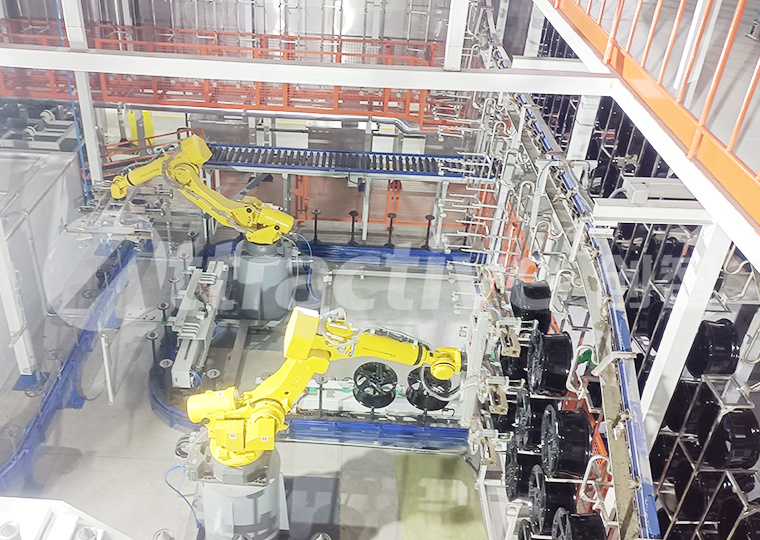
Case Study: Digital Upgrade of an Automotive Coating Line
A car manufacturer achieved:
- Color switch time reduced to 45 seconds for 50+ color mix production;
- Online film thickness detection + AI feedback (ΔE < 0.5);
- VOC emissions cut by 15%, meeting environmental regulations;
- Annual capacity increased by 20%, reaching 120,000 units.


Contact Us
No.2 Yingbin Avenue, High-tech District, Zhaoqing City, Guangdong Province, China.
Online Message