











Related News

23
2025
-
12
Next-Generation Coating Lines with Digital Integration
Author:
Chuangzhi Coating
In the Industry 4.0 era, the coating industry is undergoing a profound transformation from traditional methods to digitalization and intelligence. Digital coating lines serve as the core of this evolution, redefining production efficiency, quality control, and environmental standards through deep integration of IoT, AI, and automation technologies. For coating equipment manufacturers, next-generation coating lines are not only a technological imperative but also a strategic gateway to capture the high-end manufacturing market.
Technological Innovation: Core Advantages of Digital Coating Lines
Full-Process Automation and Precision Control
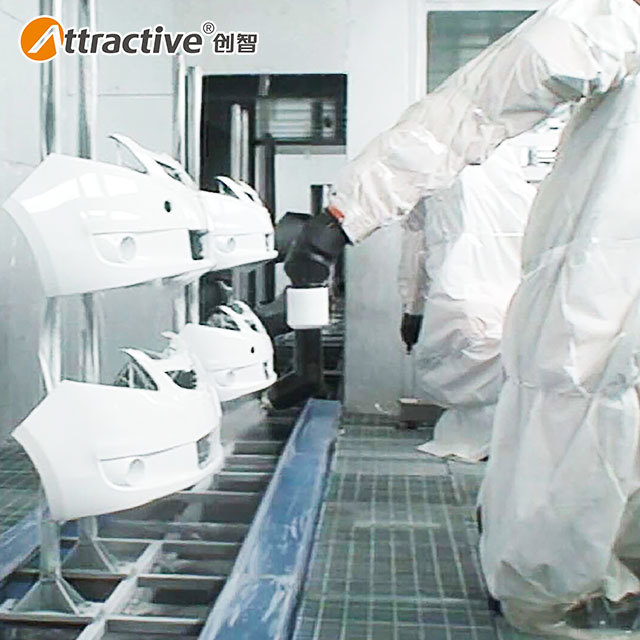
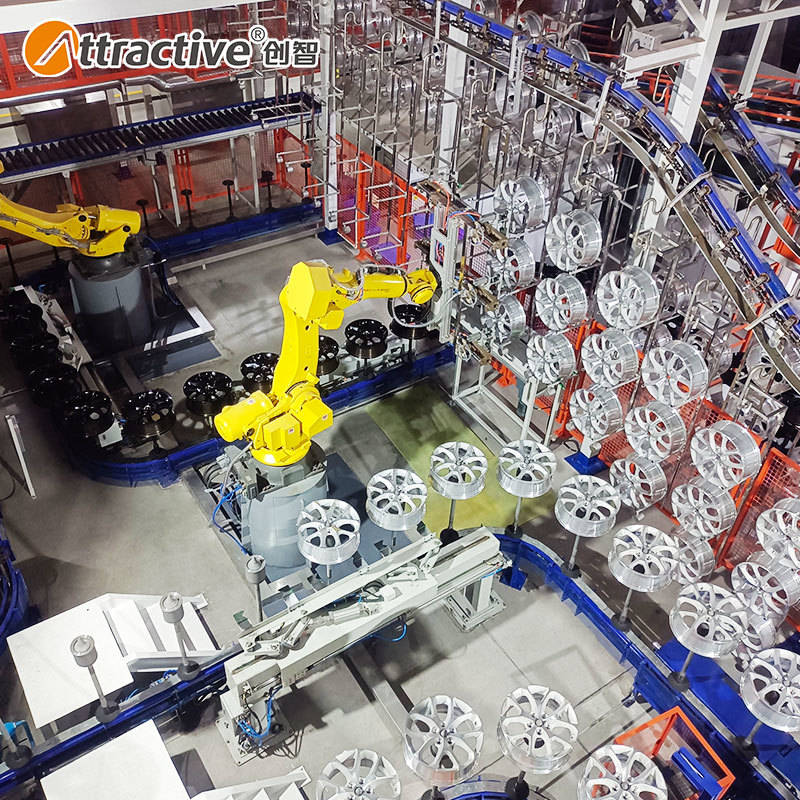
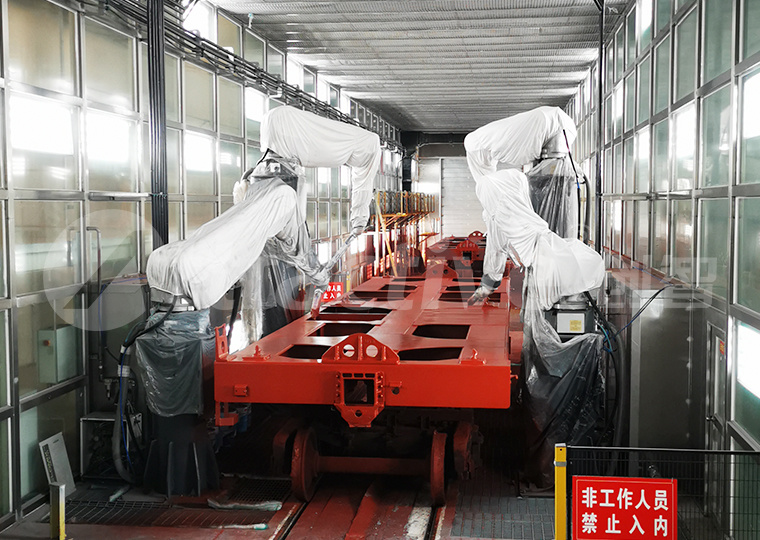
Traditional coating lines rely on manual operations, leading to inefficiencies and inconsistent quality. Smart coating equipment, such as robotic spraying systems, automated conveyors, and AI algorithms, enables end-to-end automation from pretreatment to drying. For instance, vision-based positioning systems reduce spraying errors to ±0.1mm, while real-time feedback ensures coating thickness uniformity within ±5μm precision.
Data-Driven Quality Optimization
Digital coating lines integrate sensor networks that collect thousands of process parameters (e.g., paint flow, temperature, humidity) per second. Combined with edge computing and cloud platforms, these systems enable defect prediction and adaptive process adjustments. A case study with an automotive manufacturer showed that deploying AI-powered quality inspection modules reduced color difference (ΔE value) from 1.2 to 0.3 and lowered defect rates by 40%.
Environmental Sustainability and Cost Reduction
New-generation UV coating production lines adopt water-based paints and electrostatic rotary bell technology, reducing paint waste by 30% through digital twin simulations. Integrated VOC treatment systems (e.g., zeolite wheels + RTO) cut emissions to below 20mg/m³, complying with EU REACH regulations and lowering environmental compliance costs by 25%.
Applications: From High-End Manufacturing to Customization
Automotive and New Energy Sectors
High-speed, multi-color production is critical in automotive coating. Digital lines use RFID vehicle identification and robotic program calls to achieve color changes within 45 seconds, supporting annual capacities of over 100,000 units. In battery housing manufacturing, nanoscale coating control ensures fire resistance and insulation, boosting yield rates to 99.5%.
Home Appliances and 3C Electronics
For high-gloss, fingerprint-resistant appliance casings, online CCD inspection and digital twin simulations enable micron-level thickness control. A smartphone manufacturer reported a 93.75% reduction in orange peel defects (from 8% to 0.5%) and a 30% shorter delivery cycle after adopting UV coating lines.
Custom Furniture and Heavy Industry
To meet "one-piece customization" demands, digital coating lines integrate order-driven scheduling and electrostatic water-based paint technology, cutting VOC emissions by 90%. In construction machinery, laser scanning of workpiece contours combined with adaptive path planning improves corrosion-resistant coating utilization to 98%.
Implementation Roadmap: Key Steps from Planning to Execution
Modular Design and Compatibility
Open architectures ensure seamless integration with MES and ERP systems. For example, coating line data can synchronize with enterprise resource systems in real time, enabling production visibility and dynamic supply chain adjustments.
Phased Investment and ROI Analysis
SMEs are advised to start with partial digitalization (e.g., robotic spraying + data collection) before scaling to full integration. A line producing 50,000 units annually requires an initial investment of $457,000, with a payback period of 18 months through energy savings and yield improvements.
Talent Development and Ecosystem Collaboration
Digital line operations demand interdisciplinary expertise. Manufacturers should partner with universities for tailored training and collaborate with software providers (e.g., Siemens, Honeywell) to adopt industrial apps and digital twin platforms, accelerating technological iteration.
Next-generation digital coating lines are not merely technological aggregations but hubs of smart manufacturing ecosystems. Through the integration of smart coating equipment, UV coating production lines, and eco-friendly processes, enterprises can achieve lower costs and higher flexibility to adapt to market shifts. As a coating equipment manufacturer, we are committed to delivering end-to-end solutions to help clients seize opportunities in the Industry 4.0 era.


Contact Us
No.2 Yingbin Avenue, High-tech District, Zhaoqing City, Guangdong Province, China.
Online Message