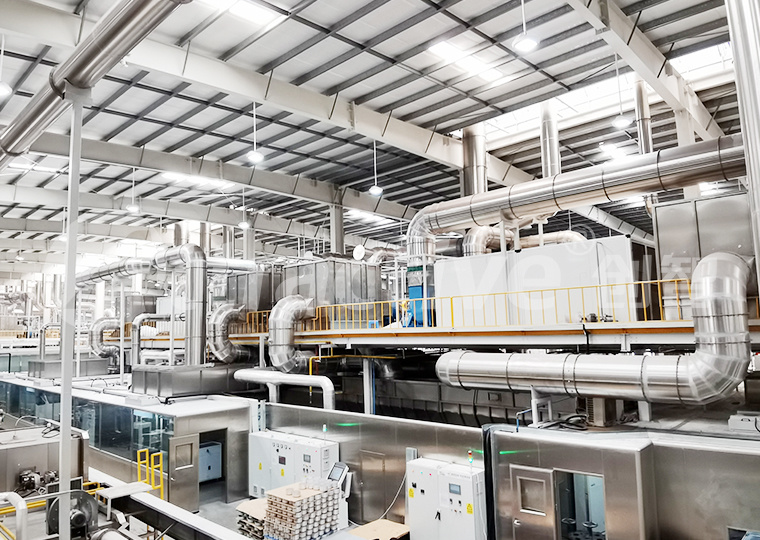
How to Achieve a Truly Sustainable and Low-Carbon Footprint Coating Line?
Author:
Chuangzhi Coating
Against the backdrop of global climate change response, manufacturing is undergoing an unprecedented green transformation. As a major source of energy consumption and emissions in industrial production, optimizing the carbon footprint of coating processes has become a critical battleground for enterprises striving to achieve sustainable development goals. However, a truly sustainable coating line is far more than simple end-of-pipe treatment or the stacking of energy-efficient equipment; it requires a systematic restructuring spanning energy sources, material selection, process design, and operational management. This article delves into how to build a genuinely sustainable, low-carbon footprint coating line, providing enterprises with a comprehensive transformation roadmap.
I. Redefining Sustainable Coating: From Single Metrics to Systemic Thinking
Before discussing specific technologies, we must first establish a correct understanding of "sustainable coating." True sustainability encompasses three core dimensions:
Environmental Dimension: Reducing energy consumption, lowering greenhouse gas emissions, eliminating hazardous substance use, minimizing waste generation
Social Dimension: Ensuring employee health and safety, meeting increasingly stringent regulatory requirements, enhancing brand social image
A truly sustainable low-carbon coating line must achieve excellence across all three dimensions. This means we need to transcend traditional "emission reduction" thinking and move toward systematic optimization across the entire lifecycle.
II. Energy Efficiency: The Core Foundation of Low-Carbon Coating Lines
Energy consumption in coating lines is primarily concentrated in curing ovens, spray booth HVAC systems, and exhaust treatment equipment. Optimizing energy efficiency is the most direct path to reducing carbon footprint.
1. High-Efficiency Heat Recovery Systems
Curing ovens represent the largest energy-consuming unit in coating lines, with enormous potential for heat recovery. Modern efficient coating solutions commonly integrate the following technologies:
Exhaust Heat Recovery: Using heat exchangers to recover heat from high-temperature exhaust gases emitted by curing ovens, preheating fresh air or drying in pre-treatment stages. Typical systems achieve 20-40% energy savings.
Multi-Zone Independent Temperature Control: Dividing curing ovens into multiple independently controlled temperature zones, precisely controlling temperatures based on actual workpiece requirements to avoid overheating. This design is particularly important for mixed production scenarios.
Hot Air Circulation Optimization: Using computational fluid dynamics simulations to optimize airflow organization within ovens, eliminating temperature dead zones and ensuring effective heat utilization without waste.
2. Intelligent Energy Management Systems
A truly low-carbon coating line must possess the ability to "sense" and "optimize":
Real-Time Energy Monitoring: Deploying smart meters, flow meters, and temperature sensors at key energy consumption points, collecting real-time data and uploading to central management systems.
Demand-Responsive Control: Dynamically adjusting equipment operating status based on production loads. For example, automatically reducing fan speeds and shutting down non-essential heating zones during standby mode.
Energy Data Analysis: Using machine learning algorithms to identify abnormal energy consumption patterns, predict equipment maintenance needs, and continuously optimize energy usage strategies.
3. Low-Carbon Energy Substitution
Addressing the energy structure at its source is the fundamental way to reduce carbon emissions:
Electrification Retrofitting: Replacing gas-fired curing ovens with electric heating systems, creating conditions for integrating renewable energy.
Renewable Energy Utilization: Installing photovoltaic panels on factory roofs, or directly using clean electricity such as wind and solar power through green power purchase agreements.
Heat Pump Technology Application: For low-temperature curing or spray booth HVAC requirements, high-efficiency heat pumps can significantly reduce electricity consumption.
III. Material Efficiency: The Invisible Lever for Reducing Carbon Footprint
Coatings themselves carry a significant carbon footprint—from raw material extraction, production, and transportation to final use and waste disposal. Improving material utilization directly translates to reduced carbon emissions.
1. High Transfer Efficiency Spraying Technologies
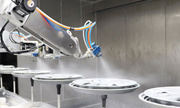
Comprehensive Electrostatic Spray Application: By charging coating particles for efficient attraction to workpieces, electrostatic bells and guns can increase liquid coating utilization from 30-50% with conventional air spray to 70-90%. For powder coatings, recovery systems can achieve utilization rates exceeding 95%.
HVLP and Air-Assisted Airless Spraying: In applications requiring fine control, these technologies significantly reduce overspray and rebound, improving material deposition efficiency.
2. Low-VOC and Bio-Based Coating Applications
Waterborne Coating Substitution: Waterborne coatings dramatically reduce VOC emissions, and their production processes typically have lower carbon footprints than solvent-based coatings. Advanced automated coating production lines are now fully compatible with waterborne materials.
High-Solids and Solvent-Free Coatings: Reducing solvent content not only lowers VOCs but also decreases carbon footprint during transportation and storage.
Bio-Based Coatings: Replacing petroleum-based raw materials with plant derivatives reduces carbon footprint at the source. Some pioneering companies have begun large-scale applications.
3. Precise Paint Supply and Waste Reduction
Closed-Loop Paint Supply Systems: Maintaining constant paint temperature and viscosity reduces spraying defects and material waste caused by viscosity fluctuations.
Quick Color Change Technology: Automatic cleaning and color change systems can reduce changeover time from tens of minutes to just minutes, dramatically reducing cleaning solvent consumption and waste paint generation.
Precise Two-Component Metering: For two-component coatings, in-line mixing and precise metering ensure accurate ratios every time, avoiding waste from improper mixing ratios leading to gelation.
IV. Process Innovation: Eliminating Emissions at the Source
Moving beyond "treatment" thinking, process innovation fundamentally eliminates or reduces pollutant generation at its origin.
1. Dry Spray Booths and Overspray Capture
Traditional wet spray booths require large amounts of water and chemicals for overspray treatment, generating secondary pollution. Modern dry spray booths utilize lime powder or cardboard filter technology:
Lime Powder Spray Booths: Lime powder adsorbs overspray and can subsequently be used as raw material for cement kiln co-processing, achieving zero wastewater discharge.
Cardboard Filter Systems: Achieve filtration efficiency exceeding 99%, with spent filter media suitable for incineration power generation or use as alternative fuel.
2. Chemical-Free Pre-Treatment Technologies
CO₂ Snow Cleaning: Utilizing compressed CO₂ to form snow-like particles that impact and remove surface contaminants, completely free of chemicals and wastewater.
Atmospheric Plasma Treatment: Activating surfaces through plasma to improve coating adhesion, potentially replacing certain chemical pre-treatment steps.
Laser Cleaning: For specific applications, lasers can precisely remove rust and old coatings without media consumption or waste generation.
3. Low-Temperature and Rapid Curing Technologies
Reducing curing temperatures directly decreases energy consumption:
Infrared and Near-Infrared Curing: Transferring energy directly to the coating rather than the entire workpiece, achieving rapid heating with high efficiency.
UV/LED Curing: For UV-curable coatings, ultraviolet light enables instantaneous curing at room temperature, consuming only 10-20% of the energy required for thermal curing.
Two-Component Ambient Curing: Some high-performance coatings can cross-link at room temperature, completely eliminating heating requirements.
V. Waste Management and Resource Circulation
Even after optimization, coating processes generate some waste. A truly sustainable coating line views this waste as "resources misplaced."
1. Waste Paint Resource Utilization
Powder Recovery and Reuse: High-efficiency recovery systems enable immediate reuse of non-adherent powder. For waste powder from color changes, it can be downgraded for primer use or mixed with other materials to create recycled products.
Waste Solvent Distillation Recovery: In-line distillation equipment can separate and reuse effective components from cleaning solvents, reducing hazardous waste generation by over 90%.
Waste Paint Sludge Energy Recovery: For unrecoverable paint sludge, collaboration with specialized facilities for pyrolysis or cement kiln co-processing enables energy recovery.
2. Water Resource Recycling
Counterflow Rinsing and Regeneration: The pre-treatment section employs multi-stage counterflow rinsing technology, significantly reducing water consumption. Ion exchange or membrane separation equipment enables regeneration and reuse of most wastewater.
Rainwater Harvesting and Utilization: For large coating facilities, rainwater collection systems can supplement cooling water or cleaning water sources.
3. Packaging Reduction and Circulation
IBC Totes Replacing Small Containers: Using reusable intermediate bulk containers (IBCs) instead of disposable packaging drums reduces packaging waste.
Supplier Take-Back Systems: Establishing packaging recycling mechanisms with coating suppliers achieves closed-loop circulation of packaging materials.
VI. Carbon Footprint Accounting and Certification: No Measurement, No Management
To build a truly low-carbon coating line, a scientific carbon footprint accounting system must be established.
1. System Boundary Definition
Scope 1: Direct emissions, such as CO₂ from natural gas combustion in curing ovens
Scope 2: Indirect emissions, such as carbon emissions corresponding to purchased electricity
Scope 3: Other indirect emissions, including upstream and downstream stages such as coating raw material production, transportation, and waste treatment
A truly sustainable green coating production line should incorporate Scope 3 considerations, driving supply chain-wide emission reduction efforts.
2. Carbon Footprint Calculation Tools
Life Cycle Assessment Software: Professional tools such as GaBi and SimaPro can quantify carbon emissions at each stage of the coating process.
Digital Carbon Management Platforms: Real-time collection of energy and material data, automatically generating carbon footprint reports to support continuous improvement decisions.
3. Third-Party Certification
ISO 14064: Greenhouse gas emissions verification standard
ISO 14067: Product carbon footprint quantification standard
EPD Environmental Product Declaration: Third-party verified declaration based on life cycle assessment
Obtaining authoritative certification is not only a compliance requirement but also powerful proof of sustainable development commitment to customers and the market.
VII. Case Study: Towards Net-Zero Emission Coating Lines
Practice of a European Automotive Parts Supplier
The company achieved the following breakthroughs in its newly constructed coating line:
Energy Structure: 100% green electricity procurement, with rooftop photovoltaics meeting 20% of electricity demand
Heat Recovery: Curing oven exhaust heat recovery system reduced gas consumption by 35%
Zero Wastewater: Dry spray booth + wastewater evaporation system achieved zero industrial wastewater discharge
Carbon Footprint: 62% reduction compared to traditional coating lines, targeting carbon neutrality by 2030
This case demonstrates that through systematic design and advanced technology integration, building a truly sustainable coating line is not only possible but can deliver significant dual economic and environmental benefits.
VIII. Implementation Pathway: Phased Approach to Sustainable Coating
For most enterprises, achieving a perfect low-carbon coating line in one step is unrealistic. The following is a feasible phased implementation pathway:
Phase 1: Basic Optimization (0-6 months)
Energy audit to identify major waste points
Compressed air system leak detection and repair
Curing oven insulation inspection and improvement
Establish energy consumption baseline
Phase 2: Technology Retrofitting (6-18 months)
Electrostatic spraying equipment upgrade
Curing oven exhaust heat recovery system installation
Variable frequency drive retrofitting
LED lighting replacement
Phase 3: System Integration (18-36 months)
Intelligent energy management system deployment
Dry spray booth replacement for wet spray booths
Renewable energy integration
Waste resource recovery system establishment
Phase 4: Net-Zero Sprint (36+ months)
Carbon neutrality target setting and roadmap development
Supply chain carbon management
Carbon offset and capture technology exploration
Net-zero emission certification
IX. Conclusion: Sustainable Coating as Competitiveness, Not Cost
For a long time, environmental protection investment has been seen as a cost burden for enterprises. However, in the era of low-carbon economy, this perception is being overturned. Building a truly sustainable coating line with a low carbon footprint can not only help companies meet increasingly stringent regulatory requirements and customers' expectations for green supply chains, but also directly translate into economic benefits through improved energy efficiency, material savings, and waste reduction.
More importantly, enterprises that complete the green transformation first will gain differentiated advantages in market competition. As more purchasers adopt carbon footprint as a key supplier selection criterion, a certified low-carbon coating line becomes the most compelling sales tool itself.
Starting today, re-examine your coating line. Every kilowatt-hour of electricity, every kilogram of coating material, and every cubic meter of water it consumes is writing your carbon story. Through systematic innovation and continuous improvement, we can make this story not just about reducing emissions but about creating value—for your enterprise, for this planet, and for future generations.