











Related News

18
2026
-
03
Dedicated Coating Lines for Automotive Component Manufacturing: Dual Guarantee of Quality and Efficiency
Author:
Chuangzhi Coating
Introduction: The Specificity and Challenges of Automotive Component Coating
In the value chain of automotive manufacturing, component coating is often regarded as an "invisible" but crucial link. Compared to vehicle body painting, automotive component coating faces more complex and diverse challenges:
- Material Diversity: From cast iron and aluminum alloys to engineering plastics, different substrates impose differentiated requirements on coating processes
- Geometric Complexity: From deep-cavity engine blocks to precision miniature sensor housings, shapes vary widely
- Functional Requirements: Chassis parts require excellent corrosion resistance, engine components need high-temperature resistance, while interior and exterior trim pursue perfect appearance
- Batch Size and Cycle Time: Mass production demands coating lines with high cycle times and stability
- Supply Chain Coordination: Must seamlessly integrate with OEM production schedules to ensure just-in-time delivery
Faced with these challenges, general-purpose coating lines can no longer meet requirements. Dedicated coating lines designed specifically for automotive components have emerged, providing tailored coating solutions for each component category through precise process design, flexible configurations, and intelligent control.
I. Heavy-Duty Anti-Corrosion Coating for Chassis System Components
1.1 Coating Challenges of Chassis Parts
The chassis system includes critical safety components such as subframes, control arms, steering knuckles, and drive shafts. These parts are long-term exposed to harsh environments including road salt, mud, water, and stone chipping, imposing extremely high requirements on coating corrosion resistance and mechanical strength. Moreover, as safety components, coating adhesion must be absolutely reliable, as any peeling could lead to serious safety hazards.
1.2 Dedicated Coating Solutions
Dedicated coating lines for chassis parts typically adopt a composite process route with cathodic electrodeposition (CED) as the main process supplemented by powder coating:
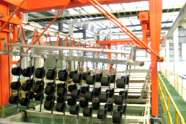
- Cathodic Electrodeposition Coating Line: Electrocoat offers excellent penetration capability, covering internal cavities and weld seams of complex structures to form a uniform anti-corrosion layer. Advanced electrodeposition coating lines use lead-free, tin-free environmentally friendly electrocoat paints, combined with multi-stage counterflow rinsing and ultrafiltration systems to achieve water resource recycling.
- Powder Coating Reinforcement: For areas requiring additional stone chip resistance (such as lower control arms), a powder coating layer can be applied over the electrocoat layer. The 100% solids content and recyclability of powder coatings make them an environmentally friendly and efficient supplementary process.
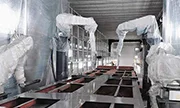
- Automated Loading/Unloading: Chassis parts are typically heavy; dedicated coating lines are equipped with robots or assistive manipulators for loading and unloading, reducing labor intensity and ensuring workpiece positioning accuracy.
1.3 Quality Control Key Points
- Film Thickness Distribution: Optimize electrode arrangement through simulation to ensure uniform film thickness on internal cavities and external surfaces
- Adhesion Testing: Regular cross-cut tests and impact tests to verify coating bonding strength
- Salt Spray Testing: Conduct neutral salt spray tests according to OEM standards (typically requiring 480-1000 hours)
II. High-Temperature Resistant and Functional Coatings for Powertrain Components
2.1 Engine and Transmission Parts
Engine blocks, cylinder heads, oil pans, transmission housings, and similar components require not only corrosion protection but also special properties such as oil resistance, high-temperature resistance, and thermal conductivity.
2.2 Dedicated Coating Technologies
- Waterborne High-Temperature Resistant Coatings: Components near exhaust pipes and turbochargers must withstand 300-600°C temperatures. Dedicated coating lines use waterborne high-temperature resistant silicone coatings that form a ceramic-like protective layer at elevated temperatures.
- Anti-Carburizing/Anti-Nitriding Coatings: For gears and shafts requiring heat treatment, coating lines must have partial masking capabilities to prevent heat treatment areas from being contaminated by coatings.
- Anti-Friction Coatings: Moving parts such as piston skirts and bearings are coated with molybdenum disulfide or graphite-based anti-friction coatings to reduce friction losses. Such coating lines are typically equipped with precision spraying equipment and closed-loop film thickness control systems.
2.3 Process Control Key Points
- Pre-treatment Precision: Cast iron parts require shot blasting to remove mill scale, while aluminum alloy parts need chrome-free passivation treatment
- Curing Temperature Profile: Different functional coatings have varying curing temperature requirements; dedicated lines use multi-zone ovens for precise temperature control
- Cleanliness Control: Engine components have extremely high cleanliness requirements; coating lines must be equipped with high-efficiency filtration and blow-off systems
III. Decorative Coating for Interior and Exterior Trim Components
3.1 From Functionality to Aesthetics
Automotive interior and exterior trim parts—including bumpers, grilles, door handles, decorative strips, and instrument panels—directly determine consumers' first impression of vehicle quality. The coating of these components pursues ultimate appearance while meeting basic performance requirements.
3.2 Advanced Coating Technologies
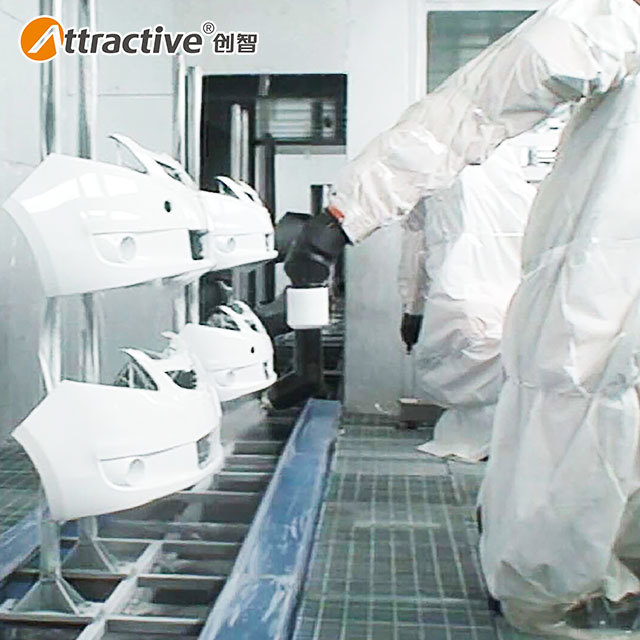
- Two-Tone Spraying Lines: An increasing number of models feature two-tone bumper designs. Dedicated coating lines are equipped with quick color change systems and precision masking robots to achieve precise color zoning.
- High-Gloss Black Spraying: Piano black trim strips demand extremely high coating leveling and cleanliness. Dedicated lines typically employ a "primer + high-gloss black paint + clearcoat" three-coat system, applied in ISO Class 5 cleanroom spray booths.
- Soft-Touch Coatings: Components such as instrument panels and armrests are coated with soft-touch materials to enhance interior texture. Such coating lines require specialized spraying equipment and precise film thickness control—too thick affects tactile feel, too thin compromises durability.
- Anti-Fingerprint and Self-Healing Coatings: High-end vehicle center console panels and exterior door handles utilize topcoats with anti-fingerprint properties or self-healing capability for minor scratches.
3.3 Intelligent Applications
Modern interior and exterior trim coating lines widely employ intelligent coating systems:
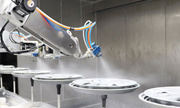
- Robotic Automatic Spraying: 6-axis robots combined with 3D vision scanning to accurately identify workpiece position and contour, automatically generating optimal spray trajectories
- Online Color Inspection: Colorimeters monitor color deviation in real-time, automatically adjusting paint supply ratios
- Automatic Defect Recognition: AI vision systems detect defects such as runs, orange peel, and particles, ensuring zero-defect delivery
IV. Flexible Design of Dedicated Coating Lines
4.1 Multi-Variety Co-Line Production
Automotive components are numerous and diverse, yet the annual production volume of a single component may not justify a dedicated line. Therefore, modern flexible coating production lines must balance specialization with flexibility:
- Modular Spray Booths: Utilizing movable partitions to dynamically adjust effective booth space according to workpiece dimensions
- Quick-Change Fixture Systems: The same rack can accommodate multiple workpiece types by changing different fixture modules
- Intelligent Scheduling Systems: Automatically switching process parameters and spray programs based on orders, enabling seamless multi-variety switching
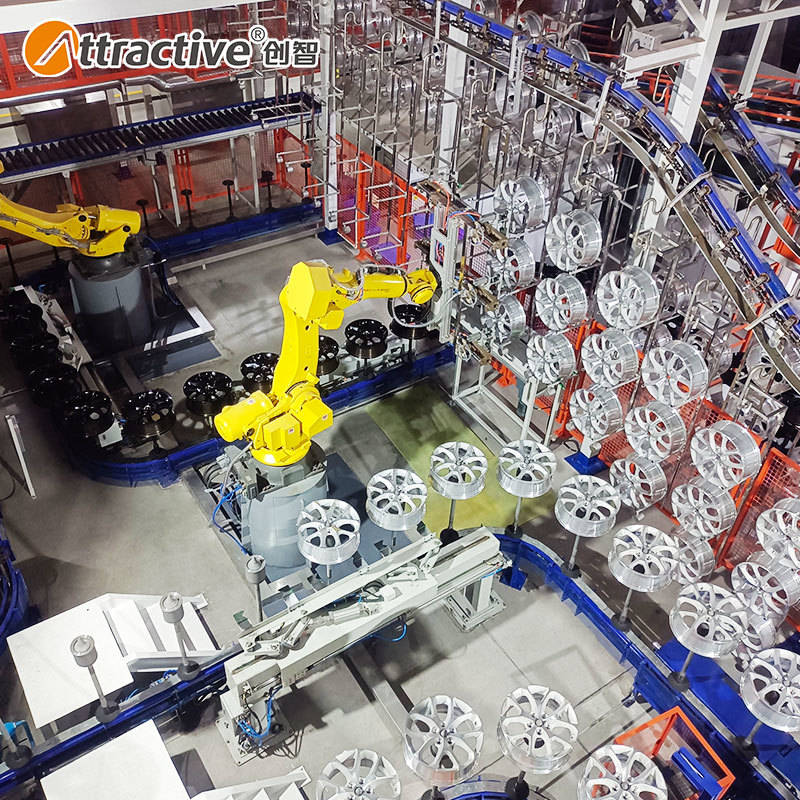
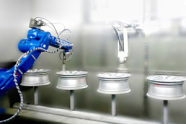
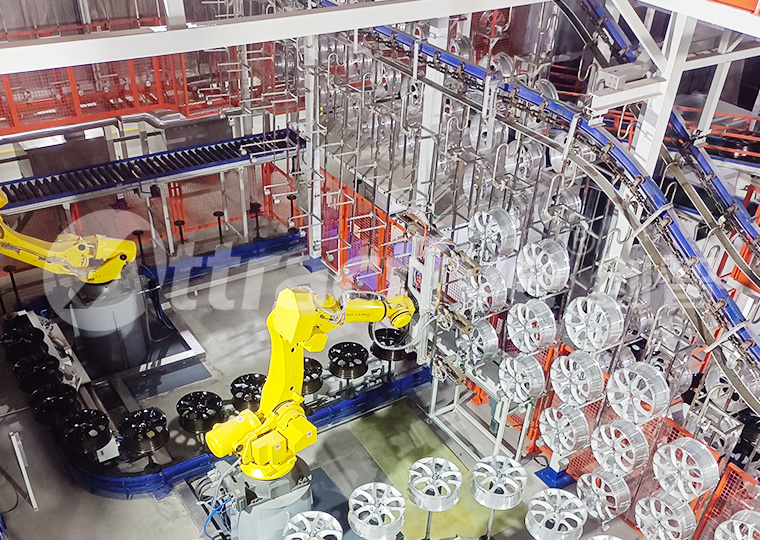
4.2 Case Study: Aluminum Alloy Wheel Coating Line
Wheels, as typical automotive components, exemplify the balance between specialization and flexibility in their coating lines:
- Base Powder + Color Powder + Clear Powder: A three-coat system completed at different stations
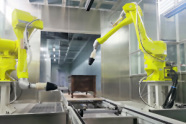
- Robotic Internal and External Surface Spraying: Wheel faces require high decoration, while backs need only corrosion protection; robots can switch different spray parameters for different areas
- Cooling and Air-Float Conveying: Cured wheels require rapid cooling; air-float conveying avoids surface scratches
V. Environmental and Sustainable Design
5.1 Green Supply Chain Requirements in the Automotive Industry
Major automotive brands have imposed clear carbon reduction and environmental requirements on suppliers. Automotive component coating lines must integrate environmental concepts into their design:
- Phosphorus-Free and Nickel-Free Pre-treatment: Utilizing environmentally friendly conversion coating technologies such as silane and zirconium salts to replace traditional phosphating
- High-Solids and Waterborne Coatings: Significantly reducing VOC emissions to meet the strictest environmental regulations
- High-Efficiency Exhaust Treatment: Equipping regenerative thermal oxidizers (RTO) achieving exhaust purification efficiency exceeding 99%
- Heat Recovery Systems: Using waste heat from curing oven exhaust to preheat fresh air or heat pre-treatment bath solutions
5.2 Carbon Footprint Optimization
A typical low-carbon coating line achieves carbon reduction through the following measures:
- Variable frequency drive technology, saving 30-50% energy on fans and pumps
- Application of low-temperature cure coatings, reducing curing temperatures from 220°C to 160°C
- Solar photovoltaic systems, meeting partial electricity demand
- Digital energy management platforms, monitoring and optimizing energy consumption in real-time
VI. Quality Traceability and Digital Management
6.1 Full-Process Data Collection
Modern automotive component coating lines are equipped with hundreds of sensors collecting real-time data on:
- Process Parameters: Temperature, pressure, flow rate, voltage, current
- Equipment Status: Robot positions, rotational speeds, alarm information
- Quality Data: Film thickness, color difference, adhesion test results
- Energy Consumption Data: Electricity, water, compressed air, coating material consumption
6.2 Integration with MES Systems
All data is uploaded to Manufacturing Execution Systems (MES), enabling:
- Process Parameters Linked to Workpieces: Each workpiece has a complete "electronic file"
- Real-Time Quality Alerts: Automatic alarms when parameters deviate from set ranges
- Predictive Maintenance: Early detection of potential failures based on equipment data analysis
- Automated Production Reporting: Key metrics such as shift output, yield rate, and energy consumption at a glance

VII. Key Considerations for Selecting Partners
For automotive component manufacturers, choosing a coating line supplier is a strategic decision. The following key points deserve attention:
7.1 Industry Experience and Success Cases
Does the supplier have delivery experience with similar components? Can they provide reference customer sites for visits?
7.2 Process Laboratory Support
Does the supplier have a process laboratory capable of conducting process validation for specific workpieces and coatings, determining optimal parameters before line design?
7.3 Turnkey Engineering Capability
Does the supplier possess full-service capabilities from solution design, equipment manufacturing, installation, and commissioning to personnel training? Is project management standardized?
7.4 After-Sales Service Response
Are service outlets established in the customer's region? Is spare parts inventory adequate? Can remote diagnostic support be provided?
7.5 Continuous Upgrade Capability
Is the coating line designed with modular architecture for future technology upgrades and capacity expansion? Is the control system open, capable of interfacing with the customer's digital systems?
VIII. Conclusion: Choose Professional Partners for a Win-Win Future in the Automotive Industry
For automotive component suppliers, investing in a technologically advanced, process-reliable, and economically efficient dedicated coating line is not only a necessary condition to meet OEM requirements but also a strategic initiative to build core competitiveness. In today's automotive industry transformation toward electrification, intelligence, and lightweighting, enterprises capable of providing stable, high-quality coated components will occupy irreplaceable positions in the supply chain.
As a specialized manufacturer of coating line equipment, Guangdong Chuangzhi Intelligent Equipment Co., Ltd. has dedicated itself to the field of automotive parts coating solutions for many years, amassing extensive industry experience and a wealth of successful project cases. Integrating R&D, design, manufacturing, installation, commissioning, and after-sales support, the company offers clients a comprehensive, end-to-end service—ranging from process validation and solution design to complete turnkey projects. Chuangzhi Intelligent Equipment remains steadfast in its commitment to driving growth through technological innovation and prioritizing customer needs; we are dedicated to creating coating production lines for automotive parts manufacturers that are efficient, stable, intelligent, and eco-friendly. Choosing Chuangzhi means choosing professionalism and trust; let us join hands to forge a brilliant future for the automotive industry.
SEO:
Next Page


Contact Us
No.2 Yingbin Avenue, High-tech District, Zhaoqing City, Guangdong Province, China.
Online Message