



















Related News

30
2026
-
03
Methods for Controlling Coating Uniformity in Cookware Coating Lines
Author:
Chuangzhi Coating
In the cookware manufacturing process, coating uniformity directly impacts a product's aesthetic quality, wear resistance, and non-stick performance. Particularly within automated cookware coating lines, achieving stable and uniform coating application is a critical factor in enhancing product competitiveness. By optimizing process parameters, equipment configurations, and operational procedures, the quality of the coating can be effectively improved.
I. Rational Control of Spraying Parameters
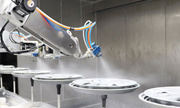
Spraying parameters are the core factors influencing coating uniformity; these include spray gun pressure, spraying distance, traverse speed, and spray pattern width. If the spraying pressure is too high, it can easily lead to paint splatter and uneven coating thickness; conversely, if the pressure is too low, it may compromise adhesion. Therefore, parameters should be adjusted according to the specific characteristics of the coating material to ensure uniform distribution and consistent thickness.
II. Optimizing Coating Formulation and Viscosity
The viscosity of the coating material is directly related to its leveling properties and adhesion. During production, the coating mixture must be prepared strictly in accordance with process specifications and monitored in real-time using viscosity measurement equipment. Appropriate viscosity facilitates the natural leveling of the coating on the substrate surface, thereby minimizing defects such as "orange peel" texture and sagging, and enhancing overall uniformity.

III. Enhancing the Quality of Substrate Surface Treatment
Prior to coating, cookware substrates typically undergo processes such as degreasing, sandblasting, or chemical treatment. Inadequate surface treatment can result in poor coating adhesion or even localized variations in coating thickness. Therefore, it is essential to ensure that the cleanliness and surface roughness of the substrate meet established standards, thereby establishing a solid foundation for subsequent uniform coating application.
IV. Adopting Automated and Intelligent Control Systems
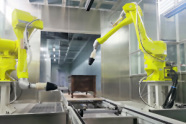
Modern cookware coating lines widely incorporate automated control systems that utilize programmed logic to govern spraying paths and speeds, thereby ensuring standardized operations. Furthermore, by integrating sensors and in-line inspection technologies, real-time data regarding coating thickness can be fed back to the system, allowing for immediate adjustments to process parameters. This effectively minimizes human error and enhances product consistency.
V. Stabilizing Drying and Curing Processes
Coating uniformity is not solely determined during the spraying phase; it is also closely linked to the subsequent drying and curing processes. Uneven temperature distribution or inconsistent heating durations can negatively impact the coating's leveling effect. Consequently, the structure of the drying oven and its temperature control system should be optimized to ensure uniform temperature distribution across all zones, thereby guaranteeing the final quality of the coating.

VI. Strengthening Equipment Maintenance and Operational Protocols
The condition of the spray guns, conveyor systems, and material supply units has a direct impact on the quality of the coating finish. Regularly cleaning nozzles, calibrating equipment parameters, and standardizing operational procedures help ensure the stable operation of the production line and prevent coating irregularities caused by equipment malfunctions.
Controlling coating uniformity on a cookware coating line requires a synergistic optimization approach encompassing various aspects, including spraying parameters, material management, equipment performance, and process workflows. Through systematic management and technological upgrades, product quality can be significantly enhanced, thereby meeting market demands for high-performance cookware.


Contact Us
No.2 Yingbin Avenue, High-tech District, Zhaoqing City, Guangdong Province, China.
Online Message