




















Related News
11
2026
-
06
Checklist Before Buying a Coating Line System
Author:
Chuangzhi Coating
Purchasing a coating line is a major capital decision for any manufacturing enterprise. Unlike buying standard equipment, a coating line is a highly customized systems engineering project involving process, mechanical, electrical, environmental, safety, and other specialized fields. Making the wrong choice not only wastes millions in investment but can also lead to production stoppages, quality complaints, and environmental penalties. This article provides a systematic pre-purchase checklist covering every key step from requirements analysis to contract signing. Checking off each item significantly reduces project risk.

I. Requirements Definition Phase
Before contacting any supplier, complete the following self-assessment:
- Product specification: Have you clearly listed all workpiece types, materials, size ranges (max/min), and weights to be coated?
- Capacity target: What is the annual output target in pieces or square meters? What is the peak daily capacity requirement?
- Coating standards: Corrosion resistance grade (salt spray hours), appearance requirements (gloss, color difference ΔE), film thickness range, adhesion standards (cross-cut/pull-off) — have these been determined?
- Process route: Have you decided whether to use powder coating, liquid coating, electrodeposition, or a hybrid process?
- Substrate special characteristics: Are there special substrates such as plastic, aluminum alloy, or galvanized steel? Are special pre-treatment methods required?
- Environmental requirements: Have the VOC emission limits, zero wastewater discharge requirements, and hazardous waste disposal regulations in your region been clarified?
- Factory conditions: Have the available workshop area, ceiling height, floor load capacity, and utility connection points been measured?
- Budget range: Has the initial investment budget (including civil works and utilities) and expected payback period been determined?
II. Process and Equipment Selection Phase
- Pre-treatment method: Spray or immersion? Is shot blasting/sandblasting pre-treatment needed? Will eco-friendly silane/zirconium conversion coatings replace phosphating?
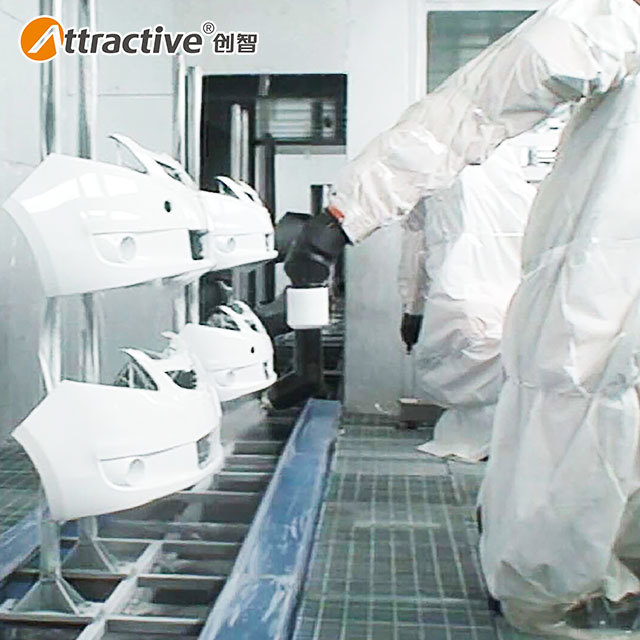
- Spraying equipment: Manual, semi-automatic, or fully automatic robotic? How many spray guns or robots are planned? Is a quick color change system needed?
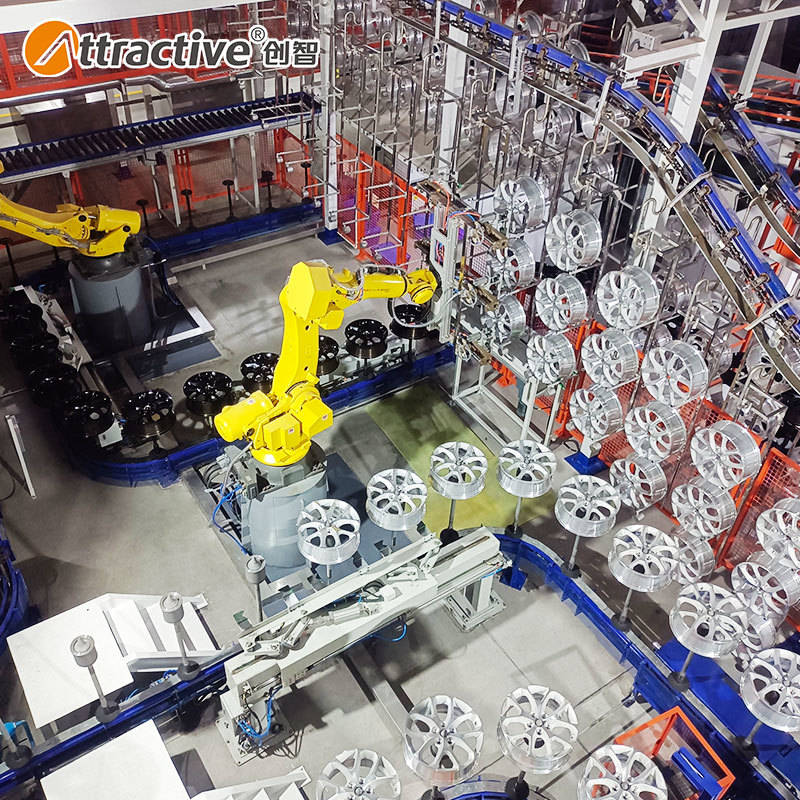
- Conveyor system: Overhead chain, floor chain, power-and-free, or self-propelled trolley? Does the load capacity match the maximum workpiece weight? Does it allow for thermal expansion compensation?
- Curing system: Heat source choice (gas/electric/thermal oil)? Oven length, number of temperature zones, insulation thickness? Is a forced cooling section needed?
- Environmental configuration: RTO/CO exhaust treatment needed? Dry spray booth or water curtain? Wastewater treatment plant scale?
- Control system: PLC brand? Is SCADA, MES interface, or energy management module included? Does remote diagnostics work?
- Flexibility capability: Does color change time and fixture change time meet high-mix production needs? Is quick changeover design in place?
III. Supplier Evaluation Phase
- Qualifications and experience: How many years has the supplier been established? Do they have successful cases in your industry with similar products? At least 3 customer sites that can be visited.
- Process laboratory: Do they have their own coating process laboratory? Can they perform process validation using your workpieces and coatings before contract signing?
- Technical team: Do they have mechanical, electrical, software, and process engineers? What is the project team size?
- Turnkey capability: Do they provide full-process services from solution design, equipment manufacturing, installation and commissioning to personnel training? Is project management standardized?
- Installation and commissioning: Do they have their own installation team or is it subcontracted? What is the committed commissioning timeline?
- After-sales network: Are there local service outlets? Emergency response time? Spare parts availability?
- Financial health: Is the supplier financially stable? Are there any major lawsuits or credit issues?
IV. Technical Proposal and Quotation Phase
- Proposal completeness: Does the technical proposal include process flow diagrams, 3D layout drawings, equipment lists, energy consumption estimates, and cycle time calculations?
- Detailed quotation: Is an itemized quotation provided (equipment, installation, commissioning, training, transport, taxes)? Are there hidden fees?
- Performance guarantees: Are key indicators such as capacity, first pass yield, energy consumption, and emissions guaranteed? Are the verification standards and methods clear?
- Delivery timeline: What is the total cycle time from contract signing to trial production? Are key milestones clear?
- Documentation delivery: Are technical documents (drawings, manuals, maintenance guides) included in the scope of delivery?
V. Contract and Legal Terms Phase
- Payment terms: Are payment milestones tied to project milestones (contract signing, shipment, installation, acceptance)? Is the down payment percentage reasonable (typically 30%)?
- Warranty terms: What is the warranty period (typically 12-18 months)? Does it include labor and travel? Which wear parts are excluded?
- Change management: Are change order pricing methods and approval processes clearly defined in the contract?
- Penalty clauses: Are penalty clauses for delayed delivery or performance shortfalls clear?
- Intellectual property: Who owns the intellectual property rights for control software and design drawings? Are you allowed to modify or further develop this software?
VI. ROI Evaluation Phase
- Total Cost of Ownership (TCO): Beyond initial investment, have you estimated 5-10 year labor, coating, energy, maintenance, and rework costs?
- Payback period: Based on savings in labor, material, and rework, have you calculated simple payback and discounted payback periods?
- Risk analysis: Have sensitivity factors such as coating price fluctuations, energy price increases, and order volatility been considered?
- Financing options: Is equipment leasing or installment payment needed? Does the supplier support it?
Conclusion
Purchasing a coating line is a complex systems engineering project. This checklist covers six phases and dozens of key checkpoints from requirements definition to contract signing. Checking off each item helps you systematically mitigate risks and avoid investment mistakes caused by information asymmetry or hasty decision-making.
If you are looking for a technically reliable, experienced, and service-oriented coating line supplier, Attractivechina deserves a place on your shortlist. As a professional turnkey integrator of coating lines, Attractivechina provides full-process services from process laboratory validation and solution design to equipment delivery, supporting customers through each phase of due diligence.
SEO:


Contact Us
No.2 Yingbin Avenue, High-tech District, Zhaoqing City, Guangdong Province, China.
Online Message