














Related News
24
2026
-
06
What Maintenance is Required for a Painting Line?
Author:
Chuangzhi Coating
A painting line is like a high-performance car—without regular maintenance, performance declines, failures become frequent, and service life shortens. Many enterprises find their coating lines experiencing efficiency drops, quality fluctuations, and increased downtime after 3-5 years of operation. The root cause is often not poor equipment quality but a lack of systematic maintenance management. A well-maintained coating line can last over 15 years; a neglected line may become a "repair black hole" within 8 years. This article systematically outlines the maintenance requirements for each coating line module, helping you establish a scientific maintenance system.

I. The Three Levels of Maintenance
Coating line maintenance can be divided into three progressive levels:
| Level | Frequency | Content | Responsible Party |
|---|---|---|---|
| Daily Maintenance (Operator Level) | Daily/per shift | Cleaning, inspection, recording | Operators |
| Preventive Maintenance (Technician Level) | Weekly/monthly/quarterly | Lubrication, calibration, wear parts replacement | Maintenance technicians |
| Overhaul and Retrofit (Engineer Level) | Annually/every 2-3 years | In-depth inspection, component replacement, system upgrades | Engineers + external experts |
II. Detailed Maintenance for Each System
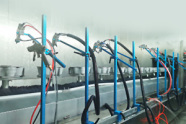
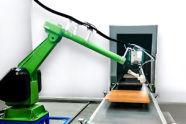
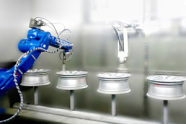
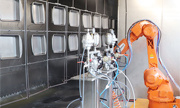
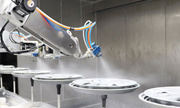
2.1 Spraying System (Spray Guns, Rotary Bells, Paint/Powder Supply)
Daily Maintenance (per shift):
- Check spray gun/bell nozzles for clogging or wear; clean residual paint
- Check paint/powder supply lines for leaks
- Verify electrostatic voltage and current readings
- For powder coating lines, check fluidization uniformity in the powder hopper
Preventive Maintenance (weekly/monthly):
- Disassemble spray gun nozzles and electrode needles; ultrasonic clean with dedicated solvent
- Inspect high-voltage cable insulation for damage
- Calibrate electrostatic voltage and current (using dedicated tester)
- Replace Venturi tubes in powder supply system (every 3-6 months)
- Clean filters in paint supply system (based on pressure differential)
Overhaul (annually):
- Fully disassemble spray guns/rotary bells; replace seals, electrode needles, and worn parts
- Check high-voltage module performance
- For robotic spray systems, check gearbox lubricant and replace gear oil
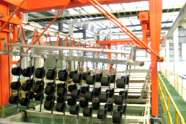
2.2 Conveyor System (Chain, Rails, Drive Units)
Daily Maintenance (per shift):
- Visually inspect chain for smooth operation and abnormal noise
- Check chain tensioning device
- Check hangers/fixtures for deformation or poor contact
Preventive Maintenance (weekly/monthly):
- Chain lubrication (use high-temperature chain oil, automatic or manual application)
- Inspect rail wear; measure chain elongation (cut chain if elongation exceeds 3%)
- Check drive motor and gearbox temperature rise and vibration
Overhaul (annually):
- Full inspection of sprocket and chain wear
- Replace severely worn chain links, hooks, and guide wheels
- Clean chain (using dedicated cleaner) and re-lubricate
- For power-and-free chains, check stop mechanisms, clutches, etc.
2.3 Curing Oven/Tunnel
Daily Maintenance (per shift):
- Check oven temperature display against actual measurement
- Listen for abnormal sounds from hot air circulation fans
- Check gas/electric heating system for abnormal alarms
Preventive Maintenance (monthly/quarterly):
- Clean powder and dust buildup from nozzles
- Check insulation for damage or detachment
- Check exhaust ducts and heat recovery heat exchangers for clogging
- Calibrate temperature sensors (thermocouples) and controllers
Overhaul (annually):
- Comprehensive oven temperature uniformity testing (using multi-point temperature recorder)
- Check burner/heating tube performance
- Replace aging insulation material
- Clean flue carbon deposits and duct interiors
2.4 Pre-treatment System (Tanks, Spray, Heating, Circulation)
Daily Maintenance (per shift):
- Check liquid levels in all tanks
- Check spray nozzles for clogging (visual or tactile)
- Verify heating system temperatures
- Observe bath clarity and abnormal foaming
Preventive Maintenance (weekly/monthly):
- Clean spray nozzles (remove and blow with compressed air or acid clean)
- Check tank welds for leaks
- Check circulation pump shaft seals for leaks
- Test bath concentration and pH; replenish chemicals
Overhaul (annually):
- Empty tanks and perform comprehensive cleaning
- Inspect heating tubes/heat exchangers for scaling
- Check tank corrosion (especially acid and phosphating tanks)
- Replace aged nozzles, pipes, and valves
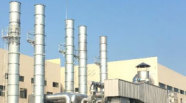
2.5 Environmental Equipment (Exhaust Treatment RTO/CO, Wastewater Treatment)
Daily Maintenance (per shift):
- Check RTO/CO operating temperature and pressure
- Check exhaust stack for unusual odors
- Check wastewater treatment system pH and level
Preventive Maintenance (monthly/quarterly):
- Clean dust accumulation on RTO heat storage media surfaces
- Check valve actuator operation flexibility
- Replace pre-filters in exhaust treatment system
- Conduct wastewater quality testing
Overhaul (annually):
- RTO heat storage media inspection and replacement of damaged bricks
- Comprehensive exhaust duct and valve seal inspection
- Deep cleaning of wastewater treatment system
2.6 Control System (PLC, HMI, Sensors, Instruments)
Daily Maintenance (per shift):
- Check HMI for alarm messages
- Verify key process parameters are within set ranges
Preventive Maintenance (monthly/quarterly):
- Backup PLC programs and recipe parameters
- Clean control cabinet interior (use vacuum or blow gun; pay attention to static prevention)
- Check terminal connections for looseness
- Calibrate critical sensors (temperature, pressure, flow)
Overhaul (annually):
- Comprehensive control system diagnostics
- Replace electronic components nearing end of life (e.g., batteries, capacitors)
- Upgrade control software versions if applicable
III. Key Principles for Establishing Maintenance Plans
3.1 Plan Based on Life Cycles
Each wear part has a recommended replacement cycle. Establish a "Wear Part Replacement Schedule":
| Component | Recommended Replacement Cycle | Basis |
|---|---|---|
| Spray gun nozzles | 3-6 months | Wear level |
| Seals | 12 months | Aging |
| Chain lubricant | Based on operating hours | Supplier recommendation |
| Filters (compressed air) | 6-12 months | Pressure differential |
| Venturi tubes (powder) | 3-6 months | Wear |
| Burners | 8-10 years | Service life |
3.2 Daily Records Drive Decisions
Establish maintenance logs to record:
- Date, content, and person responsible for each maintenance
- Names and quantities of replaced components
- Abnormal condition descriptions and corrective actions
- Trends in key parameters (e.g., oven temperature uniformity, film thickness deviation)
This data not only aids traceability but also helps predict future failures, enabling data-driven maintenance for intelligent coating systems.
3.3 Train Operators
Operators are the first line of defense. A well-trained operator can detect abnormal signals before failures occur:
- Unusual noise → bearing/chain issues
- Temperature anomalies → heating/circulation issues
- Pressure fluctuations → piping/pump issues
- Unusual odors → incomplete combustion/leakage
Recommend 2 maintenance skills training sessions per year for operators and maintenance personnel.
IV. Maintenance Cost Budget Reference
| Item | Estimated Annual Maintenance Cost (% of Equipment Investment) |
|---|---|
| Consumables (filters, seals, lubricants) | 1-2% |
| Wear parts replacement (nozzles, chains, belts) | 2-4% |
| Preventive maintenance labor | 1-3% |
| Overhaul/retrofit (every 2-3 years) | 5-10% (per occurrence) |
| Total Annual Maintenance Budget | 5-8% of equipment investment |
Conclusion
Coating line maintenance is not a cost—it is an investment. A well-maintained coating line can operate for over 15 years with lower failure rates, higher efficiency, and more stable quality—delivering far greater returns than a "fix-when-broken" passive approach.
Guangdong Chuangzhi Intelligent Equipment Co., Ltd. (Attractivechina) combines over 30 years of experience, a 35,548 m² factory, 79 invention patents, and a full suite of international certifications to deliver turnkey solutions for auto parts, cookware, wood furniture, metal, and industrial equipment coating needs.
Previous


Contact Us
No.2 Yingbin Avenue, High-tech District, Zhaoqing City, Guangdong Province, China.
Online Message