














Related News
17
2026
-
07
How to Maximize Coating Line Performance via Energy-Saving Design & Operation Optimization?
Author:
Chuangzhi Coating
In the composition of Total Cost of Ownership (TCO) for a coating production line, energy costs typically account for 25%-35% of the total, making it the largest single cost component—second only to, or even exceeding, the initial equipment purchase expenditure. With rising global energy price volatility, increasingly stringent carbon emission regulations, and the manufacturing industry's pursuit of "green factory" standards, energy-efficient design for coating lines has evolved from a "nice-to-have" feature to a core element of competitive advantage.
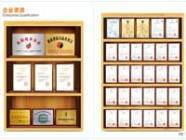
This guide aims to provide procurement decision-makers with a systematic framework for evaluating coating line energy efficiency, covering the complete pathway from equipment selection and process optimization to long-term operational management. As a National "Little Giant" Enterprise and National Intellectual Property Demonstration Enterprise, Guangdong Chuangzhi Intelligent Equipment Co., Ltd. (brand: Attractivechina) leverages over 30 years of industry experience, a patent portfolio of over 300 patents (including 79 invention patents), and the practical delivery of over 2,000 automated coating lines to integrate energy-saving concepts into every stage—from design to delivery. This article analyzes the core elements of coating line energy-efficient design from four dimensions: energy consumption structure analysis, key energy-saving technologies, economic benefit assessment, and supplier evaluation.

1. Energy Consumption Structure of a Coating Line: Where Are the Major Energy Consumers?
To effectively reduce energy consumption, it is first necessary to accurately identify the distribution of energy usage. The energy consumption of a typical automated coating line is mainly concentrated in the following areas:
| Energy Consumption Area | Share (Typical) | Primary Energy Form | Influencing Factors |
|---|---|---|---|
| Curing/Drying System | 40%-55% | Natural Gas / Electricity (Heating) | Oven insulation performance, heating efficiency, temperature profile design |
| Exhaust Gas Treatment (VOCs/RTO) | 15%-25% | Natural Gas / Electricity (Combustion + Fans) | Exhaust concentration, airflow design, heat recovery efficiency |
| Spray Booth HVAC System | 10%-18% | Electricity (Cooling/Heating/Air Supply) | Temperature/humidity control precision, fresh air ratio, air supply system efficiency |
| Conveyor System | 5%-10% | Electricity | Conveyor chain load, motor efficiency, operating speed |
| Compressed Air System | 3%-8% | Electricity | Compressor efficiency, piping leakage, air demand of equipment |
| Others (Lighting, Controls, etc.) | 2%-5% | Electricity | Equipment configuration and operational management |
Key Insight: The curing/drying system and exhaust gas treatment system together account for 60%-80% of total energy consumption, making them the top priorities for energy-saving retrofits. Any effective energy-saving plan must target these two areas first.
2. Key Technological Pathways for Energy-Efficient Coating Line Design
Based on the energy consumption analysis, the following five key technologies have been proven to significantly reduce the overall energy consumption of coating production lines.
2.1 High-Efficiency Energy-Saving Oven and Curing Technology
The oven is the largest energy consumer in a coating line, offering the most significant savings potential.
- High-Efficiency Insulation Structure: Using high-quality insulation rock wool/polyurethane sandwich panels, combined with optimized oven sealing design, can reduce heat loss by 30%-60%. Reputable suppliers employ double-layer insulation structures and thermal bridge-free design to ensure maximum heat retention within the oven.
- Precise Temperature Control and Zoned Heating: PLC and SCADA systems enable independent temperature control for different oven zones, preventing overheating. Combined with variable frequency drive (VFD) fans, airflow and circulation ratios are dynamically adjusted based on temperature demand, avoiding constant high-power operation.
- Low-Temperature Curing Technology: New coating formulations that cure at 140-190°C significantly reduce oven energy consumption compared to traditional curing temperatures of 224-232°C. Some UV/EB curing technologies even enable room-temperature curing, offering even greater energy reductions.
- Heat Recovery and Reuse: Installing gas-to-gas heat exchangers in oven exhaust ducts preheats fresh air using hot flue gas, recovering 15%-30% of exhaust heat loss. Some advanced solutions achieve full-process heat recovery, reducing overall energy consumption by 30%.
2.2 Intelligent Exhaust Gas Treatment Systems (VOCs Reduction and Energy Savings)
Exhaust gas treatment systems are both a regulatory necessity and a major energy consumer. The core of energy-efficient design lies in balancing "volume reduction" with "high efficiency."
- Concentrator Rotor + RTO Combined Process: Zeolite concentrator rotors concentrate low-concentration, high-volume VOCs exhaust into high-concentration, low-volume streams before they enter the Regenerative Thermal Oxidizer (RTO) for combustion. This significantly reduces RTO fuel consumption and fan power.
- Heat Recovery RTO: Modern RTO systems achieve over 95% heat recovery efficiency, using combustion-generated heat to preheat incoming exhaust gas, drastically reducing auxiliary fuel consumption.
- Source Reduction: Improving spray transfer efficiency (e.g., electrostatic spraying at 70%-85% vs. conventional air spraying at 40%-60%) reduces overspray and VOCs generation at the source, thereby lowering the treatment load and energy consumption of the exhaust gas system.
2.3 Intelligent Control Systems and AI Energy Optimization
Digital technologies offer new possibilities for coating line energy savings.
- AI Algorithm-Driven Energy Optimization: By collecting hundreds of real-time data points (temperature, pressure, flow, humidity, etc.), AI models dynamically adjust oven temperature setpoints, fan speeds, and exhaust treatment parameters, achieving "on-demand energy supply." Industry practice demonstrates that AI energy optimization systems can deliver 10%-20% overall energy savings.
- Digital Twin Technology: A virtual model of the paint shop simulates energy distribution under different production plans, helping managers identify optimal production scheduling and equipment operation combinations.
- Peak Shaving and Load Scheduling: Integrated with real-time electricity price signals, intelligent systems automatically schedule high-energy-consumption processes (e.g., oven preheating, RTO operation) during off-peak periods, reducing electricity costs.
2.4 High-Efficiency Spraying Technology and Transfer Efficiency Improvement
The transfer efficiency of the spraying process directly impacts paint consumption and VOCs emissions, indirectly affecting energy consumption.
- Electrostatic Spraying Technology: Compared to conventional air spraying, electrostatic spraying increases paint transfer efficiency from 40%-60% to 70%-85%, significantly reducing overspray and VOCs generation.
- Over Spray-Free Application Technology (OFLA) : This cutting-edge technology achieves 100% transfer efficiency, completely eliminating overspray. It can reduce energy consumption by approximately 25% (equivalent to saving about 1.7 GWh annually) while reducing CO₂ emissions by approximately 300 tons.
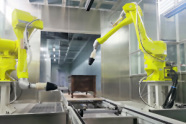
- Robotic Automated Spraying: Precise trajectory control and parameter optimization eliminate paint and energy waste associated with manual operations.
2.5 Air Management System Optimization
The energy consumption of spray booth HVAC systems is often overlooked, but its optimization potential is considerable.
- Recirculated Air Utilization: Maximizing the return air ratio while meeting process requirements reduces the amount of fresh air that needs conditioning. Practices at Toyota's Kentucky plant demonstrate that reducing outside air intake significantly lowers HVAC energy consumption.
- Variable Frequency Drives (VFDs): Supply and exhaust fans equipped with VFDs dynamically adjust airflow based on production load, avoiding constant full-speed operation.
- High-Efficiency Filtration Systems: Low-resistance, high-efficiency filter media reduce fan energy consumption.
3. Economic Benefit Assessment of Energy-Efficient Coating Lines
The value of energy-efficient design is ultimately reflected in sustained operating cost reductions. Below is an example of energy-saving benefit calculations for a coating shop with an annual output of 2 million standard metal parts:
| Energy-Saving Measure | Estimated Energy Savings | Estimated Annual Savings | Payback Period |
|---|---|---|---|
| High-Efficiency Insulation Oven + Low-Temperature Curing | Oven energy reduction 20%-30% | $80,000-150,000 | 1.5-2.5 years |
| Concentrator Rotor + RTO + Heat Recovery | Exhaust treatment energy reduction 15%-25% | $40,000-80,000 | 2-3 years |
| AI Energy Optimization Control System | Overall energy reduction 10%-20% | $50,000-120,000 | 1.5-2 years |
| Electrostatic Spraying (Transfer Efficiency Improvement) | Paint savings 15%-25% + indirect energy savings | $100,000-200,000 | 1-2 years |
| Total | Overall energy reduction 25%-40% | $270,000-550,000/year | 1.5-2.5 years |
Key Conclusion: Although the initial investment for a high-efficiency energy-saving coating line may be 10%-25% higher than conventional alternatives, the substantial annual operating cost savings yield a payback period typically between 1.5 and 2.5 years. Over its subsequent 15-20 year service life, the cumulative energy savings will be several times the initial investment difference.
4. Key Points for Evaluating Supplier Energy-Saving Capabilities
When selecting a coating line supplier, buyers should incorporate energy-efficient design capability as a core evaluation dimension, focusing on the following aspects:
- Systematic Energy Consumption Assessment Capability: Can the supplier provide a detailed energy consumption assessment report during the proposal phase, rather than vague "energy-saving" promises? A reliable supplier should offer quantified energy consumption predictions and cost analyses based on your production volume, product dimensions, and local energy prices.
- Mastery of Core Energy-Saving Technologies: Does the supplier hold patented technologies related to energy efficiency, such as high-efficiency oven design, heat recovery systems, or AI energy optimization algorithms? Patent counts (especially invention patents) are hard indicators of technological strength.
- Verified Energy-Saving Case Studies: Request actual energy consumption data from delivered projects rather than relying solely on theoretical calculations. Whenever possible, arrange visits to already operational energy-efficient coating lines for on-site verification.
- Lifecycle Energy Efficiency Services: Does the supplier offer not only equipment but also ongoing energy monitoring and optimization services—for example, through remote data monitoring platforms that continuously track energy performance and suggest improvements?
- Certifications and Standards Compliance: Does the supplier hold ISO 50001 Energy Management System Certification? Are their equipment compliant with energy efficiency standards such as GB 18613? These certifications serve as external endorsements of their energy-saving commitments.
5. Common Energy-Saving Misconceptions and Avoidance Suggestions
- Misconception 1: "Energy saving simply means buying high-efficiency motors and VFDs."
- Fact: Energy saving is a systematic engineering effort requiring coordinated optimization across multiple areas—oven design, exhaust treatment processes, control systems, and spraying technology. Scattered "energy-saving components" cannot deliver system-level efficiency improvements.
- Misconception 2: "Energy-saving solutions increase initial investment too much."
- Fact: While energy-efficient design adds some upfront cost, the payback period is typically within 2 years. More importantly, over the equipment's 15-20 year service life, the cumulative savings far outweigh the initial investment difference. We recommend using Total Cost of Ownership (TCO) analysis during project evaluation, rather than comparing only initial quotes.
- Misconception 3: "Energy saving is solely about equipment; production management doesn't matter."
- Fact: Operational management has an equally significant impact on actual energy consumption. Rational production scheduling (e.g., batching production to reduce frequent oven startups/stops), correct parameter settings, and timely maintenance all significantly affect energy levels. Reputable suppliers provide systematic energy management training upon delivery.
Conclusion
Energy-efficient design for coating production lines has evolved from an "optional extra" to a core competitive differentiator. In the context of rising global energy costs and tightening carbon emission regulations, choosing a supplier with systematic energy-efficient design capabilities not only affects your current operating costs but also determines your company's market competitiveness for the next decade.
Guangdong Chuangzhi Intelligent Equipment Co., Ltd. (Attractivechina) , as a national-level "Little Giant" Enterprise with over 300 patents (including 79 invention patents), deeply integrates energy-saving concepts into the design and manufacturing of coating lines. Our 3D AI-driven intelligent coating equipment (a domestic pioneer, already deployed at BYD's production base) uses AI algorithms to optimize spraying parameters and energy configurations in real-time, demonstrating significant energy-saving benefits in cutting-edge fields such as new energy vehicles. Simultaneously, we have accumulated extensive patented technologies and practical experience in oven insulation structures, heat recovery systems, and intelligent control algorithms, committed to providing global customers with high-efficiency, energy-saving, and sustainable coating solutions.
We invite you to share your specific product parameters and production planning—our engineering team will provide you with a comprehensive assessment report containing detailed energy consumption calculations, energy-saving solution designs, and return-on-investment analyses.
Previous


Contact Us
No.2 Yingbin Avenue, High-tech District, Zhaoqing City, Guangdong Province, China.
Online Message