













Related News
07
2026
-
08
How Does a Coating Line Work? – Core Processes, System Configuration, and Selection Considerations
Author:
Chuangzhi Coating
For manufacturing enterprises planning to procure a coating production line, understanding "how a coating line works" is not only a required course for the technical team but also the foundation for making sound investment decisions. An automatic coating line is not a simple stacking of equipment; it is a precisely coordinated system consisting of pre-treatment, coating, curing, conveying, and control systems. The parameter settings and matching of each stage directly affect the final coating quality, production efficiency, and operating costs.
This guide aims to provide procurement decision-makers and engineering technicians with a clear analysis of the working principles and system composition of a coating line. As a national-level "Little Giant" Enterprise, Guangdong Chuangzhi Intelligent Equipment Co., Ltd. (brand: Attractivechina) leverages over 30 years of industry experience and the delivery of over 2,000 automated coating lines, based on actual project data, to break down the core processes and key selection points of coating lines.

1. The Core Process Flow of a Coating Line
A typical automated coating production line, whether applied to automotive parts, cookware, metal furniture, or industrial equipment, has a highly consistent basic process flow. Understanding this flow is the first step in equipment selection and configuration optimization.
| Process Stage | Core Function | Key Equipment/Modules | Main Control Parameters |
|---|---|---|---|
| Pre-treatment | Remove oil, rust, and oxide scale from the workpiece surface; form a protective/conversion film to enhance coating adhesion and corrosion resistance | Degreasing tank, water wash tank, phosphating/silanation tank, drying oven | Bath concentration, temperature, treatment time, spray pressure |
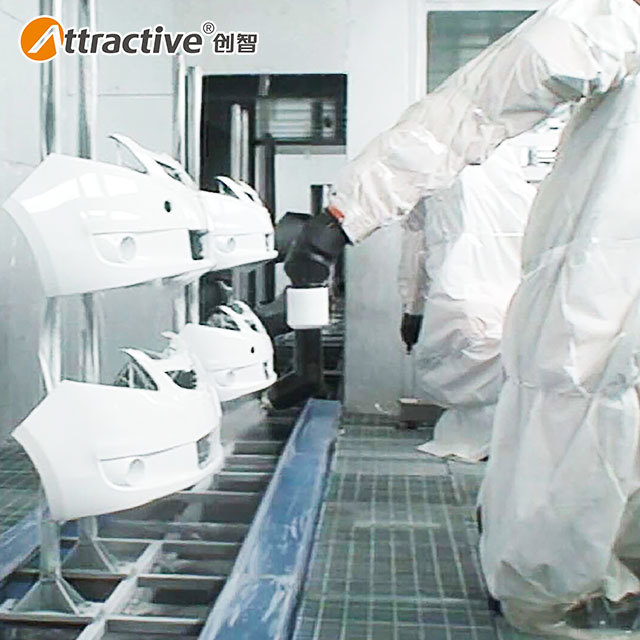
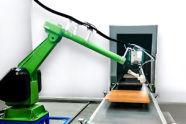
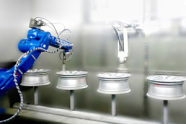
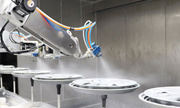
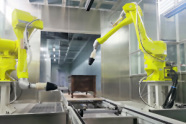
| Spraying | Apply coating material uniformly and efficiently onto the workpiece surface to form a film of required thickness | Spray booth, spray guns (air/electrostatic/airless), robots/reciprocators, paint/powder supply system | Spraying voltage, flow rate, atomization air pressure, gun trajectory, temperature & humidity |
| Curing/Drying | Allow solvent evaporation or cross-linking reactions in the coating film to form a hard solid coating | Curing oven (hot air/infrared/UV), oven tunnel, heating system | Temperature profile, baking time, heating rate, temperature uniformity |
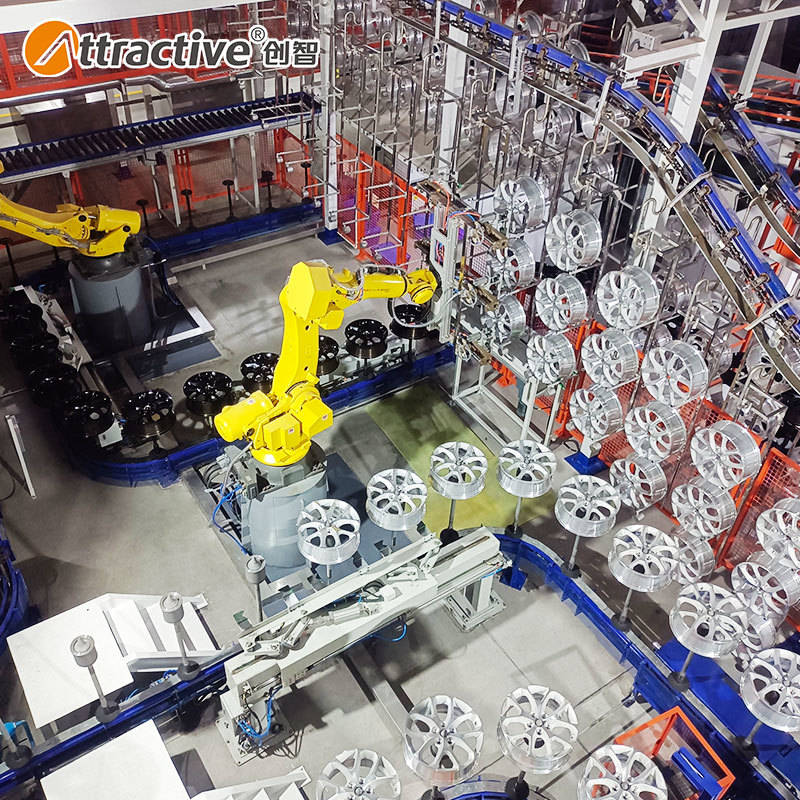
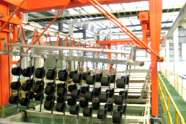
| Conveying | Enable automatic, continuous, and stable transfer of workpieces between process stages | Overhead conveyor chain, power-and-free chain, floor conveyor, lifting/transfer devices | Line speed, accumulation accuracy, cycle time control, load capacity |
| Control System | Coordinate the collaborative work of subsystems, monitor operating status, and achieve precise control of process parameters and data traceability | PLC, SCADA system, HMI, sensors, variable frequency drives | Program logic, communication protocols, data acquisition points, alarm settings |
Key Insight: The overall performance of a coating line is not determined by its strongest link, but is constrained by its weakest link. For example, even with a top-tier coating robot, inadequate pre-treatment will still result in substandard coating adhesion and corrosion resistance.
2. Detailed Explanation of Key System Modules
2.1 Pre-treatment System: The Foundation of Coating Quality
Pre-treatment is the most easily overlooked yet critical stage in the coating process. Its goal is to obtain a clean, uniform surface with appropriate roughness and chemical activity to ensure optimal coating adhesion and anti-corrosion performance.
Main Process Types and Applicable Scenarios:
| Pre-treatment Type | Typical Process Flow | Applicable Substrates | Features and Selection Suggestions |
|---|---|---|---|
| Spray Type | Pre-degreasing → Main degreasing → Water wash → Surface conditioning → Phosphating/Silanation → Water wash → Passivation → Drying | Sheet metal, relatively simple-shaped workpieces | Moderate investment, suitable for high-volume continuous production, but limited effectiveness in treating complex internal cavities |
| Immersion Type | Similar to spray type, but using bath immersion | Workpieces with complex shapes, deep cavities, or blind holes | More thorough treatment, complete coverage without dead corners, but requires larger floor space and higher investment |
| Combined Type | Spray + immersion combined | Workpieces with extremely high surface quality requirements | Combines advantages of both, best results, but highest investment |
Key Selection Parameters:
- Treatment Temperature: Room temperature (energy-saving) to medium temperature (40-60°C, faster reaction)
- Treatment Time: Typically 2-10 minutes
- Number of Tanks: Determined by process complexity and output requirements (typically 5-10 stations)
2.2 Spray System: The Core Determining Coating Appearance and Efficiency
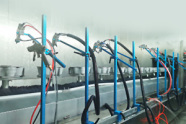
The spray system is the core value-creating unit of the coating line. Its configuration directly determines the coating's appearance quality, material utilization efficiency, and production efficiency.
Comparison of Common coating Technologies:
| Spraying Technology | Transfer Efficiency (Typical) | Applicable Coatings | Main Advantages | Main Limitations |
|---|---|---|---|---|
| Air Spraying | 40%-60% | Solvent-based, waterborne coatings | Low equipment investment, wide applicability | High paint waste, high VOCs emissions, dependent on operator skill |
| Air-Assisted Airless | 50%-70% | High-solid, waterborne coatings | Better efficiency than air spraying, good coating quality | More complex equipment, higher investment |
| Electrostatic Spraying | 70%-85% | Solvent-based, waterborne, powder coatings | Very high paint utilization, excellent wrap-around effect, saves paint | Only suitable for conductive substrates, requires good workpiece grounding |
| Powder Electrostatic Spraying | >95% | Powder coatings | Nearly zero VOCs, recoverable overspray, excellent coating performance | Relatively complex color change, thicker film build |
| Airless Spraying | 50%-70% | High-viscosity coatings | High film build per pass, high production efficiency | Relatively coarse atomization, not suitable for fine appearance requirements |
Selection Suggestion: Under the premise of meeting coating performance requirements, priority should be given to coating technologies with higher transfer efficiency to reduce paint consumption, VOCs emissions, and hazardous waste treatment costs. For high-volume production of metal substrates, electrostatic coating is a widely recognized high-benefit choice.
2.3 Curing System: The Key to Determining Final Coating Performance
The curing process is the "final step" where the coating obtains its final mechanical strength, chemical resistance, and decorative properties. Improper curing can lead to poor adhesion, insufficient hardness, discoloration, or chalking.
Comparison of Curing Methods:
| Curing Method | Heating Principle | Typical Applications | Advantages | Disadvantages |
|---|---|---|---|---|
| Hot Air Circulation | Heats air and transfers heat through convection | Powder coatings, waterborne coatings, solvent-based coatings | Good temperature uniformity, suitable for complex workpieces | Slow heating/cooling, large thermal inertia, higher energy consumption |
| Infrared Radiation | Uses infrared electromagnetic waves to directly heat the coating and the workpiece surface layer | Waterborne coatings, powder coatings (thin parts) | Fast heating speed, high energy density, suitable for rapid curing | Limited penetration, uneven heating for complex-shaped workpieces |
| Ultraviolet (UV) Curing | Uses ultraviolet light to trigger cross-linking reactions of photoinitiators in the coating system | UV-specific coatings (wood, plastic, metal) | Extremely fast (seconds), low-temperature curing, energy-saving | Requires specific UV coatings, high equipment investment, shadowing effects |
Key Selection Parameters:
- Curing Temperature: Depends on coating type (powder typically 180-200°C, waterborne typically 80-160°C, UV at room temperature)
- Curing Time: Determined by coating requirements, oven length, and line speed
- Temperature Uniformity: Temperature deviation at various points in the oven should be controlled within ±5°C, a critical indicator for coating consistency.
3. Factory Utility Conditions: The Hardware Foundation That Must Be Clarified Before Selection
Before finalizing the coating line technical solution, the buyer must provide or confirm the following factory conditions to the supplier; otherwise, the equipment may not be installable or may operate inefficiently:
| Item | Key Parameters | Impact on Coating Line Design |
|---|---|---|
| Factory Floor Space | Available length, width, height; column spacing; material entry/exit locations | Determines line layout (straight/L-shaped/U-shaped) and module dimensions |
| Power Supply | Voltage, number of phases, frequency, total installed capacity, reserved capacity | Determines power supply design for motors, heating systems, and control systems |
| Energy Types | Natural gas (calorific value/pressure), electricity (capacity), steam (pressure/temperature), compressed air (pressure/flow) | Determines selection of ovens, burners, pneumatic components |
| Environmental Requirements | VOCs emission limits, wastewater discharge standards, noise limits | Determines selection and investment in exhaust/wastewater treatment equipment |
| Environmental Conditions | Workshop temperature, humidity range; presence of corrosive gases | Affects equipment material selection and protection rating design |
4. Frequently Asked Questions (FAQ)
Q: How do I determine which type of coating line is suitable for my factory?
A: A comprehensive evaluation of workpiece material, dimensions, output targets, coating quality requirements, and budget is needed. It is recommended to contact a professional supplier (such as Attractivechina) for on-site surveys and needs analysis to obtain a customized solution.
Q: How long is the service life of a coating line?
A: With proper maintenance, a well-engineered coating line can operate efficiently for 15-20 years or more. This depends critically on the quality of core components, maintenance standards, and operating intensity.
Q: Is retrofitting an existing line more cost-effective than building a new one?
A: It depends. If the factory infrastructure, such as the building structure and conveyor system, is in good condition, modular upgrades (e.g., replacing spray booths, adding robots, upgrading control systems) are generally more cost-effective than a completely new build, with a shorter payback period.
Q: What technical documents should I request from the supplier when procuring a coating line?
A: At minimum, the supplier should provide: process flow diagrams, equipment layout drawings, electrical schematics, operation and maintenance manuals, a list of key components, energy consumption assessment reports, and quality certificates (ISO, CE, etc.).
Conclusion
Understanding "how a coating line works" is the first step toward scientific selection and successful operation. A coating line is an organic whole where the five major systems—pre-treatment, coating, curing, conveying, and control—operate in synergy. Its ultimate performance depends on the proper matching and precise control of these systems, not on the high specification of a single device.
When selecting a supplier, priority should be given to partners capable of providing full-process process design, in-house manufacturing of core equipment, control system integration, and long-term service support. This not only ensures efficient equipment operation but also lays the foundation for future upgrades and continuous optimization of the production line.
Guangdong Chuangzhi Intelligent Equipment Co., Ltd. (Attractivechina) , as a national-level "Little Giant" Enterprise with over 300 patents, provides a full-process coating solution from pre-treatment to curing. Our strengths include:
- Full-Chain In-House Capabilities: Covering R&D, design, manufacturing, installation, commissioning, and after-sales service.
- Data-Driven Design Foundation: Leveraging experience from over 2,000 line deliveries, with mature industry-specific process databases.
- Verified Performance Data: Actual projects achieving approximately 10% energy savings, a service life 3 times longer than traditional lines, and a yield rate up to 98%.
- Global Delivery Experience: Products exported to more than ten countries, including Vietnam, Indonesia, Brazil, UAE, Turkey, Thailand, Saudi Arabia, Argentina, Mexico, India, the United States, Russia, and Singapore.
We invite you to share your specific product details and factory conditions—our engineering team will provide you with a preliminary proposal including process flow diagrams, layout drafts, and energy consumption estimates.


Contact Us
No.2 Yingbin Avenue, High-tech District, Zhaoqing City, Guangdong Province, China.
Online Message