












Related News
04
2026
-
09
Aluminum Pot Coating Line: Improving Efficiency and Surface Quality in Modern Cookware Manufacturing
Author:
Chuangzhi Coating
In the modern cookware industry, surface treatment has become an essential part of aluminum pot manufacturing. Aluminum cookware is widely used because of its light weight, excellent thermal conductivity, and convenient processing characteristics. However, untreated aluminum surfaces can be vulnerable to scratches, corrosion, and wear during daily use. For this reason, an efficient and reliable aluminum pot coating line plays an important role in improving product performance, appearance, and service life.
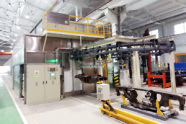
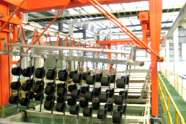
An aluminum pot coating line is designed to provide an integrated production process for different types of cookware. Depending on production requirements, the system can be used for non-stick pans, kettles, rice cooker inner pots, baking utensils, enamel cookware, and other aluminum or composite cookware products. By combining pretreatment, surface cleaning, spraying, drying, curing, cooling, and conveying processes, the production line helps manufacturers achieve stable and repeatable coating quality.

Surface Pretreatment as the Foundation of Coating Quality
The coating performance of an aluminum pot depends heavily on the condition of its surface before spraying. Oil, dust, oxide layers, and other contaminants can reduce coating adhesion and affect the final appearance of the product. Therefore, pretreatment equipment is an important part of an aluminum pot coating line.
A typical process may include loading, cleaning, degreasing, rinsing, surface treatment, drying, cooling, and transfer. Some production lines can also integrate automatic dedusting or sandblasting processes according to the material and coating requirements. Proper pretreatment creates a cleaner and more suitable surface for the following coating operation.
This process is particularly important for non-stick cookware. A stable surface condition can improve the bonding strength between the aluminum substrate and the primer or functional coating, helping reduce problems such as peeling, uneven coverage, or premature wear.
Automated Spraying for Consistent Coating Application
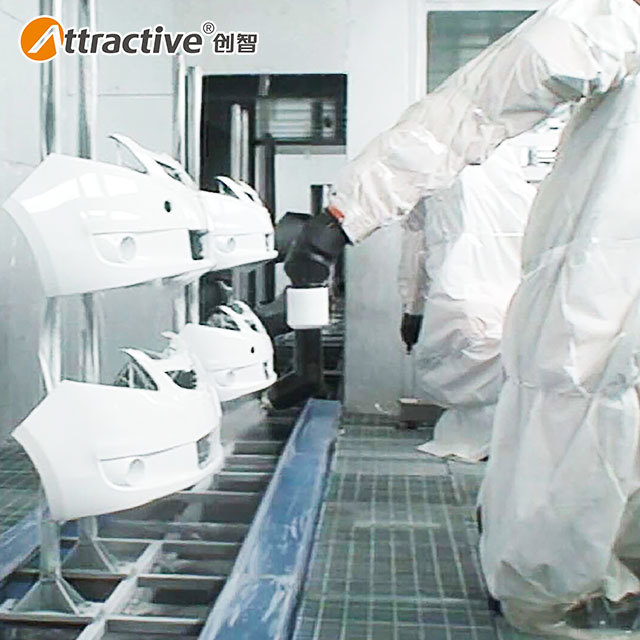
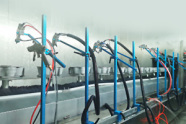
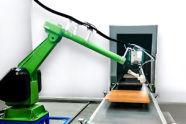
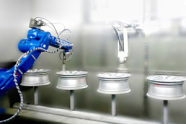
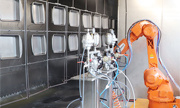
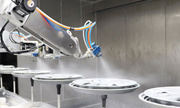
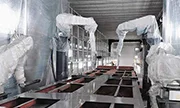
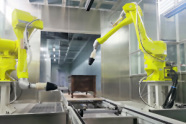
Traditional manual spraying can create variations in coating thickness and material consumption. An automated aluminum pot coating line provides a more controlled solution through fixed spray guns, reciprocating equipment, or robotic spraying systems.
Automated spraying can help manufacturers maintain a more uniform coating layer across large production volumes. Process parameters such as spraying distance, movement speed, coating flow, and application time can be adjusted according to the workpiece and coating material.
For cookware manufacturers, consistent coating thickness is important not only for appearance but also for functional performance. Non-stick coatings, decorative coatings, and high-temperature-resistant coatings all require controlled application conditions. A well-designed coating system can improve production consistency while reducing unnecessary coating waste.
Integrated Drying and High-Temperature Curing
After spraying, cookware products must go through drying and curing stages to develop the required coating properties. An aluminum pot coating line can integrate multiple drying and curing sections according to the selected coating process.
For example, an inner pot coating process may include automatic dedusting, preheating, primer spraying, primer drying, cooling, secondary coating application, high-temperature curing, and final cooling. An outer pot coating process may involve primer spraying, drying, top-coat spraying, additional drying, and final curing.
Temperature control is a key factor during these stages. Stable heating conditions help ensure that the coating forms a consistent surface and reaches the required adhesion and durability level. Depending on the production design, heating systems may use electricity, natural gas, or other suitable energy sources.
Flexible Design for Different Cookware Production Requirements
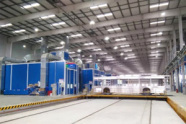
Different cookware manufacturers have different production capacities, workpiece sizes, coating materials, and factory layouts. For this reason, aluminum pot coating lines are commonly designed as customized production systems.
The line configuration can be adjusted according to the customer's required output, product dimensions, automation level, spraying method, and environmental control requirements. Conveying systems can also be designed to connect individual processing stations into a continuous production flow.
This flexibility allows manufacturers to build a production line that matches their actual manufacturing conditions rather than using a completely fixed equipment configuration. Both medium-scale and large-scale cookware production operations can benefit from a properly planned automated coating system.
Supporting Efficient and Sustainable Cookware Manufacturing
As cookware manufacturers face increasing requirements for product consistency, production efficiency, and environmental management, automated coating equipment is becoming more important. Modern aluminum pot coating lines can reduce manual handling, improve process stability, and support better control of coating consumption.
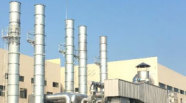
Integrated ventilation, exhaust treatment, temperature management, and automated conveying systems can also contribute to a more organized production environment. By optimizing the complete coating process, manufacturers can reduce operational interruptions and improve the consistency of finished cookware.
The aluminum pot coating line is therefore more than a spraying machine. It is a complete surface treatment solution that connects pretreatment, coating application, drying, curing, cooling, and material handling into one coordinated production process.
With the continued development of non-stick cookware, functional coatings, and automated manufacturing technologies, aluminum pot coating lines will continue to support cookware producers in improving quality, increasing production efficiency, and adapting to changing market requirements.
Previous


Contact Us
No.2 Yingbin Avenue, High-tech District, Zhaoqing City, Guangdong Province, China.
Online Message