











Related News

16
2026
-
10
How to Choose a Powder Coating Line for Efficient Industrial Production
Author:
Chuangzhi Coating
A powder coating line is an important investment for manufacturers seeking consistent surface finishes, reliable production efficiency, and better control over operating costs. By integrating surface pretreatment, automated coating equipment, conveyor systems, curing ovens, and quality inspection, a complete coating line can support continuous production while improving the appearance and durability of finished products. For automotive components and other industrial workpieces, selecting the right system requires careful consideration of material properties, product dimensions, coating requirements, and expected production capacity.

Understanding the Main Functions of a Powder Coating Line
A modern powder coating line is designed to coordinate multiple production stages within one integrated system. Each stage contributes to the final coating quality, from preparing the workpiece surface to curing the applied coating. Depending on the product and coating method, the system may include cleaning equipment, drying stations, automatic spraying units, conveyor equipment, curing ovens, cooling sections, and inspection areas.
For manufacturers handling automotive parts, metal components, and other industrial products, a well-planned production line helps reduce unnecessary handling and maintain consistent processing conditions. Automated equipment can also improve repeatability and reduce dependence on manual spraying operations. The specific configuration should be determined by the workpiece material, production volume, coating specification, and available factory space.
Surface Pretreatment and Coating Quality
Surface pretreatment is a critical step in achieving reliable coating performance. Oil, dust, residues, and other contaminants may affect coating adhesion or create visible defects if they are not properly removed. A suitable pretreatment process can include degreasing, rinsing, pure water washing, and drying, depending on the workpiece material and the coating system.
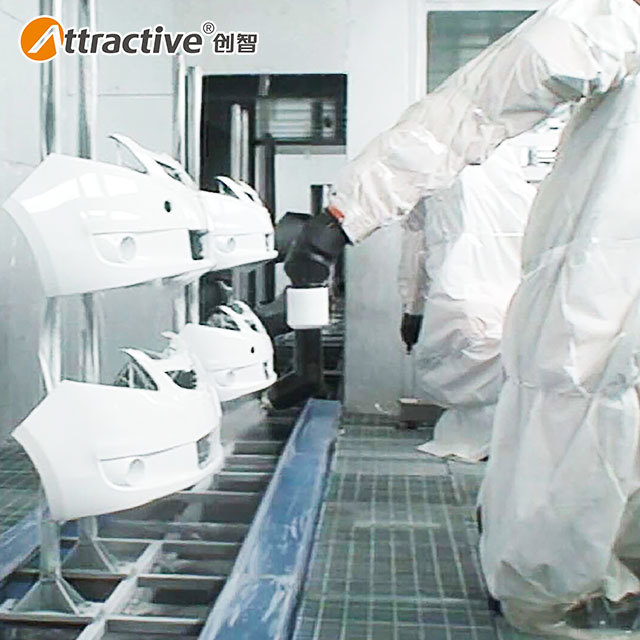
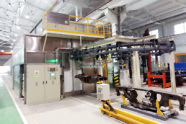
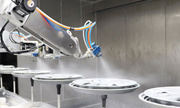
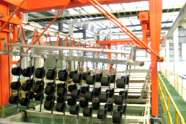
The product solution featured by Attractivechina demonstrates an automotive spraying process that integrates cleaning, rinsing, drying, cooling, surface treatment, and subsequent coating operations. This type of process planning provides a useful reference for manufacturers developing an automated coating line. However, powder coating and liquid paint spraying use different application technologies, so the actual pretreatment and application equipment must be selected according to the chosen coating process.
Automation for Stable and Repeatable Production
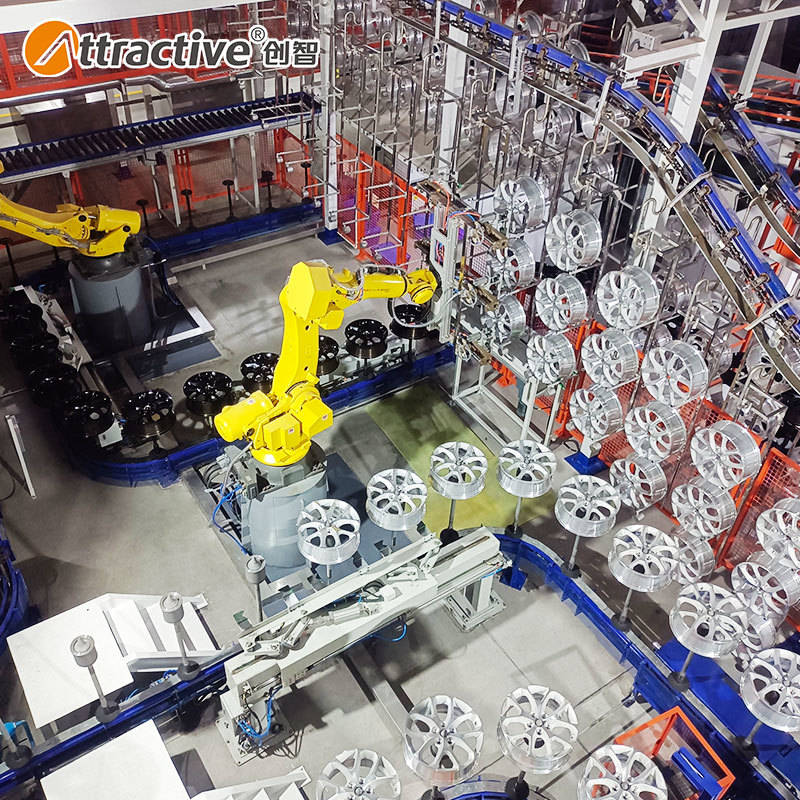
Automation is one of the main considerations when planning a powder coating line. Automatic spray equipment and appropriately designed fixtures help maintain consistent distances and coating coverage across repeated workpieces. Conveyor systems coordinate the movement of products between processing stations, helping manufacturers establish a more predictable production rhythm.
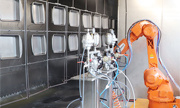
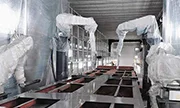
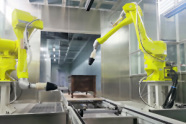
For complex automotive components, robot-assisted spraying may be considered when the workpiece geometry, coating specification, and production volume justify the investment. Fixture design, conveyor speed, spray parameters, and curing conditions should be evaluated together rather than selected independently. A balanced system helps manufacturers reduce process variation while making better use of labor and production space.

Conveyor Systems and Production Capacity
The conveyor system directly affects the workflow and throughput of an industrial coating line. Its layout should reflect the dimensions, weight, shape, and hanging requirements of the workpieces. Appropriate spacing between fixtures allows sufficient time for pretreatment, coating, drying, or curing without unnecessary congestion.
When planning capacity, manufacturers should consider more than the nominal conveyor speed. Loading and unloading time, color changes, maintenance requirements, product variation, and downstream inspection can all influence actual output. A properly engineered powder coating line should balance the capacity of each station so that one slow process does not limit the entire production system.
For projects involving automotive fuel tanks, plastic exterior parts, metal components, or similar products, the workpiece specifications must be confirmed before finalizing the conveyor route and equipment arrangement. These details help determine the installation dimensions and the most practical production configuration.
Curing and Energy Management
Curing is essential to achieving the required coating properties in a powder coating process. The oven must provide suitable temperature conditions and sufficient curing time for the selected powder material and workpiece. Temperature uniformity, airflow, heat distribution, and the thermal characteristics of the product all influence the final result.
Energy consumption is another important factor in long-term operating costs. Insulation, oven layout, heating method, production scheduling, and heat recovery options should be evaluated during system design. The best configuration depends on the coating material, production targets, factory utilities, and local operating conditions. Any energy-saving expectations should be verified through engineering calculations and project-specific testing.
Customization for Different Industrial Applications
A standard coating line may not satisfy every manufacturing requirement. Different products can require different pretreatment methods, spray technologies, fixture structures, conveyor speeds, and curing parameters. A customized solution allows these elements to be coordinated around the actual workpiece and production process.
Attractivechina's automotive fuel tank spraying production line provides a reference for integrated automotive coating applications. The published solution describes a process involving cleaning, rinsing, drying, cooling, surface treatment, primer application, intermediate coating, top coating, curing, and final inspection. The listed workpieces also include automotive bumpers, wheel hubs, wheel hub covers, fuel tanks, and frames. Actual equipment selection and process sequencing should be confirmed according to the specific product and coating requirements.
Although the featured solution focuses on automotive spraying, the broader engineering principles are also relevant when planning other industrial coating systems. Buyers should clarify whether they need electrostatic powder coating, liquid paint spraying, or a combination of processes before requesting a quotation.
How to Select a Reliable Powder Coating Line Supplier
Choosing a supplier involves more than comparing the initial equipment price. Buyers should evaluate engineering experience, process design capability, equipment integration, customization options, installation support, spare parts availability, and after-sales service. A supplier should be able to explain how the proposed line addresses the customer's workpieces, target output, quality standards, and factory conditions.
Before placing an order, manufacturers should prepare key information such as product drawings, workpiece materials, maximum dimensions, daily production targets, coating specifications, available installation space, and local power and heating conditions. These details make technical communication more efficient and help reduce the risk of design changes during installation.
A complete project proposal should define the process flow, equipment scope, utility requirements, installation conditions, commissioning procedures, and acceptance criteria. Clear technical documentation helps both parties establish realistic expectations and provides a practical basis for evaluating production performance after commissioning.
Building a More Efficient Coating Production System
A well-designed powder coating line brings together pretreatment, application equipment, conveying, curing, and quality control in a coordinated workflow. Its performance depends on how effectively these elements match the products being manufactured. Careful process planning can help improve coating consistency, reduce unnecessary handling, and support stable production.
For automotive and industrial manufacturers planning a new coating project or upgrading an existing facility, Attractivechina offers customized coating line solutions based on specific production requirements. By confirming workpiece details, coating technology, output targets, and factory conditions at the beginning of the project, buyers can identify a suitable system configuration and make more informed investment decisions.


Contact Us
No.2 Yingbin Avenue, High-tech District, Zhaoqing City, Guangdong Province, China.
Online Message