














Related News

16
2026
-
10
How to Choose an E-Coating Line for Efficient and Consistent Surface Finishing
Author:
Chuangzhi Coating
What Is an E-Coating Line?
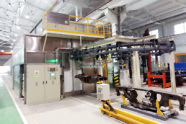
An e-coating line is an automated surface finishing system that uses electrical current to deposit paint onto conductive workpieces. Also known as an electrophoretic coating line, it is widely used for metal components that require uniform coverage, corrosion resistance, and consistent coating quality. Typical applications include automotive parts, hardware, electrical components, and industrial metal products.
Unlike conventional spray painting, e-coating uses an immersion tank and an electric field to distribute coating material across accessible surfaces, including complex shapes and recessed areas. This process can help manufacturers improve coating consistency while reducing material waste and manual finishing work.

Key Processes in an E-Coating Line
A complete e-coating line generally integrates several stages to create a stable and repeatable production process.
1. Pretreatment
Pretreatment removes oil, dirt, and other contaminants from the workpiece surface. Depending on the material and production requirements, the process may include degreasing, rinsing, surface conditioning, and conversion coating. Proper pretreatment is essential for coating adhesion and long-term corrosion protection.
2. Electrophoretic Coating
Clean workpieces enter the e-coating tank, where an electrical field drives charged paint particles toward the conductive surface. Tank circulation, electrical parameters, paint condition, and immersion time all influence coating thickness and appearance. Accurate process control helps achieve consistent results across different batches.
3. Rinsing and Paint Recovery
After deposition, the workpieces pass through rinsing stages to remove excess coating material. Suitable rinsing and recovery arrangements can reduce paint loss and help maintain a cleaner production environment.
4. Curing and Drying
The coated parts enter a curing oven, where controlled heating allows the coating film to develop its required properties. Oven temperature, heating time, and conveyor speed should be matched to the coating formulation and workpiece characteristics.
5. Inspection and Unloading
The finished products are checked for coverage, appearance, film thickness, and other quality requirements before unloading. Integrating inspection into the production workflow helps identify defects early and supports stable output.
Benefits of an Automated E-Coating Line
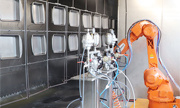
An automated e-coating line can improve production consistency by coordinating pretreatment, immersion coating, rinsing, curing, and material transfer. Compared with labor-intensive finishing processes, automation can reduce repetitive handling and help manufacturers maintain more predictable production cycles.
Uniform coating coverage is another important advantage, particularly for metal components with complicated geometries. When the workpiece design, pretreatment process, and electrical parameters are properly matched, electrophoretic coating can provide reliable protection across a wide range of applications.
Energy use and operating costs should also be considered. Conveyor design, oven insulation, heat recovery, tank management, and maintenance planning can influence long-term operating efficiency. A well-designed system should balance coating quality, production capacity, resource consumption, and ease of maintenance.
How to Select the Right E-Coating Line
Before investing in an e-coating line, manufacturers should evaluate workpiece dimensions, material types, required coating performance, daily production volume, and available factory space. These factors determine the appropriate tank size, conveyor configuration, automation level, and curing capacity.
It is also important to confirm compatibility between the coating material and the workpiece. Pretreatment chemicals, electrical settings, and curing conditions must be selected according to the production requirements rather than using one fixed configuration for every application.
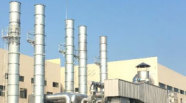
For manufacturers planning a complete surface finishing project, an integrated equipment solution may include pretreatment systems, coating equipment, curing ovens, conveyors, and environmental protection equipment. Customization can help connect individual process stages into a practical production layout.

Customized Coating Equipment and Technical Support
Attractivechina provides customized coating production line solutions and painting equipment for different industrial applications. Its product portfolio includes wood coating systems, spraying equipment, pretreatment equipment, curing ovens, conveyors, and environmental protection equipment. The company also offers project-oriented solutions based on customer production needs.
Although e-coating and conventional spray painting use different coating principles, both require coordinated equipment, suitable process parameters, and reliable material handling. When planning an e-coating project, buyers should confirm that the supplier can provide the specific electrophoretic tanks, electrical control systems, rinsing arrangements, and curing equipment required for the intended process.
Technical support, spare parts availability, maintenance planning, and opportunities for future process upgrades should also be included in supplier evaluation. A carefully planned coating line can help manufacturers achieve dependable surface quality, efficient production, and sustainable long-term operation.
Next Page


Contact Us
No.2 Yingbin Avenue, High-tech District, Zhaoqing City, Guangdong Province, China.
Online Message