













Related News

17
2026
-
07
Spray Paint Production Line: An Efficient Solution for Consistent Surface Finishing
Author:
Chuangzhi Coating
Improving Manufacturing Efficiency with a Spray Paint Production Line
A modern spray paint production line helps manufacturers improve coating consistency, production efficiency, and finished product quality. For industries that process wood furniture, musical instruments, panels, and other decorative components, an integrated painting system can reduce repetitive manual work while maintaining a stable surface finish.
Rather than relying on separate machines and disconnected operations, a complete coating line connects surface preparation, primer application, spraying, drying, inspection, and unloading into an organized workflow. This integrated approach helps manufacturers manage production schedules, improve material utilization, and maintain consistent quality across different batches.

Flexible Coating Solutions for Different Products
Different workpieces require different coating processes. Solid wood, medium-density fiberboard, veneer, and particleboard may vary in surface texture, paint absorption, shape, and finishing requirements. A well-designed spray paint production line should therefore be configured around the actual products and production targets.
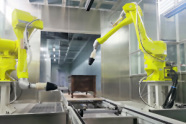
For wood furniture and musical instruments, the process may include multiple primer applications, surface wiping, brushing, color adjustment, and topcoat spraying. These stages help create a smooth appearance while supporting the required decorative effect and surface protection.
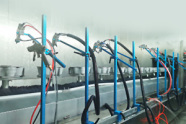
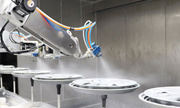
Spraying equipment can also be configured for different paint types, including suitable water-based and solvent-based coatings. Nozzle selection, spraying parameters, and equipment settings should be adjusted according to the coating material and workpiece geometry to achieve uniform coverage and reduce unnecessary paint consumption.
Key Equipment and Production Workflow
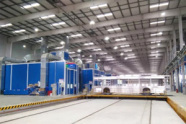
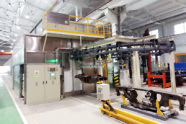
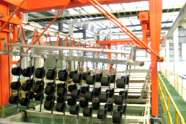
An integrated painting system may include loading stations, pretreatment equipment, spray booths, automatic or manual spraying devices, conveyors, drying equipment, and final inspection areas. Each component serves a specific purpose, and the complete layout should match the factory's available space, required output, and coating specifications.
The production process generally begins with loading and surface preparation. Primer is then applied to help establish the foundation for subsequent coatings. Depending on the product, additional primer layers, wiping, brushing, and color application may follow before the final topcoat is sprayed. The coated workpieces then enter the appropriate drying stage before inspection and unloading.
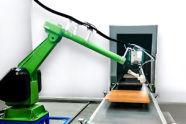
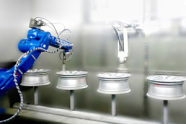
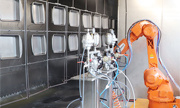
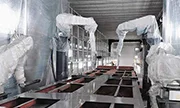
A coordinated workflow reduces unnecessary handling between operations. Conveyor systems can help maintain a predictable production rhythm, while automated spraying can improve repeatability for suitable workpieces. Manual spraying remains a practical option for complex shapes, special finishes, or products that require flexible operator control.
How to Improve Coating Quality and Production Efficiency
Consistent coating quality depends on more than the spray equipment itself. Paint viscosity, nozzle condition, spray distance, air pressure, conveyor speed, and the condition of the workpiece all influence the final result. A properly planned spray paint production line brings these factors into a coordinated process, making it easier to establish repeatable operating standards.
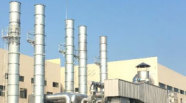
Temperature and humidity management are also important, particularly when coating wood products. Stable environmental conditions can help improve paint application and drying performance. Appropriate ventilation, paint handling, and exhaust treatment should be incorporated into the system design according to the coating materials and applicable safety and environmental requirements.
Energy consumption is another important consideration. Selecting suitable drying equipment, optimizing oven operation, and recovering usable heat where technically feasible can help reduce operating costs. Regular maintenance of spray guns, filters, conveyors, and ventilation equipment also helps prevent unexpected downtime and maintain stable production.

Customized Design for Different Production Requirements
Every manufacturer has different requirements for product dimensions, coating layers, production capacity, and automation. A customized spray paint production line should take these factors into account before equipment selection begins.
Attractivechina provides coating production solutions covering pretreatment, spraying, and drying processes, with equipment configurations tailored to specific applications. Its wood coating solutions are designed for products such as guitars, other musical instruments, beds, dining tables, chairs, and decorative panels. Spraying can be configured for manual or robotic operation, depending on the workpiece and production requirements.
Before investing in a new line, manufacturers should evaluate the size and weight of their workpieces, expected output, paint specifications, available factory space, and utility conditions. These details help determine the appropriate conveyor layout, spray booth dimensions, drying capacity, and level of automation.
Choosing a Reliable Spray Paint Production Line Supplier
Selecting the right supplier involves more than comparing equipment prices. Manufacturers should assess engineering experience, process design capabilities, customization options, installation support, spare parts availability, and after-sales service.
A reliable supplier should understand the complete coating process rather than focusing on an individual spray machine. Coordinating pretreatment, spraying, drying, and material transfer helps reduce bottlenecks and makes the production line easier to operate and maintain.
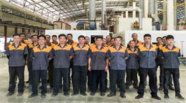
With more than 30 years of coating-line experience, Attractivechina offers customized turnkey solutions for manufacturers seeking integrated painting equipment. Its approach supports different product types and production requirements, helping customers plan coating systems around their actual manufacturing processes.
For manufacturers upgrading an existing workshop or establishing a new finishing facility, a properly designed spray paint production line can provide a practical foundation for consistent surface quality, efficient production, and long-term operational stability.


Contact Us
No.2 Yingbin Avenue, High-tech District, Zhaoqing City, Guangdong Province, China.
Online Message