











Related News

20
2026
-
07
Powder Coating System for Efficient and Consistent Industrial Finishing
Author:
Chuangzhi Coating
A reliable powder coating system helps manufacturers improve surface quality, enhance corrosion resistance, and maintain consistent finishing results across production batches. For automotive components, metal products, and industrial parts, an integrated coating line can connect pretreatment, coating application, curing, cooling, and inspection into a coordinated workflow. Selecting the right equipment configuration is essential for balancing product quality, production capacity, and operating costs.
Attractivechina provides customized coating line solutions designed around workpiece characteristics, manufacturing requirements, and factory layouts. Its coating equipment portfolio covers pretreatment systems, coating equipment, curing ovens, conveyor systems, and environmental protection equipment, allowing manufacturers to develop a production process suited to their specific applications.

How Does a Powder Coating System Work?
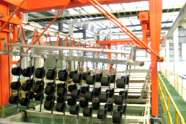
The performance of a powder coating system depends on how effectively each production stage works with the others. Surface preparation removes oil, dust, and other contaminants that may affect coating adhesion. The workpieces are then transported to the coating area, where the application equipment distributes powder across the required surfaces. After application, the parts enter a curing oven, where controlled heating allows the coating to form a durable film.
A typical automated coating workflow may include loading, degreasing, rinsing, drying, surface treatment, electrostatic spraying, curing, cooling, unloading, and final inspection. The exact sequence depends on the substrate material, workpiece geometry, coating specification, and production objectives. Integrating these stages helps reduce unnecessary handling and supports a more stable production rhythm.
Key Advantages of an Integrated Coating Line
Consistent coating quality
Uniform surface coverage is important for both appearance and protective performance. Automated conveying and controlled application parameters help maintain repeatable results across production batches. Spray equipment, workpiece positioning, and conveyor speed should be coordinated to reduce uneven coverage and excessive powder accumulation.
Improved production efficiency
An integrated system can reduce manual transfers between individual processing stages. Continuous or synchronized conveying allows operators to organize production more efficiently, while automation helps maintain a predictable workflow. For manufacturers handling recurring orders, this can simplify production scheduling and improve equipment utilization.
Better resource management
Powder recovery, appropriate ventilation, and optimized curing conditions can help reduce material waste and energy consumption. The actual benefits depend on the coating material, equipment configuration, operating parameters, and factory conditions. A properly designed system should consider these factors during the initial engineering stage rather than treating them as separate upgrades.
Applications Across Automotive and Industrial Manufacturing
A powder coating system can be configured for a range of metal components and industrial products. Automotive manufacturing may require reliable surface protection for brackets, frames, wheels, and other compatible components. Metal furniture, equipment housings, building materials, and fabricated parts may also benefit from automated coating processes.
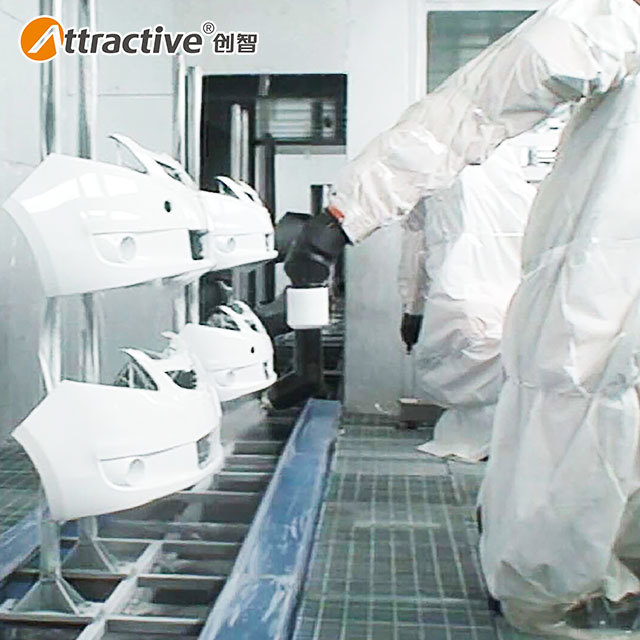
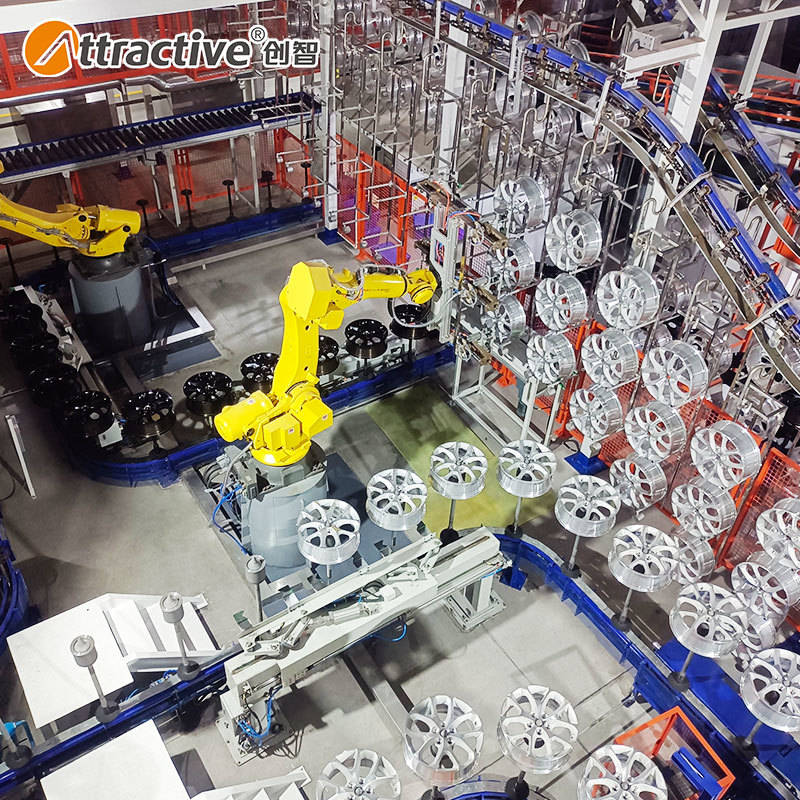
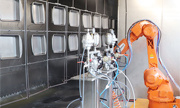
For automotive fuel tanks and plastic exterior components, however, the appropriate finishing method must be selected according to the substrate and coating specification. The linked Attractivechina product page describes an automotive fuel tank spraying production line with robotic application, pretreatment, primer and topcoat stages, drying, curing, and cooling. It also lists workpieces such as automotive bumpers, wheel hubs, fuel tanks, and frames. These details illustrate the importance of matching the coating process to the actual product rather than assuming that every application is suitable for powder coating.

How to Choose the Right Powder Coating System
Before investing in a new coating line, manufacturers should evaluate several practical factors.
First, identify the workpiece material, dimensions, weight, and geometry. These characteristics influence the pretreatment method, fixture design, conveyor arrangement, and coating equipment. Second, establish the expected output, product mix, and required coating quality. These requirements determine the appropriate automation level and production speed.
Factory conditions are equally important. Available floor space, conveyor routes, ventilation, heating energy, compressed air, and environmental controls all affect the final configuration. For projects involving multiple product types, a flexible system may be preferable to equipment designed for only one fixed workpiece.
Manufacturers should also consider maintenance access, spare parts, operator training, and future capacity expansion. Evaluating these factors together helps buyers select a system that fits both current production needs and long-term operational plans.
Customized Engineering and Technical Support
Every coating project has its own process requirements. A well-planned system should therefore be designed around the products being manufactured instead of relying on a standard layout for every factory. Pretreatment equipment, coating stations, curing ovens, conveying systems, and environmental protection units need to work together as one production solution.
Attractivechina offers customized turnkey coating line solutions, with product configurations and production capacity determined by customer requirements. The company also describes engineering support for installation, commissioning, maintenance, and process upgrades. These services are relevant for manufacturers who need to integrate new finishing equipment into an existing facility or develop a dedicated production line.
Conclusion
Choosing the right powder coating system involves more than selecting a spray booth or curing oven. Manufacturers need to consider surface preparation, application consistency, curing conditions, material recovery, conveying efficiency, and factory layout as parts of one integrated process. With a configuration tailored to the workpiece and production target, an automated coating line can support consistent finishing quality, organized manufacturing, and more efficient resource use.
Attractivechina develops customized coating solutions for different industrial applications. By defining workpiece specifications, production capacity, and coating requirements at the beginning of a project, buyers can obtain a system designed to meet their actual manufacturing needs.


Contact Us
No.2 Yingbin Avenue, High-tech District, Zhaoqing City, Guangdong Province, China.
Online Message