










Related News

23
2025
-
02
Advancements in Robotic Painting Systems for Automotive Manufacturing
Author:
Chuangzhi Coating
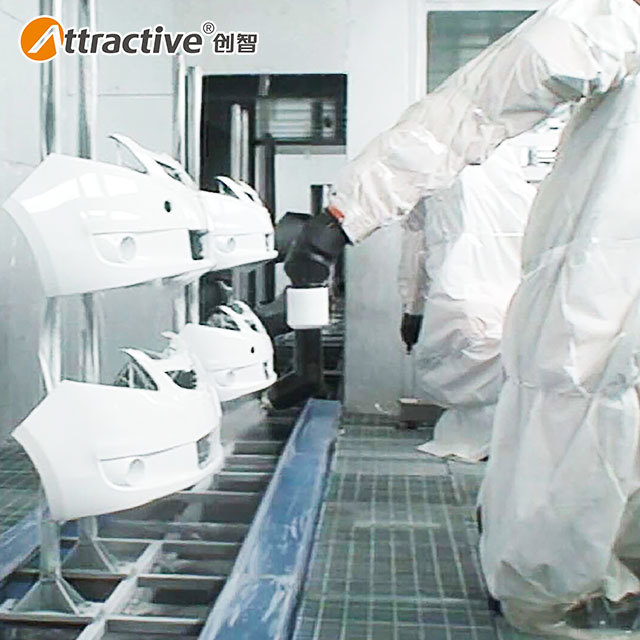
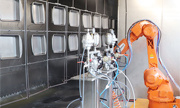
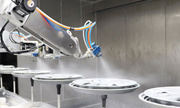
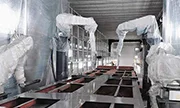
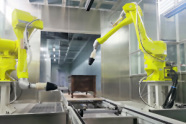
The automotive industry is embracing robotic painting systems to meet growing demands for precision, efficiency, and sustainability. These advanced systems are transforming traditional painting processes, delivering higher quality finishes while reducing waste and costs. This article explores the latest advancements in robotic painting technology and their impact on automotive manufacturing.
Key Technological Advancements
1. Multi-Axis Robotic Arms
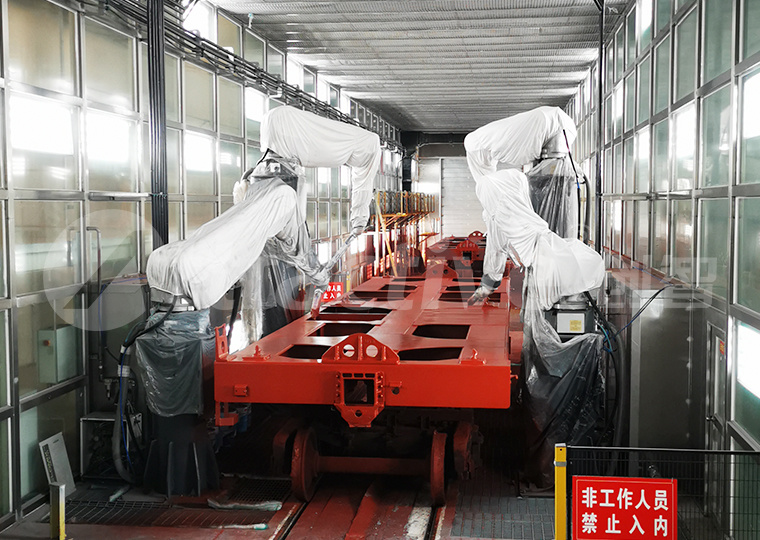
Modern robots equipped with 6-7 axes of motion can reach complex geometries, ensuring uniform coverage on curved surfaces, edges, and hard-to-access areas like door seams.
2.3D Vision and AI Integration
- 3D Vision Systems: Enable real-time surface scanning to adjust spray paths dynamically.
- AI Algorithms: Optimize paint thickness, reduce overspray, and predict maintenance needs.
3.High-Transfer Efficiency Spray Guns
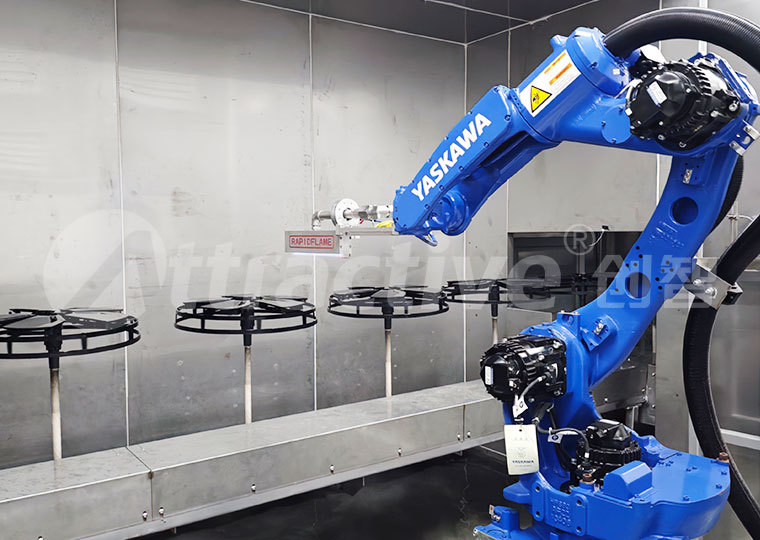
Electrostatic rotary atomizers achieve up to 90% transfer efficiency, minimizing paint waste and VOC emissions.
4.Energy-Efficient Designs
Newer robots consume 20-30% less energy and integrate with regenerative braking systems to recover power during motion.
Benefits of Robotic Painting Systems
1.Consistent Quality: Eliminate human error for flawless finishes.
2.Faster Cycle Times: Robots operate 24/7, reducing production bottlenecks.
3.Cost Savings: Lower material waste and energy consumption.
4.Worker Safety: Reduce human exposure to hazardous fumes.
Applications in Automotive Manufacturing
1.Base Coat and Clear Coat Application: Ensure even layers for glossy finishes.
2.Anti-Corrosion Primers: Precision coating of underbody components.
3.Customization: Enable multi-color painting with rapid color-change systems.
4.Case Study: Tesla’s Gigafactories use robotic painters to achieve a defect rate below 0.5%, significantly outperforming manual methods.
Future Trends
1.Collaborative Robots (Cobots): Smaller, safer robots working alongside humans for hybrid workflows.
2.Machine Learning: Self-optimizing systems that adapt to new vehicle models autonomously.
3.Sustainable Solutions: Water-based paints and closed-loop recycling integrated with robotic systems.


Contact Us
No.2 Yingbin Avenue, High-tech District, Zhaoqing City, Guangdong Province, China.
Online Message