












Related News

26
2025
-
03
What types of conveyor systems are there for coating lines? How to choose?
Author:
Chuangzhi Coating
Conveying systems in coating production lines play a vital role. They are responsible for efficiently transferring workpieces from one process to the next, ensuring the smoothness and efficiency of the entire coating process. This article will introduce several common types of conveyor systems for coating lines and provide strategies for selecting these systems.
1. Common Conveyor System Types
a. Sled conveyor system
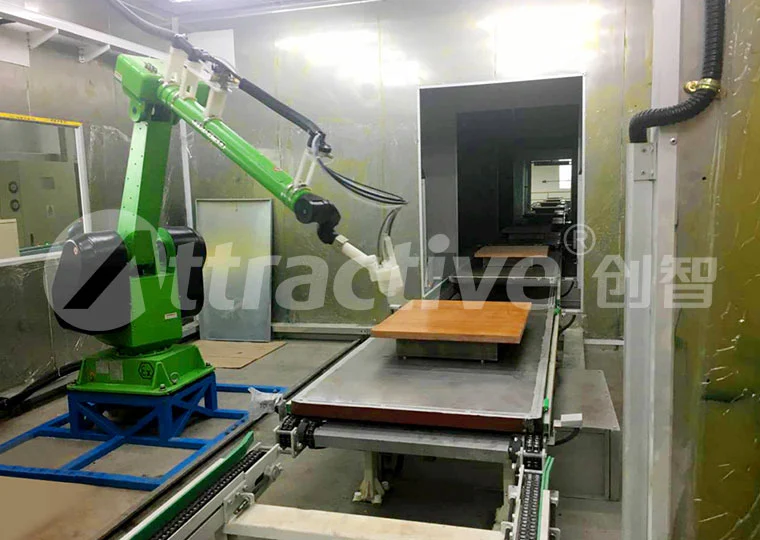
The sled conveyor system is a widely used conveying method for large workpieces, such as passenger cars, buses, train carriages, etc. The system carries the workpiece on a sled and moves smoothly on the track. The sled conveyor system has the advantages of strong carrying capacity, smooth operation, and easy maintenance. In addition, it can adapt to complex coating processes such as electrophoretic coating to ensure that the workpiece is evenly coated in the dip tank.
b. Suspension Conveyor System
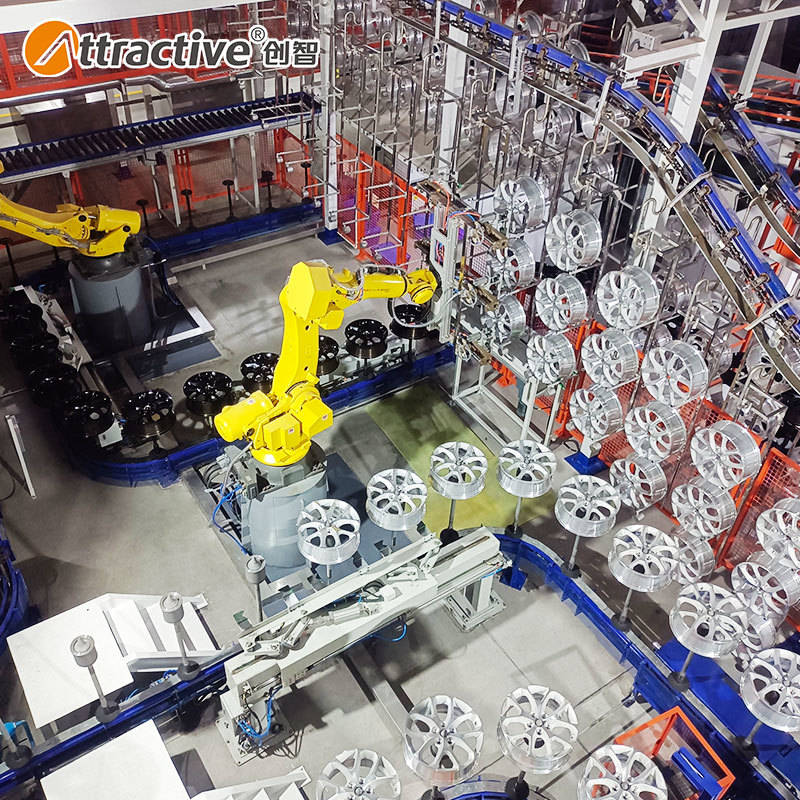
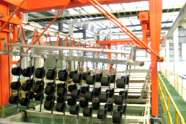
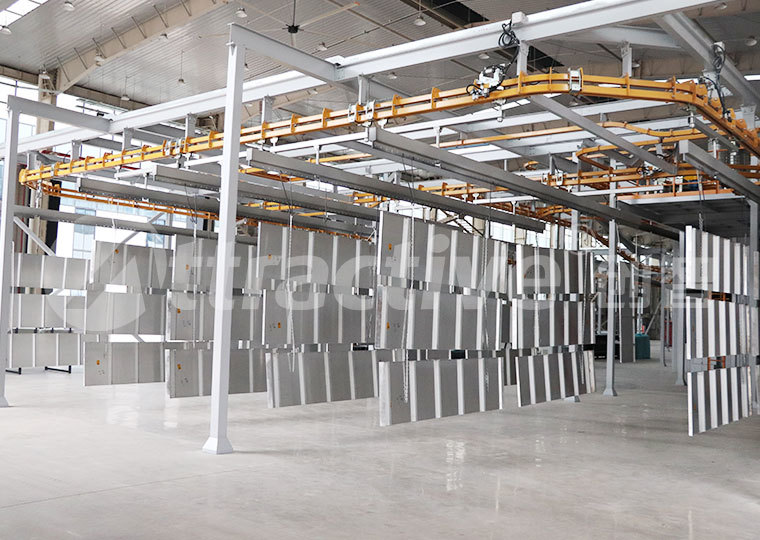
The suspension conveyor system uses hooks or slings to suspend the workpiece on the aerial track and realizes the conveyance of the workpiece through the drive device. This system is suitable for small and medium-sized workpieces, such as automotive parts, home appliances, steel structure products, etc. The advantages of the suspended conveying system are that it saves ground space, improves production efficiency, and facilitates the pre-treatment and painting or powder spraying of workpieces. However, for large or heavy workpieces, the suspended conveying system may face the problem of insufficient carrying capacity.
c. Ground Conveying System
Ground conveying systems include self-propelled hoist conveyors, swing-bar conveyors and other types. Self-propelled hoist conveyors move on the track through self-propelled trolleys, which are suitable for conveying small batches and multiple varieties of workpieces. Swing-bar conveyors drive the workpieces to swing forward on the track through the swing bar, which is suitable for continuous production systems. The ground conveying system has the advantages of high flexibility and strong adaptability, and can be customized according to production needs.
2. Conveying System Selection Strategy
a. Selection based on workpiece characteristics
When selecting a conveying system, the shape, size, weight and other characteristics of the workpiece should be considered first. For example, for large or heavy workpieces, a skid conveying system may be more suitable; while for small and medium-sized workpieces, a suspended conveying system or a ground conveying system is more advantageous.
b. Selection Based On Production Needs
Production needs are also an important factor in selecting a conveying system. Factors such as the degree of automation of the production line, production efficiency, and workpiece handling process should be considered. For example, for a coating line that requires efficient and continuous production, a conveying system with smooth operation and low failure rate should be selected; while for a coating line that requires flexible adjustment of the production line, a conveying system that is easy to install, disassemble, and reorganize should be selected.
c. Consider Cost and Maintenance
The cost and maintenance costs of the conveying system are also factors that need to be considered when selecting. A cost-effective conveying system should be selected based on the budget and the long-term operation requirements of the production line. At the same time, the ease of maintenance and reliability of the conveying system should be considered to reduce the subsequent maintenance costs.
d. Consider Environmental Protection and Safety
In modern coating production lines, environmental protection and safety have become factors that cannot be ignored. When selecting a conveying system, its impact on the environment and safety should be considered. For example, a conveying system with low noise and low emissions should be selected, and it should be ensured to comply with relevant safety standards and regulations.
There are various types of conveying systems for spray painting lines, each with its own advantages and disadvantages. When selecting, comprehensive consideration should be given to factors such as workpiece characteristics, production requirements, cost and maintenance, and environmental protection and safety. Through scientific and reasonable selection, we can ensure the efficient and stable operation of the coating production line and improve product quality and production efficiency.
Choose Attractivechina, you will get a professional coating line conveyor system solution. From design to implementation, from commissioning to maintenance, we will accompany you throughout the process to ensure that your production line is efficient, stable and environmentally friendly. Let us work together to create a better future and jointly promote the development of the coating industry!


Contact Us
No.2 Yingbin Avenue, High-tech District, Zhaoqing City, Guangdong Province, China.
Online Message