
















Related News

01
2025
-
04
Painting Challenges in Home Appliance Industry: How to Choose Anti-Rust and High-Temperature Resistant Equipment
Author:
Chuangzhi Coating
Home appliances such as refrigerators, ovens, and water heaters are often exposed to humid, high-temperature, or corrosive environments, placing stringent demands on coating performance. However, many manufacturers face challenges like coating peeling, rusting, and discoloration, which not only compromise aesthetics but also reduce product lifespan and pose safety risks.
This article analyzes core pain points in home appliance painting and provides a selection guide for anti-rust and high-temperature-resistant equipment, helping businesses enhance coating quality and competitiveness.
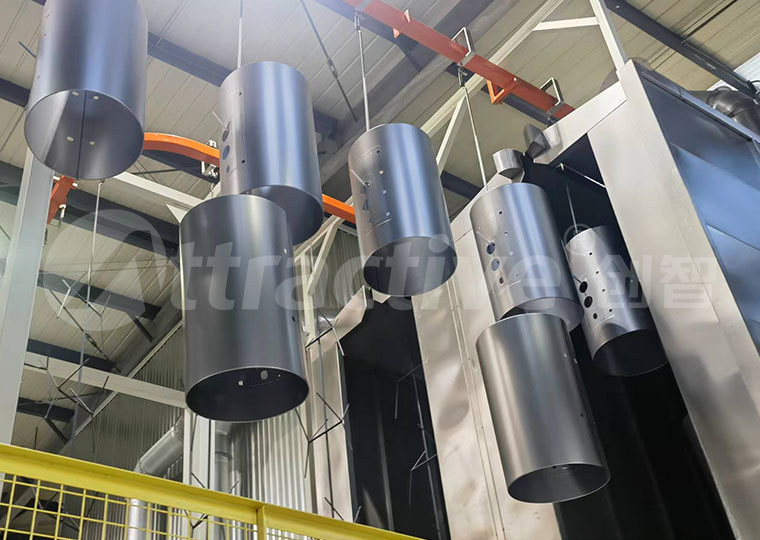
I. Four Core Challenges in Home Appliance Painting
1. Insufficient Anti-Rust Performance
Issue: Metal components (e.g., refrigerator shells, washing machine drums) rust in humid environments, causing coating blistering or peeling.
Root Cause: Inadequate pre-treatment (e.g., incomplete degreasing or phosphating) or suboptimal spray processes that fail to form dense anti-corrosion layers.
2. High-Temperature Coating Failure
Issue: Coatings on ovens, water heaters, and other high-temperature appliances often discolor, crack, or degrade.
Root Cause: Poor thermal resistance of coatings or improper curing processes (temperature/time deviations).
3. Poor Surface Aesthetics
Issue: Defects like uneven gloss, orange peel, or particles ruin the premium appearance of high-end appliances.
Root Cause: Low-precision spraying equipment, insufficient dust control, or poor paint flow properties.
4. Low Production Efficiency
Issue: Traditional painting lines suffer from slow color changes, high energy consumption, and inflexibility for small-batch production.
Root Cause: Outdated equipment with limited automation and adaptability.
II. Key Anti-Rust Technologies and Equipment Selection
1. Comparison of Anti-Rust Spraying Technologies
| Technology | Principle | Applications |
|---|---|---|
| Electrostatic Spraying | Uses electrostatic charge to improve coating uniformity | Flat surfaces (refrigerator panels, washing machine shells) |
| Electrophoretic Coating | Forms dense anti-corrosion layers via electric field deposition | Complex-shaped parts (metal drums, structural components) |
| Powder Coating | Solvent-free, eco-friendly process with strong adhesion | Outdoor appliances, high-corrosion-resistance parts |
2. Equipment Selection Recommendations
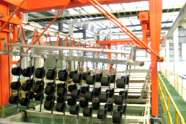
Pre-Treatment Systems: Opt for automated systems with multi-stage cleaning, phosphating, and passivation to eliminate surface contaminants.
Spraying Equipment:
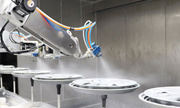
Use high-speed rotary electrostatic spray guns (e.g., rotary bell type) to achieve >85% paint transfer efficiency.
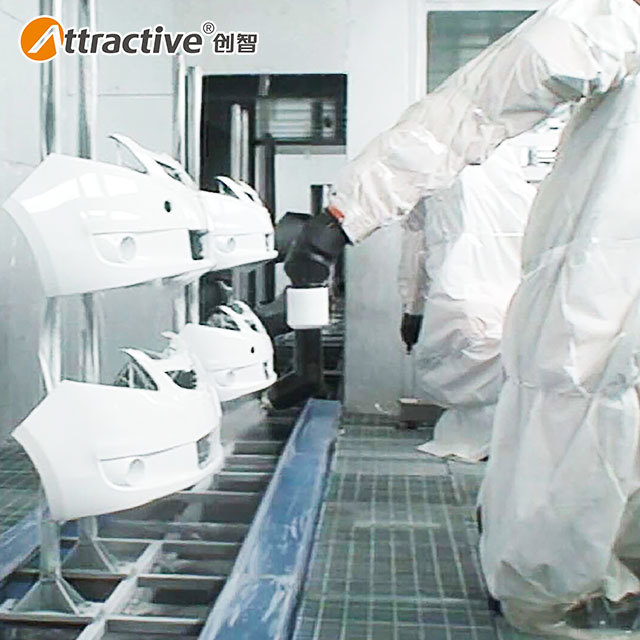
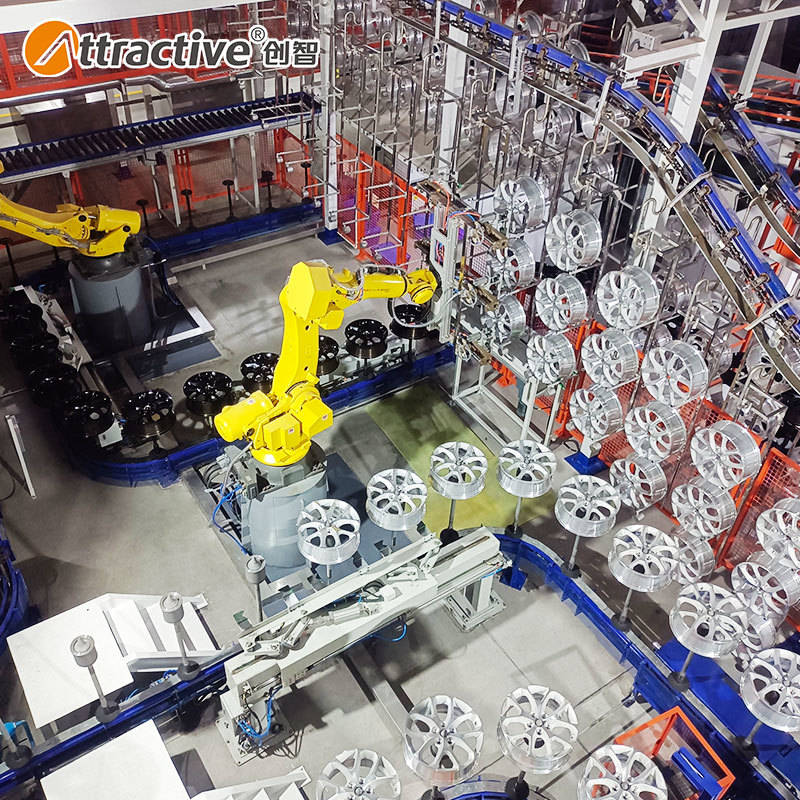
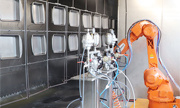
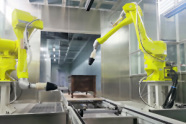
For complex geometries, deploy robotic spraying systems for 360° coverage.
Curing Equipment: Choose infrared + hot air convection ovens to ensure complete cross-linking and enhanced corrosion resistance.
III. Solutions for High-Temperature-Resistant Coatings
1. High-Temperature Paint Selection
Silicone Resin Paints: Withstand 200–600°C, ideal for oven interiors and grill racks.
Ceramic Coatings: Tolerate >800°C and provide thermal insulation (e.g., water heater heating elements).
Fluoropolymer Coatings: Offer UV and heat resistance for outdoor AC units.
2. Equipment and Process Requirements
Spraying Equipment: Use heat-resistant spray guns (e.g., stainless steel) and corrosion-resistant material delivery systems.
Curing Process:
Maintain oven temperature fluctuations within ±5°C to prevent under- or over-curing.
Implement graded heating to avoid bubble formation from rapid temperature changes.
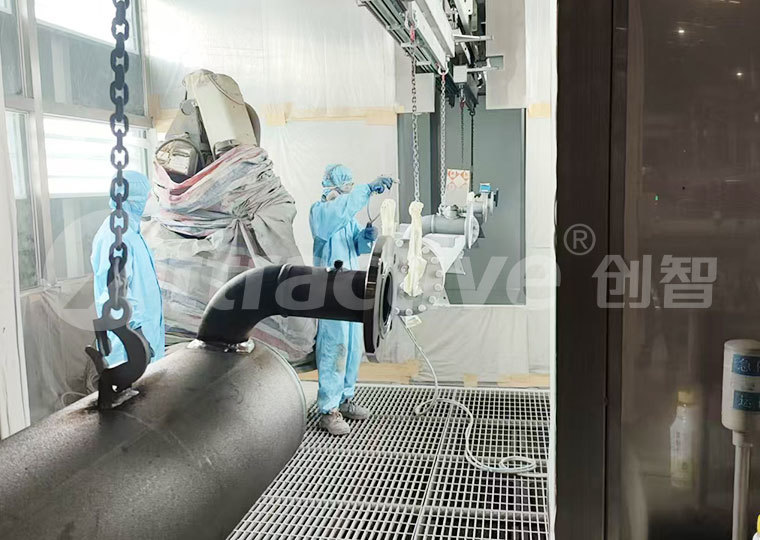
IV. Five Golden Rules for Selecting Home Appliance Painting Equipment
Match Production Needs: Select automation levels based on product types (large vs. small appliances) and output (continuous vs. batch production).
Multi-Material Compatibility: Ensure equipment handles metal, plastic, and glass substrates.
Energy Efficiency & Sustainability: Prioritize systems with ≥90% VOC recovery to comply with regulations.
Ease of Maintenance: Modular designs and quick-change nozzles minimize downtime.
Data Traceability: Integrate IoT monitoring to track coating thickness, curing curves, and other parameters in real time.
V. Case Study: Oven Coating Line Upgrade for Brand X
Challenge: Existing coatings cracked after 3 months at 250°C, resulting in a 15% customer complaint rate.
Solution:
Switched to silicone-ceramic hybrid paint (400°C resistance).
Implemented robotic electrostatic spraying + infrared curing, improving coating uniformity by 30%.
Result: Product return rate dropped to <2%, with annual cost savings of ¥1.2 million.
VI. Conclusion
Addressing anti-rust and high-temperature challenges in home appliance painting requires synergy among materials, equipment, and processes. By selecting cost-effective, high-performance painting systems, manufacturers can resolve quality issues while boosting efficiency.
Contact our engineering team today for a free production line audit and customized solutions!


Contact Us
No.2 Yingbin Avenue, High-tech District, Zhaoqing City, Guangdong Province, China.
Online Message