Integrated VOC Abatement Systems: Building the Core Defense for Environmental Compliance in Painting Operations
Author:
Chuangzhi Coating
In manufacturing painting operations, the emission of volatile organic compounds (VOCs) is a major environmental challenge for enterprises. As global environmental regulations become increasingly stringent—such as China’sStandards for the Control of Volatile Organic Compounds Unorganized Emissionsand the EU’s REACH Regulation, which continuously raise requirements for VOC emission concentrations and treatment efficiency—relying solely on single purification equipment can no longer meet compliance needs. However, integrated VOC abatement systems, through a full-process collaborative design of "collection-pre-treatment-purification-monitoring," can efficiently control VOC emissions in painting line, becoming a core solution for enterprises to achieve environmental compliance and avoid penalty risks.
1. VOC Emission Pain Points and Compliance Pressure in Painting Operations
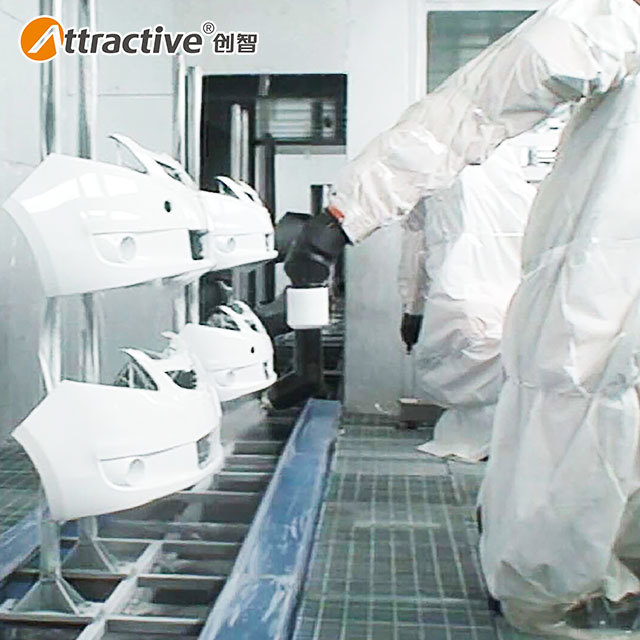
Painting operations (such as automotive spraying, furniture painting, and hardware coating) require the use of large amounts of solvent-based coatings, which release VOCs such as benzene, toluene, and xylene during the process. These emissions not only pollute the atmospheric environment but also may harm the health of operators. The current environmental compliance pressure is mainly reflected in two aspects:
Strict Emission Concentration Limits: Most regions require that after treatment, the VOC emission concentration of painting waste gas must be below 80mg/m³, and some key areas (such as the Yangtze River Delta and Pearl River Delta in China) have tightened it to below 50mg/m³;
Clear Treatment Efficiency Requirements: Regulations mandate that the VOC removal rate must not be less than 90%. Enterprises that fail to meet this standard will face production suspension for rectification and heavy fines (single fines can be as high as several million yuan).
Traditional treatment methods (such as single activated carbon adsorption) have problems such as "fast adsorption saturation, low treatment efficiency, and large amount of hazardous waste generation," which cannot meet compliance standards stably for a long time. The full-process design of integrated VOC abatement systems precisely solves this pain point.
2. Core Components of Integrated VOC Abatement Systems: Full-Process Collaborative Emission Control
An integrated VOC abatement system is not a superposition of single equipment, but a customized collaborative system based on the VOC emission volume and composition characteristics (such as solvent type, concentration fluctuation) of painting operations. It mainly includes four modules, with seamless connection between each link to ensure treatment effect:
a. Efficient Collection Module: Reducing Unorganized Emissions
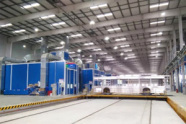
The system first realizes source collection of VOCs through a combination of "closed spraying booth + universal air hood + negative pressure pipeline." The closed spraying booth controls unorganized emissions within the booth, the universal air hood accurately captures key emission sources such as spray guns and workpieces, and the negative pressure pipeline ensures no waste gas leakage. The collection efficiency can reach more than 95%—this is the foundation of subsequent purification. If collection is incomplete, even if the purification equipment is highly efficient, it may still lead to excessive total emissions.
b. Pre-Treatment Module: Ensuring Stable Operation of Core Purification Equipment
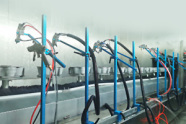
Painting waste gas often contains impurities such as paint mist and dust. If it directly enters the core purification equipment, it will block the catalyst or reduce the efficiency of the thermal oxidation furnace. The pre-treatment module adopts a two-step process of "spray tower + dry filtration": the spray tower uses circulating water to remove most of the paint mist, and the dry filtration (using high-efficiency filter cotton) further traps tiny dust, ensuring that the waste gas entering the next link is "impurity-free and low-humidity," avoiding failure of core equipment and prolonging its service life.
c. Core Purification Module: Efficiently Degrading VOCs for Compliant Emission
The core purification module selects suitable technologies based on the concentration and composition of VOCs in painting operations. The mainstream solutions include two types:
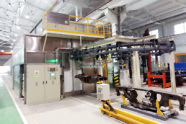
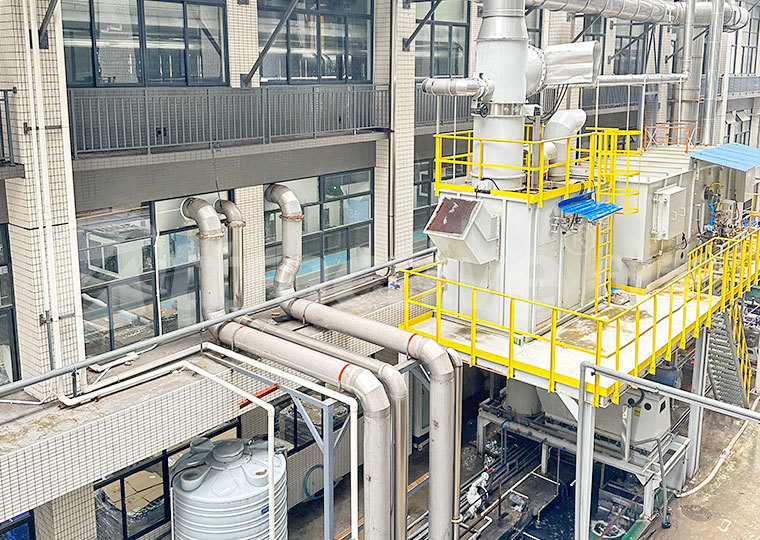
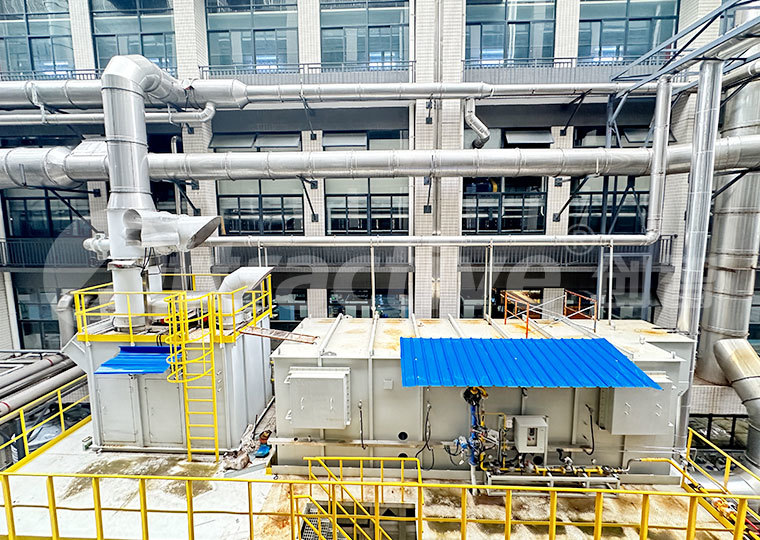
Regenerative Thermal Oxidizer (RTO): Suitable for high-concentration VOC waste gas (concentration > 2000mg/m³). It oxidizes VOCs into CO₂ and H₂O at a high temperature of 800-850℃, with a heat recovery efficiency of more than 95% and a stable VOC removal rate of more than 98%, which can easily meet the emission limits of strict regions;
Catalytic Oxidation (CO) Device: Suitable for medium and low-concentration VOC waste gas (concentration 500-2000mg/m³). With the help of catalysts (such as precious metals platinum and palladium), it reduces the VOC oxidation temperature to 300-400℃, with energy consumption only 1/3 of that of RTO, and the VOC removal rate can also reach more than 95%, which is suitable for the needs of small and medium-sized painting enterprises.
d. Online Monitoring and Control Module: Real-Time Compliance Status Management
The system is equipped with a national certified online VOC monitor, which collects real-time data such as the VOC concentration and flow rate of the treated waste gas, and uploads the data to the environmental supervision platform of the competent department. At the same time, the system has a built-in PLC intelligent control module. If excessive VOC concentration is detected, it will automatically adjust the parameters of the purification equipment (such as increasing RTO temperature, increasing catalytic oxidation air volume) or trigger an alarm to remind manual intervention, ensuring that the emission data continuously meets regulatory requirements and avoiding the risk of "passive over-standard."
3. Compliance Advantages of Integrated Systems: From "Passive Compliance" to "Proactive Prevention"
Compared with traditional decentralized treatment solutions, integrated VOC abatement systems have irreplaceable advantages in ensuring environmental compliance:
Stable Treatment Efficiency: The full-process collaborative design avoids problems such as "collection loopholes" and "incomplete pre-treatment." The VOC removal rate is stably maintained above 90%, and the emission concentration can be controlled below 50mg/m³, easily coping with random inspections by environmental authorities;
Strong Adaptability: It can flexibly adjust the system load according to changes in the production capacity of painting operations (such as increased VOC emissions due to higher output in peak seasons) without additional equipment replacement, ensuring that enterprises can still comply when expanding production;
Reduced Compliance Costs: Through designs such as heat recovery and intelligent temperature control, the system reduces energy consumption (e.g., RTO heat recovery can save more than 60% of heating costs). At the same time, it reduces the replacement frequency of consumables such as activated carbon. The long-term operation cost is 30%-40% lower than that of decentralized treatment, avoiding enterprises falling into operational difficulties due to "excessively high compliance costs."
4. Future Trend: In-Depth Integration of Integrated Systems and Painting Lines
As environmental regulations upgrade from "concentration control" to "total amount control," integrated VOC abatement systems are being deeply integrated with painting production lines—through IoT technology, system data is linked with the coating consumption and production rhythm of the painting line to achieve "on-demand purification": when the output of the painting line increases and VOC emissions rise, the system automatically increases the treatment load; when the painting line is shut down, the system enters a low-energy standby mode. This "linked control" not only further improves compliance stability but also maximizes energy consumption reduction, becoming the future direction of environmental governance in painting operations.