













Related News

20
2025
-
10
How to Improve the Efficiency of Industrial Coating Systems
Author:
Chuangzhi Coating
As an indispensable component in modern manufacturing, industrial coating systems directly impact product appearance quality, corrosion resistance, and overall production efficiency. With the continuous advancement of automation and intelligence in the manufacturing industry, improving the efficiency of industrial coating systems has become a key priority for many companies in optimizing production structures, reducing costs, and enhancing market competitiveness.
First, to improve production efficiency, a sound system design and process layout are crucial. Industrial coating systems typically include multiple stages, including pretreatment, spraying, drying, cooling, and conveying. The smooth connection between these stages directly determines production cycle time and equipment utilization. During the initial design phase, companies should strategically plan the length and process sequence of production lines based on product characteristics and production capacity requirements to avoid bottlenecks and inefficient waiting. For example, adopting a linear or circular conveying layout can make material flow more efficient, reducing manual handling and downtime.
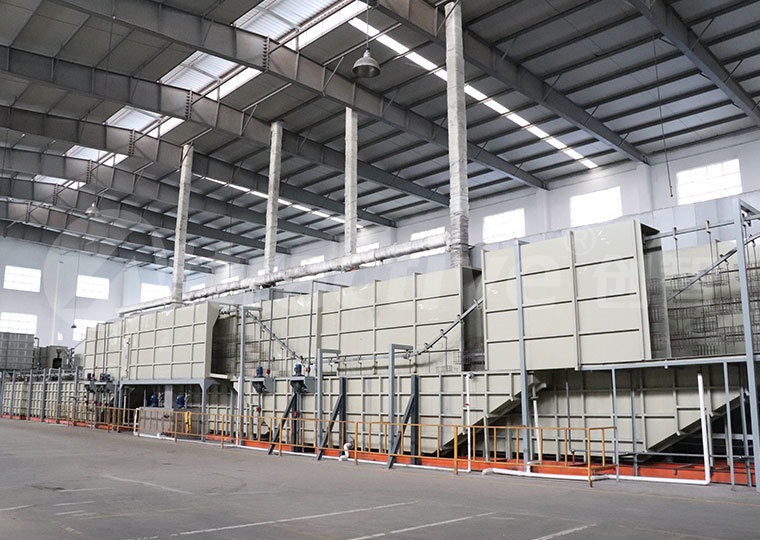
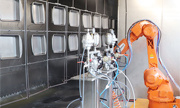
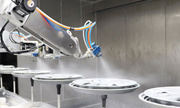
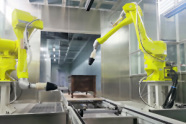
Second, the introduction of automated and intelligent equipment is a key means of improving efficiency. Technologies such as automated spraying robots, intelligent conveying systems, and automatic temperature-controlled drying equipment enable precise spraying, uniform drying, and full process monitoring, significantly reducing manual errors and energy consumption. Through the integration of sensors and control systems, coating equipment can monitor spray thickness, flow rate, and temperature and humidity parameters in real time, enabling efficient production while ensuring coating quality. For companies with larger production lines, establishing an MES (Manufacturing Execution System) to visualize production data and automate scheduling is also a key way to improve overall efficiency.
Third, process optimization and material management are also key aspects. Selecting the appropriate spraying method (such as electrostatic spray, powder spray, or air spray) can effectively improve paint utilization. Optimizing paint viscosity, nozzle type, and air pressure parameters can reduce spraying time without compromising coating quality. Furthermore, companies should establish a comprehensive material management system to ensure the orderly supply and use of paint, solvent, and workpieces, avoiding waiting and waste during the production process.
Fourth, a sound equipment maintenance and cleaning system is also crucial for maintaining high-efficiency operations. Regular inspection of spray guns, filters, ovens, and conveyor systems can prevent line stoppages caused by equipment blockage, missed sprays, or malfunctions. Maintaining a clean equipment and spray booth effectively reduces the impact of dust particles and improves product quality.
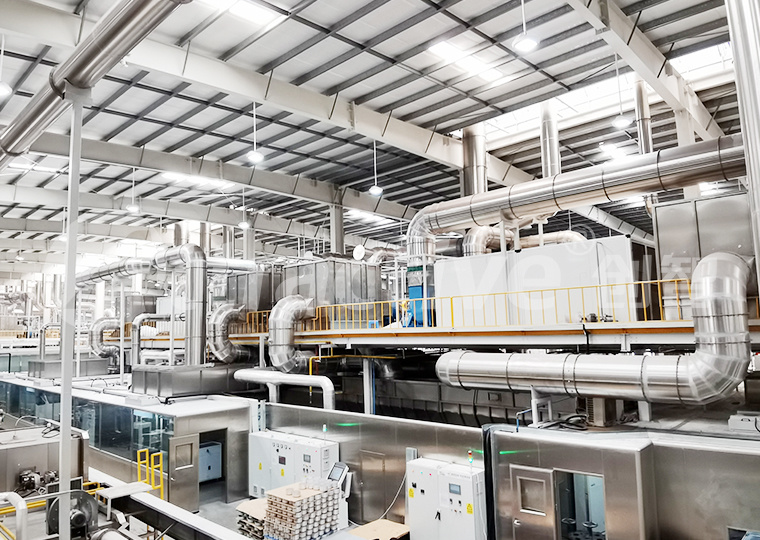
Finally, employee training and production management optimization are equally crucial. Operator skill levels directly impact production stability and equipment efficiency. Through systematic training, employees can become familiar with automated system operation, parameter adjustment, and exception handling, further reducing human error. Furthermore, establishing standardized production processes and performance evaluation mechanisms will help continuously optimize production efficiency.
Improving the production efficiency of industrial coating systems is a systematic undertaking, requiring multiple approaches encompassing design layout, automation technology, process control, equipment maintenance, and personnel management. Only by effectively integrating these elements can companies achieve efficient, energy-efficient, and sustainable production while ensuring coating quality, further enhancing their market competitiveness.


Contact Us
No.2 Yingbin Avenue, High-tech District, Zhaoqing City, Guangdong Province, China.
Online Message