













Related News

27
2026
-
02
Integrated Coating Solutions for Complex Production Needs
Author:
Chuangzhi Coating
In cutting-edge industrial fields such as aerospace, defense manufacturing, rail transit, and high-end equipment, coating is never a simple process step but a critical manufacturing phase determining product performance, safety, and lifespan. The production needs faced by these industries are exceptionally complex: workpieces span a vast size range (from miniature precision parts to structural components tens of meters long), materials are diverse (aluminum alloys, titanium alloys, composites), coating systems are stringent (requiring high-temperature resistance, corrosion protection, stealth capabilities), batch sizes are small but varieties are numerous, and quality standards are extremely demanding. Faced with such complex production needs, traditional, single-function coating equipment is entirely inadequate. Here, an Integrated Coating Solution that systematically combines processes, equipment, control, and logistics becomes the only path to mastering manufacturing complexity.
I. What Constitutes "Complex Production Needs"? – Identifying the Dimensions of Challenge
To build a solution, we must first accurately define "complexity." In the coating field, complexity typically manifests in several dimensions:
- Product Complexity: Workpieces have highly irregular geometries (e.g., engine blades, cabin structural parts) with numerous deep cavities and blind spots; size ranges are wide, requiring the same line to handle both miniature parts and large components.
- Process Complexity: Requires multi-layer, multi-functional coating systems (e.g., primer + stealth coating + topcoat), and different coatings have different requirements for spray parameters and curing temperatures.
- Material Complexity: The same line must handle multiple substrates (carbon fiber, aluminum alloy, steel), each with different pre-treatment and adhesion requirements.
- Logistics and Takt Time Complexity: Production tasks are discontinuous, order batches are small, and workpieces arrive in random order, imposing high demands on production scheduling and rapid changeover.
- Quality and Traceability Complexity: Each workpiece requires a complete coating quality file, enabling full traceability from pre-treatment to curing.
II. Core Architecture of an Integrated Coating Solution
The core of a successful Integrated Coating Solution lies in transforming scattered challenges into a coherent, controllable production process through systematic design. Its architecture typically includes the following levels:
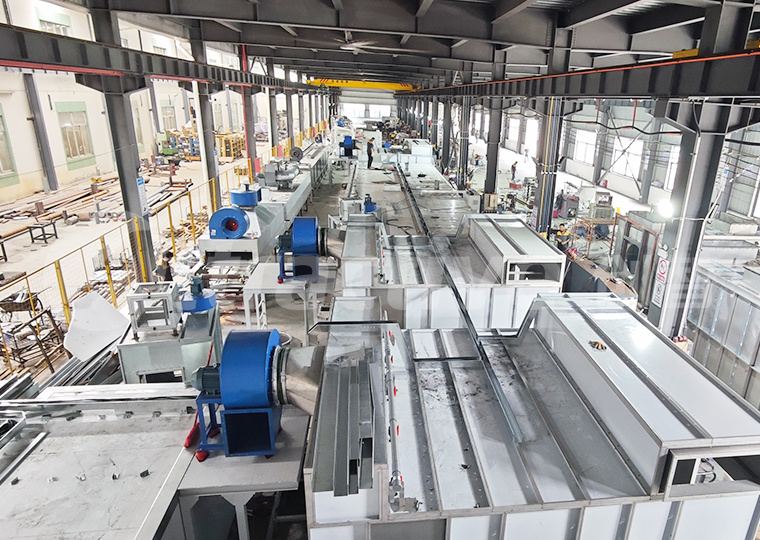
1. Flexible and Modular Hardware Platform
This is the physical foundation for handling product and process diversity. The solution adopts a modular design philosophy:
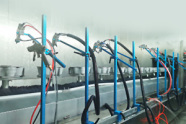
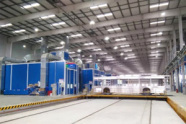
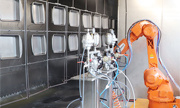
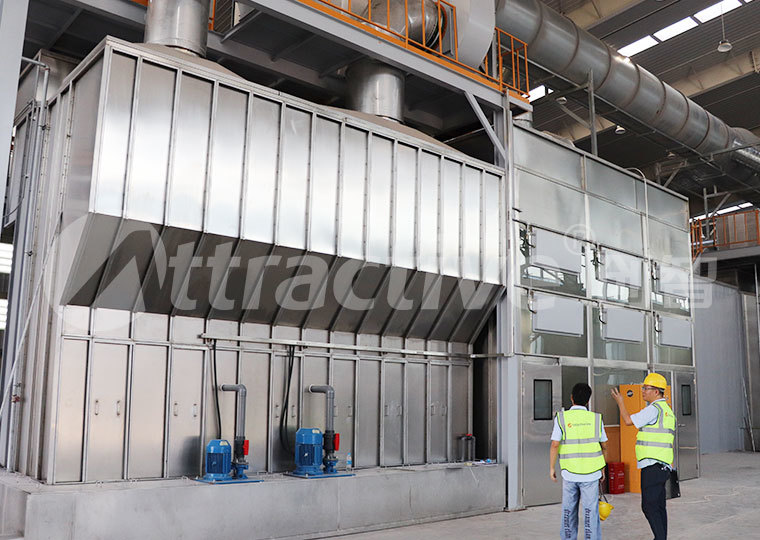
- Reconfigurable Spray Booth System: Adapts to workpieces of different sizes using movable partitions or adjustable booth dimensions. Different types of spraying equipment (e.g., extension guns for complex cavities, high-speed bells for large flat surfaces) can be rapidly changed inside the booth.
- Flexible Conveyor System: Utilizes intelligent AGVs or power-and-free conveyors for independent, asynchronous workpiece transport. Large parts travel on floor conveyors, while small parts can be suspended, without interfering with each other. The system automatically routes workpieces to the appropriate spray station or curing oven based on their information.
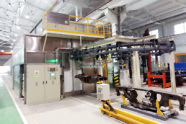
- Multi-Zone / Multi-Process Curing Ovens: Designs zone-controlled tunnels or parallels multiple functionally different ovens (high-temp, low-temp, infrared). Intelligent scheduling of the conveyor system routes workpieces requiring different coatings to the most suitable curing path.
2. Intelligent Perception and Adaptive Control Core
This is the "brain" for handling uncertainty and ensuring quality consistency.
- 3D Vision Recognition and Workpiece Tracking: Workpieces are identified upon entering the line; the system automatically retrieves their CAD model and process file. A 3D vision system scans the actual workpiece, compensating for fixture deformation or incoming material tolerances, and plans precise spray paths for the robot.
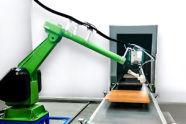
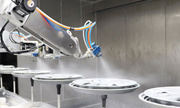
- Adaptive Process Parameter Adjustment: Based on perception data, the Intelligent Coating System adjusts spray flow rate, atomizing pressure, electrostatic voltage, and robot trajectory in real-time. For example, it automatically increases coating thickness on weld seams or edges, and adjusts gun angle and reach for complex cavities.
- Digital Twin and Offline Programming: Simulates the entire production process in a virtual environment, optimizing programs in advance, verifying accessibility, and checking for interference. This minimizes on-site commissioning time and supports rapid reprogramming for product changes.
3. Integrated Data and Manufacturing Execution System
This is the management hub for achieving traceability and continuous optimization.
- Full-Process Data Collection: Real-time collection and correlation of workpiece information, process parameters, equipment status, energy consumption data, and quality inspection results.
- Quality Closed-Loop Control: Data from online film thickness gauges is fed back to the spraying robot in real-time to automatically correct parameters for subsequent workpieces. After visual inspection systems identify defects, they automatically mark them and guide subsequent handling processes.
- Seamless Integration with MES/ERP: Receives production orders and automatically generates process tasks; after completion, transmits actual consumption, labor hours, and quality data back, enabling factory-level information exchange. This is key to the evolution of an automated coating production line towards smart manufacturing.
III. Industry Application Examples: When Complexity Meets Integration
Aerospace: A coating line for aircraft engine blades must handle dozens of different blade types with high-temperature thermal barrier coatings. The Integrated Coating Solution uses robots equipped with specialized spray guns to reach inside the blades' internal cooling channels. Combined with precise masking technology, it achieves precise coating application only on specific areas, ensuring coating thickness tolerance at the micron level. All line data is linked to the product's serial number, enabling lifetime traceability.
Defense Manufacturing: A defense company needs to apply anti-corrosion and stealth coatings to large cabin structural parts. The solution employs rail-mounted mobile robots paired with lifting and rotating platforms to cover all external surfaces and internal cavities. A quick color change system enables continuous application of multi-layer, multi-color coatings on a single part without cross-contamination between different coatings.
IV. Key Considerations for Choosing an Integrated Solution
Faced with such complex systems, selecting the right partner is critical:
- Process Depth and Cross-Domain Knowledge: The supplier must deeply understand the coating standards and process pain points of the target industry, and be able to integrate multiple technologies like powder, liquid, and electrocoating.
- System Integration Capability: They need to be more than just an equipment manufacturer; they must be a system integrator. Strong project management skills are required to coordinate multiple disciplines like mechanical, electrical, software, and environmental engineering.
- Customization, Not Standardization: A true integrated solution is inherently a highly customized coating solution. The supplier should possess end-to-end customization capabilities, from process testing and solution design to non-standard equipment development.
- Openness and Scalability: The system architecture should be open, reserving interfaces for future technologies (e.g., new inspection equipment, AI optimization algorithms), ensuring the line can evolve alongside future needs.
V. Conclusion
In an era where manufacturing complexity is increasingly the norm, treating the coating process as an isolated island is no longer viable. Integrated Coating Solutions for Complex Production Needs represent a systemic, holistic engineering mindset. They deeply integrate processes, equipment, control, and information flow, transforming "complexity" into "order" and "challenges" into "competitiveness." For enterprises in high-end manufacturing, investing in such a system is not just a means to solve current production problems but a strategic foundation for building an agile, intelligent, and future-proof manufacturing capability. It gives companies the confidence to take on the most complex orders and the strength to guarantee the most stringent quality, enabling them to navigate steadily and far in the blue ocean of high-end manufacturing.
SEO:


Contact Us
No.2 Yingbin Avenue, High-tech District, Zhaoqing City, Guangdong Province, China.
Online Message