Intelligent Coating Line Advantages: Reshaping the Core Competitiveness of Manufacturing Surface Treatment
Author:
Chuangzhi Coating
Introduction: From Automation to Intelligence, a Paradigm Shift in Coating Technology
In the process of manufacturing moving towards high-quality development, coating technology is undergoing a profound transformation. Traditional automated coating lines solved the problem of "machines replacing labor," while the new generation of intelligent coating lines has achieved a qualitative leap on this foundation—endowing equipment with capabilities for perception, decision-making, learning, and self-optimization. This transition from "automation" to "intelligence" is not merely an improvement in technical parameters but a fundamental change in production models. This article systematically expounds the core advantages of intelligent coating lines, revealing how they build insurmountable competitive barriers for manufacturing enterprises.
I. Quality Advantages: From "Human Control" to "Precision Assurance"
1.1 Ultimate Consistency and Repeatability
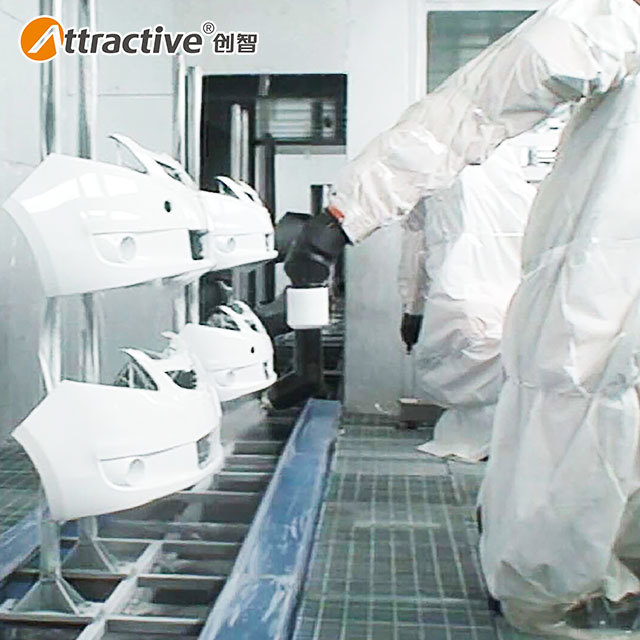
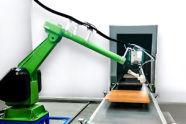
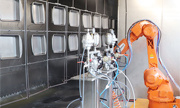
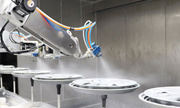
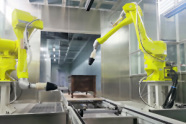
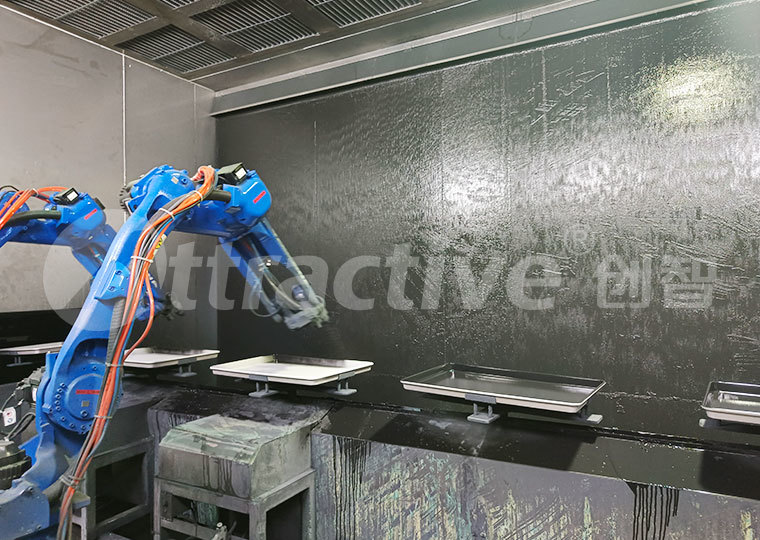
Quality fluctuation is the biggest pain point of traditional coating lines. Manual spraying is affected by operator condition and experience differences; even the same skilled worker cannot guarantee identical coatings on every product. Intelligent coating lines achieve millimeter-level control over spray trajectory, gun distance, and movement speed through high-precision robots combined with 3D vision systems. Robots can precisely reproduce optimal trajectories, ensuring that key indicators such as film thickness, color difference, and gloss remain highly consistent whether it is the first piece or the ten-thousandth piece.
1.2 Adaptive Process Adjustment
Traditional coating lines are often powerless when facing variations such as incoming material tolerances and fixture deformation. Intelligent coating systems possess "adaptive" capabilities—through online inspection equipment that monitors key parameters such as film thickness and temperature in real-time, when deviations are detected, the system automatically adjusts spray flow rate, robot speed, or curing temperature, eliminating quality fluctuations in their infancy. This closed-loop control mechanism ensures stable and reliable coating quality even under complex operating conditions.
1.3 Early Defect Identification and Prevention
Intelligent coating lines integrate AI vision inspection systems capable of identifying surface defects such as runs, orange peel, particles, and color difference with precision and speed far exceeding manual inspection. More importantly, the system can perform statistical analysis on defect data, tracing back to specific process parameters or equipment status, helping engineers quickly locate root causes and achieve defect prevention rather than post-hoc repair.
II. Efficiency Advantages: Unleashing the Potential of Overall Equipment Effectiveness
2.1 Cycle Time Optimization and Capacity Increase
Intelligent coating lines use digital twin technology to simulate and optimize production cycle times in a virtual environment. Engineers can precisely calculate operation time at each station, eliminate bottleneck processes, and achieve optimal balance across the entire line. Compared to traditional lines, intelligent coating lines typically achieve 15-30% capacity increases without additional equipment investment.
2.2 Quick Changeover and Flexible Production
In the market trend toward high-mix, low-volume production, changeover efficiency has become a critical capability for coating lines. Intelligent coating lines are equipped with automatic color change systems and quick-change fixtures, enabling one-click changeover through preset programs. Color change time is reduced from hours to minutes, and tooling change time is reduced from half a day to under 30 minutes. This flexible coating line design enables enterprises to confidently respond to order fluctuations and product iterations.
2.3 Improved Overall Equipment Effectiveness
Intelligent coating lines continuously monitor equipment status parameters such as vibration, temperature, and current through predictive maintenance systems, providing early warning of potential failures and avoiding unexpected downtime. Additionally, the system can automatically optimize equipment start-up and shutdown based on production schedules, reducing idle waste. These measures increase Overall Equipment Effectiveness (OEE) from 60-70% on traditional lines to over 85%.
III. Cost Advantages: Economic Benefits from a Full Lifecycle Perspective
3.1 Maximized Material Utilization
Coating materials represent the largest variable cost in coating lines. Intelligent coating lines utilize electrostatic spraying technology combined with closed-loop flow control, increasing coating utilization from 30-50% with conventional air spray to 70-90%. For powder coatings, efficient recovery systems achieve utilization rates exceeding 95%. This single factor can save millions of yuan in material costs annually for medium to large coating lines.
3.2 Energy Consumption Optimization
Intelligent coating lines significantly reduce energy consumption through integrated application of technologies such as variable frequency drives, waste heat recovery, and low-temperature curing. The system automatically adjusts fan speeds and oven temperature settings based on actual production loads, avoiding ineffective energy consumption. Combined with intelligent scheduling, it concentrates production of workpieces requiring similar temperature profiles, reducing the number of oven ramp-ups. Typical projects achieve 20-40% energy savings.
3.3 Reduction in Labor Costs and Quality Losses
Automation replaces physically demanding spraying operations, reducing dependence on skilled workers. Simultaneously, stable quality greatly reduces losses from rework, scrap, and customer claims. Comprehensive calculations show that total lifecycle operating costs of intelligent coating lines can be 25-35% lower than traditional lines.
IV. Flexibility Advantages: Agile Capability to Adapt to Dynamic Markets
4.1 Multi-Variety Co-Line Production
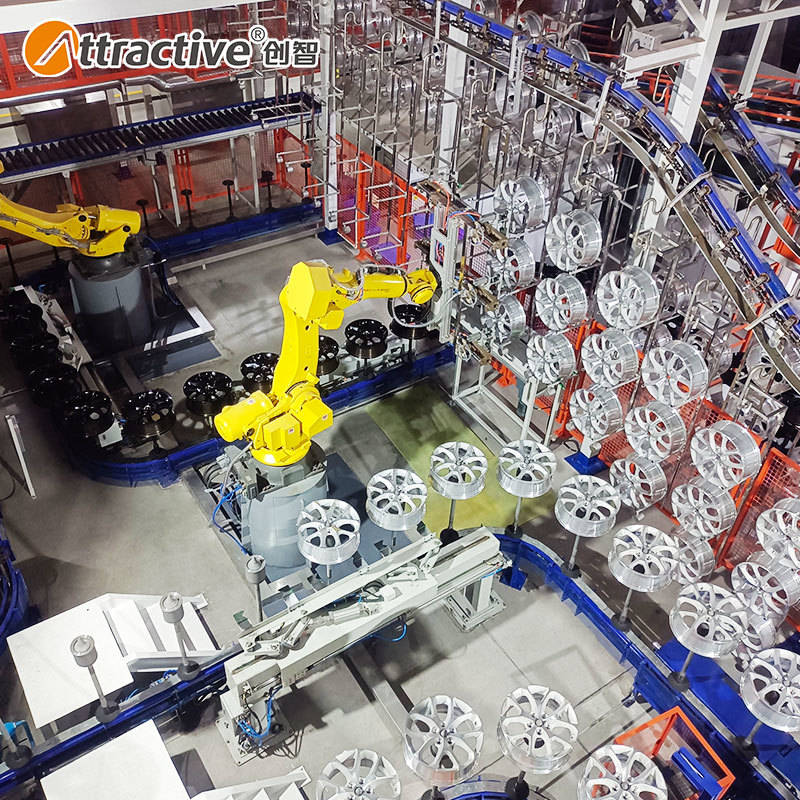
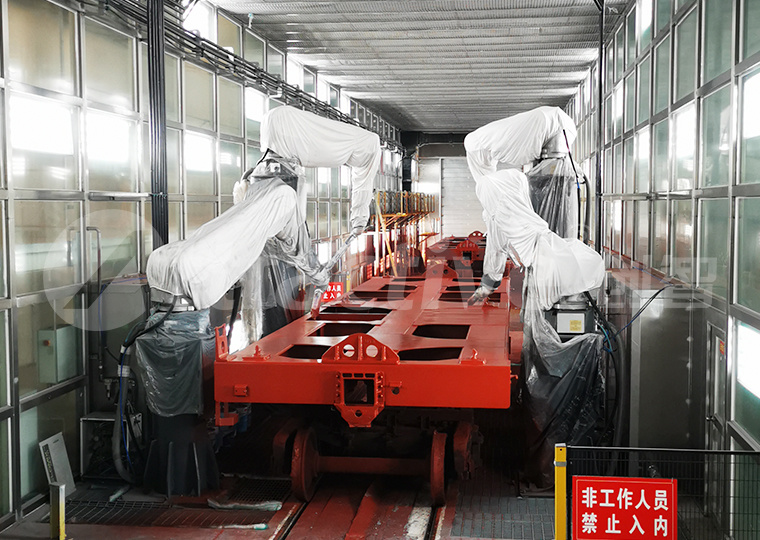
Intelligent coating lines achieve mixed production of multiple workpiece varieties on the same line through modular design and intelligent scheduling. The system automatically calls corresponding spray programs, process parameters, and conveying paths based on workpiece type, without manual intervention. This capability eliminates the need for enterprises to invest in separate lines for each product, significantly reducing capital expenditure.
4.2 Rapid Response to Customer Customization
In the era of personalized consumption, customization demands are increasingly common. Intelligent coating lines support flexible modes capable of single-piece production, meeting custom orders at costs approaching batch production through quick color changes and intelligent path planning. This agile manufacturing capability becomes important support for enterprises to secure high-value-added orders.
4.3 Dynamic Adjustment of Process Paths
When product designs change or new processes are introduced, intelligent coating lines require no hardware modification—adjustments can be completed through software upgrades alone. This flexibility enables enterprises to respond rapidly to market demand changes, maintaining leadership amid technological iterations.
V. Green Advantages: An Inevitable Choice for Sustainable Development
5.1 VOC Source Reduction
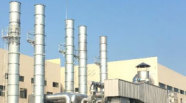
Intelligent coating lines actively adapt to environmentally friendly materials such as waterborne coatings, high-solid coatings, and powder coatings, reducing volatile organic compound emissions at the source. Combined with efficient exhaust treatment systems (such as RTO), VOC removal rates can exceed 99%, easily meeting the strictest environmental regulations.
5.2 Waste Resource Utilization
Through precise paint supply control and efficient recovery systems, intelligent coating lines significantly reduce the generation of waste paint sludge, waste solvents, and waste packaging. For unavoidable waste, the system supports segregated collection and resource utilization, achieving the environmental goals of "reduction, resource utilization, and harmless treatment."
5.3 Carbon Footprint Transparency
Intelligent coating lines have built-in energy management systems that collect real-time data on electricity, gas, water, and coating consumption, automatically generating carbon footprint reports. This transparency not only supports enterprises' own continuous improvement but also serves as powerful proof of environmental commitment to customers and regulators.
VI. Digital Advantages: Data-Driven Continuous Evolution
6.1 Full-Process Data Collection
Intelligent coating lines deploy hundreds of sensors at critical points, collecting real-time data on process parameters, equipment status, quality metrics, and energy consumption. This data constitutes a "digital mirror" of the production line, providing a solid foundation for subsequent analysis and optimization.
6.2 Process Optimization and Knowledge Accumulation
Through big data analysis, the system can identify correlations between process parameters and quality outcomes, automatically recommending optimal parameter combinations. More importantly, the experience of senior engineers is transformed into reusable algorithmic models, preventing knowledge loss due to personnel turnover.
6.3 Seamless Integration with MES/ERP
As key nodes in smart factories, intelligent coating lines achieve data exchange with enterprise-level systems such as MES and ERP. Production orders are automatically dispatched to the line, completion information is transmitted back in real-time, and managers can remotely monitor line status and trace product quality, achieving transparent and refined operational management.
VII. Conclusion: Intelligent Coating Lines are the Future Cornerstone of Manufacturing
The advantages of intelligent coating lines extend far beyond equipment-level upgrades—they fundamentally reshape the production model of surface treatment. Driven by data and powered by algorithms, they transform coating from a "craft" reliant on experience into a "science" that can be quantified, optimized, and predicted.
For manufacturing enterprises, investing in intelligent coating lines is far from simple equipment procurement; it is a strategic deployment to build future core competitiveness. In an era of increasingly stringent quality requirements, fierce market competition, and tightening environmental regulations, those enterprises that embrace intelligent coating technology first will inevitably establish insurmountable competitive barriers across dimensions such as efficiency, quality, cost, and sustainability.
Choosing an intelligent coating system means choosing to manage uncertainty with certainty, replacing experience-based judgment with intelligent decision-making, and enabling continuous optimization through data-driven approaches. This is not only the future of coating technology but also the necessary path toward high-quality development in manufacturing.