The Complete Guide to Coating Line Equipment: Types, Processes & Applications
Author:
Chuangzhi Coating
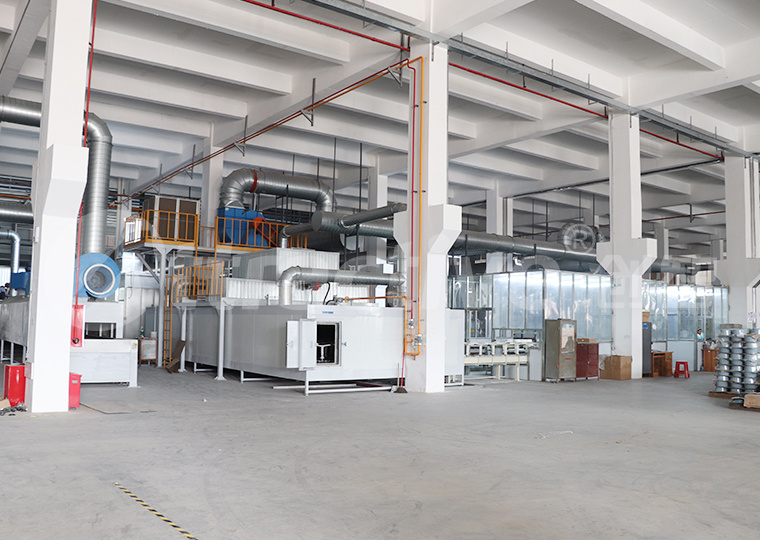
Coating line equipment is the core technology for achieving surface protection and decoration in modern manufacturing. From automotive components to home appliance housings, from building materials to construction machinery, almost all industrial products require high-quality coating treatment. However, faced with different types of coating technologies, complex process flows, and diverse equipment options, many enterprises often feel confused when planning coating lines. This article systematically reviews the main types of coating line equipment, key process stages, and typical application scenarios, providing a clear roadmap for your investment decisions.
I. Main Types of Coating Line Equipment
According to different coating forms and application methods, coating line equipment is mainly divided into the following three categories:
1. Powder Coating Line
Powder coating uses the principle of electrostatic spraying, where charged powder particles are attracted to grounded workpiece surfaces and then cured at high temperatures to form a dense coating.
Core Equipment Components:
Spray booth and powder recovery system (cyclone separation + cartridge filtration)
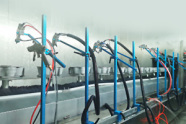
Electrostatic powder spray guns (manual or automatic)
Coating material utilization rate exceeding 95% (recyclable)
Thick, wear-resistant and corrosion-resistant coating
One-coat film formation, no primer required
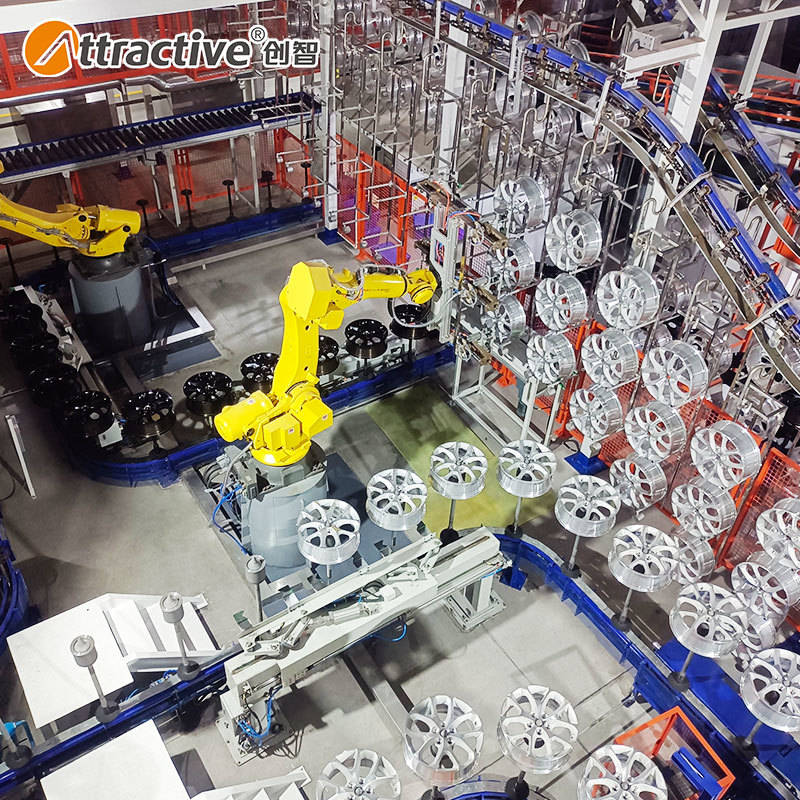
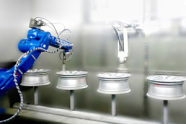
Typical Applications: Home appliance housings, aluminum profiles, automotive wheels, metal furniture, railings and fences
2. Liquid Coating Line
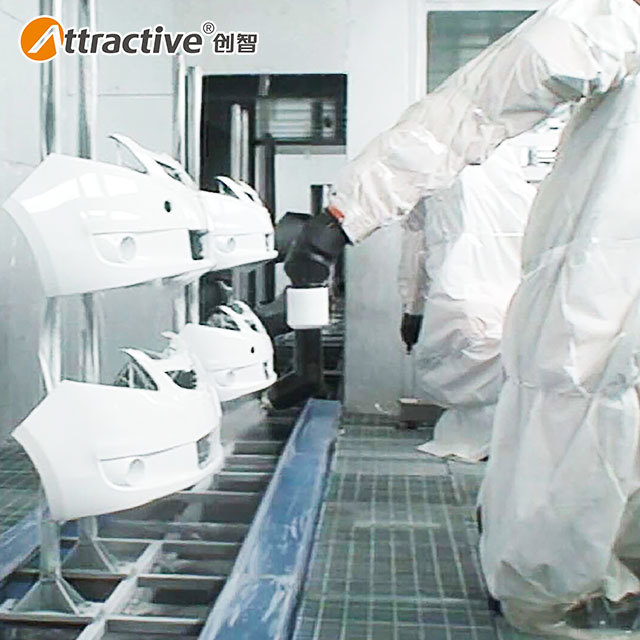
Liquid coating lines are suitable for solvent-based coatings, waterborne coatings, and high-solid coatings. They atomize liquid coatings and apply them to workpiece surfaces through air spraying, airless spraying, or electrostatic rotary bells.
Core Equipment Components:
Spray booth with air supply and exhaust system (water curtain or dry type)
Electrodeposition coating uses an electric field to deposit charged coating particles onto workpiece surfaces, primarily used for primer anti-corrosion treatment.
Core Equipment Components:
E-coat tank with circulation and filtration system
Rectifier power supply and anode system
Ultrafiltration (UF) and reverse osmosis (EDI) rinse systems
Curing oven
Advantages and Characteristics:
Excellent penetrating power, covering internal cavities and weld seams
Superior corrosion resistance, salt spray test exceeding 1000 hours
High degree of automation, suitable for mass production
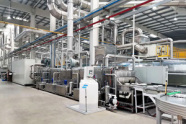
Regardless of the coating technology used, a complete set of coating line equipment typically includes the following core process stages:
1. Pre-Treatment
Pre-treatment is the foundation of coating quality. Its main objectives are to remove oil, rust, and scale from workpiece surfaces and to form a uniform chemical conversion film (such as phosphate or silane film) to enhance coating adhesion and corrosion resistance.
Typical Process Sequence: Pre-degreasing → Main degreasing → Water rinsing → Surface conditioning → Phosphating/Silanization → Deionized water rinsing → Drying
For powder coating, pre-treatment quality directly determines coating adhesion and long-term corrosion protection performance.
2. Coating Application
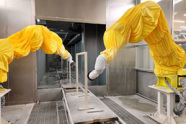
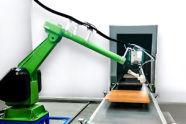
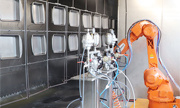
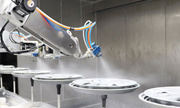
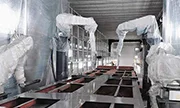
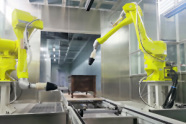
This is the core stage of the coating line. Depending on the process, robotic automatic spraying, reciprocator spraying, or manual spraying can be used. Modern automated coating production lines generally adopt electrostatic spraying technology to improve coating utilization and uniformity.
For liquid coating, air velocity, temperature, and humidity inside the spray booth must be strictly controlled. For powder coating, attention must be paid to the sealing of the spray booth and recovery efficiency.
3. Curing/Drying
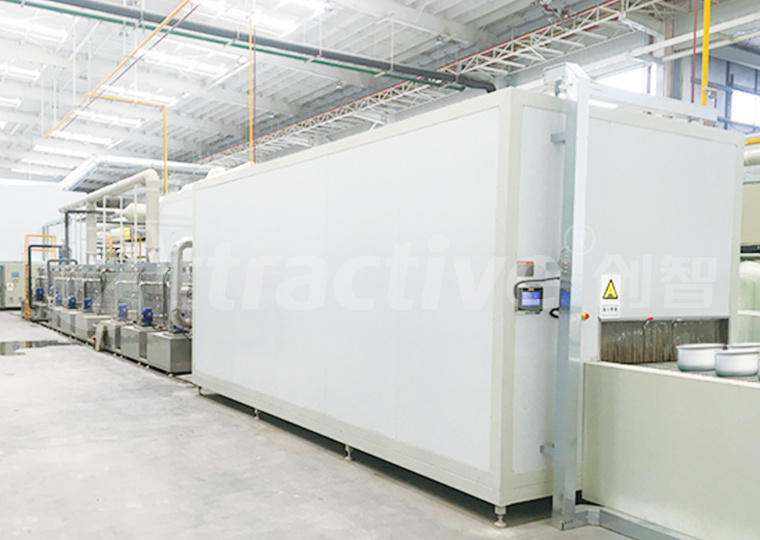
After spraying, workpieces enter a curing oven or tunnel, where the coating melts, levels, and undergoes cross-linking reactions at a set temperature, forming a hard, durable, and aesthetically pleasing film.
Key Control Parameters: Heating rate, holding temperature, holding time, oven temperature uniformity (within ±5°C)
4. Auxiliary Systems
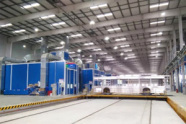
Conveying System: Overhead chain, floor chain, power-and-free chain, self-propelled trolleys, etc., enabling automatic transfer of workpieces between stations
Control System: PLC and SCADA systems for centralized monitoring and data collection across the entire line
III. Typical Application Scenarios of Coating Lines
Automotive Component Manufacturing
The automotive industry is one of the most extensive application fields for coating technology. Chassis components often use cathodic electrodeposition coating lines for excellent corrosion protection; wheels generally use powder coating lines for both appearance and durability; interior trim requires liquid coating lines for high decorative effects.
Home Appliances and Consumer Electronics
The housings of refrigerators, air conditioners, and washing machines typically use powder coating lines for environmental friendliness and cost control. Precision electronic products such as mobile phones and laptops require high-precision liquid coating lines to achieve delicate surface texture and color performance.
Building Materials and Hardware
Aluminum doors, windows, and curtain wall profiles widely use powder coating lines to provide rich color and texture effects. Small hardware parts such as fasteners and hinges often use electrodeposition or batch powder coating.
Construction Machinery and Agricultural Equipment
Large equipment such as excavators, loaders, and tractors require thick-film heavy-duty anti-corrosion coatings, typically using liquid coating lines with multi-layer processes (primer + intermediate + topcoat). Some components also use powder coating.
IV. How to Choose the Right Coating Line Equipment
Selecting coating line equipment is a complex systems engineering task. It is recommended to evaluate comprehensively from the following dimensions:
1. Product Characteristics and Coating Requirements
Workpiece material: Steel, aluminum, plastic, and composites have different pre-treatment requirements
Workpiece shape: Simple flat surfaces or complex curved surfaces? Are there deep cavities or blind holes?
Coating performance: Corrosion resistance level, weatherability, hardness, gloss, color requirements
2. Production Capacity and Automation Level
Annual output requirements: Determine line speed and scale
Product variety: Is quick color change or flexible production needed?
Degree of automation: Robotic spraying significantly improves consistency and efficiency
3. Environmental Protection and Energy Consumption
Environmental regulations: VOC emission limits, zero wastewater discharge requirements
Energy costs: Electricity and natural gas prices affect operating economics
Sustainability Goals: Should Interfaces for Low-Carbon and Green Processes Be Reserved
4. Budget and Return on Investment
Balance between initial investment and total cost of ownership (TCO)
Whether the supplier can provide customized coating solutions and turnkey engineering
V. Future Trends: Intelligent and Green Coating Lines
With the advancement of Industry 4.0 and carbon peaking/carbon neutrality goals, coating line equipment is evolving towards greater intelligence, greener operation, and higher efficiency:
Intelligent Coating Systems: Integrating AI vision, 3D scanning, and digital twins to achieve adaptive spraying and predictive maintenance
Low-Temperature Curing Technology: Reducing energy consumption and adapting to heat-sensitive substrates
Waterborne and High-Solid Coatings: Reducing VOCs at the source
Dry Spray Booths and Recirculating Air Technology: Significantly reducing water and energy consumption
Choosing efficient coating solutions with forward-looking design will keep your production line technologically advanced for years to come.
VI. Conclusion
Coating line equipment serves as the critical bridge connecting materials to products and processes to quality. Understanding the characteristics, core processes, and applicable scenarios of different types of coating lines is the first step in making correct investment decisions. Whether powder coating, liquid coating, or electrodeposition coating, every successful coating line relies on a deep understanding of product requirements, strict control of process details, and careful evaluation of supplier expertise.
We hope this article provides valuable references for your coating line planning. To further explore automated coating line solutions tailored to your specific products, we recommend engaging in in-depth discussions with experienced professional manufacturers to jointly create the coating solution that best suits your needs.