
















Powder coating is widely used in home appliances, automotive parts, aluminum profiles, metal furniture, and other industries due to its environmental friendliness, high efficiency, and excellent coating performance. However, various failures occur during the operation of powder coating systems—uneven powder delivery, orange peel, cratering, poor adhesion, over-baking yellowing—directly affecting production efficiency and product quality. This article summarizes the root causes and solutions for ten common failures in powder coating systems, helping you quickly diagnose and fix problems, keeping your powder coating line in optimal condition.

I. Uneven Powder Delivery (Flow Fluctuation)
Symptoms: Powder output from the spray gun fluctuates, causing uneven coating thickness, localized exposed substrate, or excessive buildup.
Root Causes:
- Worn or clogged Venturi tube in powder pump
- Poor fluidization in powder hopper, powder clumping, or insufficient air pressure
- Powder hose too long or with too many bends
- Powder moist or agglomerated
Solutions:
- Regularly inspect and replace Venturi tubes (every 3-6 months)
- Check fluidizing plate for clogging; adjust fluidization air pressure to 0.2-0.5 bar
- Shorten powder hose length and reduce elbows
- Keep powder storage dry (humidity <60%); sieve powder before use
II. Orange Peel (Rough Surface)
Symptoms: Coating surface has an orange peel texture after curing, low gloss, rough feel.
Root Causes:
- Wide powder particle size distribution or excessive fine powder content
- Insufficient film thickness (<40μm)
- Low curing temperature or insufficient dwell time
- Excessive electrostatic voltage causing powder rebound
Solutions:
- Switch to high-quality powder with narrow particle size distribution
- Adjust spraying parameters to achieve 60-80μm film thickness
- Measure oven temperature profile; ensure workpiece temperature meets curing requirements (typically 180-200°C for 10-15 min)
- Reduce electrostatic voltage (50-60kV); appropriately increase gun distance
III. Craters and Fish Eyes
Symptoms: Circular depressions on coating surface, exposing substrate at center.
Root Causes:
- Oil or water in compressed air contaminating powder
- Residual oil, mold release agent, or silicone on workpiece surface
- Powder moisture or contamination
- Incompatible release agents or lubricants near spray booth
Solutions:
- Install high-efficiency oil-water separators; regularly drain compressor condensate
- Reinforce pre-treatment with degreasing and rinsing steps
- Replace contaminated powder; clean powder supply system
- Avoid using silicone-containing products near spray booth
IV. Poor Adhesion (Peeling, Flaking)
Symptoms: Coating flakes off during cross-cut test or after impact.
Root Causes:
- Poor pre-treatment (incomplete degreasing, uneven phosphate film)
- Under-curing (insufficient temperature or time)
- Excessive film thickness (>120μm causing high internal stress)
- Rust or mill scale on substrate surface
Solutions:
- Check pre-treatment bath concentrations, temperatures, and spray pressures
- Use oven temperature profiler; extend dwell time or raise temperature if needed
- Control film thickness between 60-90μm
- Add shot blasting or pickling to remove scale
V. Over-Baking Yellowing
Symptoms: Coating turns yellow, loses gloss, especially on white or light colors.
Root Causes:
- Excessive curing temperature or time
- Non-uniform oven temperature, localized overheating
- Poor thermal stability of powder
Solutions:
- Calibrate oven temperature sensors; adjust to powder's recommended curing window
- Check hot air circulation system; eliminate hot spots
- Switch to powder with better heat resistance (e.g., polyester resin system)
VI. Back Ionization (Volcano Crater)
Symptoms: Ring-shaped raised bumps with pinhole centers on coating surface.
Root Causes:
- Excessive electrostatic voltage causing charge buildup and breakdown
- High powder resistivity
- Excessive film thickness
Solutions:
- Reduce voltage to 50-60kV; use reverse pulse or "soft spray" mode
- Switch to powder with better conductivity
- Keep film thickness below 100μm
VII. Faraday Cage Effect
Symptoms: Thin or missing coating in deep cavities, inside corners, and recessed areas.
Root Causes:
- Electrostatic shielding preventing charged powder from entering deep areas
- Improper gun angle or distance too close
- Powder charge too strong
Solutions:
- Reduce electrostatic voltage; increase gun-to-workpiece distance
- Use specialized extension guns or "back ionization" guns
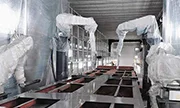
- For automated coating lines, optimize robot spraying paths with multiple angles
- Consider using tribo guns (non-electrostatic)
VIII. Poor Fluidization in Powder Hopper
Symptoms: Uneven powder turbulence in hopper; intermittent powder delivery.
Root Causes:
- Fluidizing plate clogged by fine powder
- Insufficient or fluctuating fluidization air pressure
- Powder clumping (moisture or old stock)
- Too much or too little powder in hopper
Solutions:
- Regularly clean or replace fluidizing plate
- Stabilize fluidization air supply with regulator and filter
- Sieve powder before use; control storage environment
- Keep powder level between 1/3 and 2/3 of hopper capacity
IX. Reduced Recovery System Efficiency
Symptoms: Powder drifting in booth; less recovered powder; rapid filter clogging.
Root Causes:
- Malfunctioning filter cartridge reverse pulse system or incorrect parameters
- Clogged recovery ducts or insufficient fan airflow
- Filter cartridges at end of life
Solutions:
- Check reverse pulse solenoid valves, pulse frequency, and pulse pressure
- Clean recovery ducts; inspect fan belts and motors
- Replace filter cartridges per service life (typically 6-12 months)
X. Non-Uniform Curing Oven Temperature
Symptoms: Different degrees of curing on different areas of same workpiece; large gloss variation.
Root Causes:
- Improperly adjusted air nozzle angles or openings
- Faulty circulating fan or slipping belt
- Workpiece racking blocking hot air flow
Solutions:
- Use multi-point temperature recorder to map oven temperature field; adjust nozzles
- Inspect fan and drive components
- Optimize rack design to avoid blocking hot air
Conclusion
Stable operation of a powder coating system relies on meticulous management of every step—from pre-treatment, spraying parameters, powder quality, equipment maintenance to curing process. By systematically understanding the causes and solutions of common failures, you can significantly reduce downtime and improve the overall efficiency of your powder coating line.
If you encounter difficulties in operating your powder coating system or wish to upgrade your coating line equipment for more consistent coating quality, Attractivechina is worth your attention. We has extensive experience in designing, manufacturing, and commissioning automatic coating lines, and can provide you with customized coating solutions for powder, liquid, and hybrid processes.