











Related News
13
2026
-
05
Top Coating Line Technology Trends in 2026
Author:
Chuangzhi Coating
Coating technology is undergoing a profound transformation. In 2026, customers no longer settle for lines that "just coat." They demand lines with self-sensing, self-decision-making, and self-optimizing intelligence. Automation, data, and sustainability have become core purchasing criteria. Coating lines that fail to follow these trends will lag in efficiency, cost, and environmental compliance. This article outlines the top ten technology trends in coating lines for 2026, helping you plan ahead.

Trend 1: Adaptive Robotic Spraying — From Teaching to Sensing
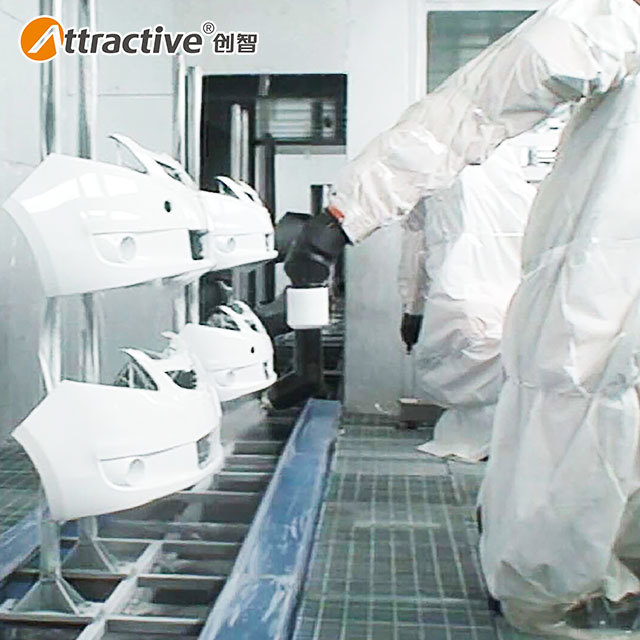
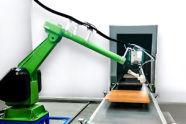
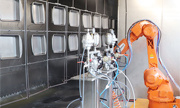
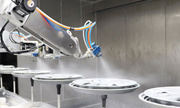
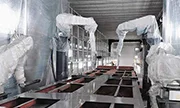
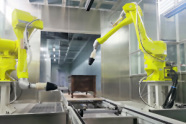
Traditional robotic spraying relies on offline programming or teach pendants, unable to handle workpiece position variations or incoming tolerances. In 2026, 3D vision guidance and force sensing have become standard on automatic coating lines. Robots scan workpiece contours in real-time, dynamically adjusting trajectories and parameters — spraying accurately even when parts are randomly placed. This technology reduces changeover time by 80%, ideal for high-mix, low-volume production.
Trend 2: Digital Twins — Virtual Commissioning for Line Optimization
Before physical equipment is installed, engineers build a digital twin of the coating line in a virtual environment, simulating spray trajectories, airflow, and temperature fields, identifying interferences and process defects early. In 2026, digital twins have become a standard deliverable for large coating line equipment projects. Clients can verify cycle times and quality on the virtual line, compressing on-site commissioning time by over 50%.
Trend 3: AI Vision Inspection — Guardian of Zero Defects
Deep learning-based AI vision inspection systems identify defects such as runs, orange peel, craters, particles, and color variations with far greater accuracy and speed than humans. In 2026, AI inspection has evolved from "offline sampling" to "online full inspection with closed-loop feedback." The system automatically marks defect locations and feeds data back to the spray robot, adjusting parameters in real-time — closing the quality loop. This is a key enabler of intelligent coating systems.
Trend 4: Predictive Maintenance — Goodbye to Unexpected Downtime
Using vibration, temperature, and current sensors to continuously monitor fans, motors, pumps, and robots, machine learning models predict remaining useful life and issue early maintenance alerts. In 2026, predictive maintenance reduces unplanned downtime on coating lines by over 60%, driving Overall Equipment Effectiveness (OEE) above 85%. This technology is especially valuable for continuously operating powder coating lines.
Trend 5: Low-Temperature Curing — Green Path to Cost Reduction
New powder and liquid coatings cure at 120-160°C, significantly lower than traditional 180-220°C, reducing energy consumption. In 2026, low-temperature curing has become standard on new efficient coating solutions. Combined with heat pumps and waste heat recovery, total line energy consumption can be cut by 30-40%. Additionally, low-temperature curing enables heat-sensitive substrates like plastics and wood to be powder coated, expanding application boundaries.
Trend 6: Waterborne and High-Solid Coatings Dominate
Driven by global VOC reduction regulations, waterborne and high-solid coatings have captured the dominant share of the liquid coating market in 2026. Coating line equipment must be compatible with these new materials — including corrosion-resistant stainless steel paint supply systems, low-temperature flash-off zones, and explosion-proof adjustments. This forces older solvent-based lines to accelerate retrofits.
Trend 7: Dry Spray Booths Proliferate — Zero Water, Low Maintenance
Traditional water-curtain spray booths consume large amounts of water and have high wastewater treatment costs. In 2026, dry spray booths (using lime powder or cardboard filters) have achieved over 50% penetration in liquid coating lines. Overspray is captured by dry media, requiring no water treatment. The media can be incinerated or co-processed. Compared to water curtains, dry spray booths reduce operating costs by about 40% and eliminate wastewater discharge.
Trend 8: Deep Integration of Energy Management Systems
Automated coating lines in 2026 are built with multi-level energy metering (ovens, fans, compressors, pre-treatment heating, etc.). Energy Management Systems (EMS) monitor consumption in real-time, benchmark against targets, automatically detect abnormal usage, and generate carbon footprint reports. Customers can connect EMS data to factory-level carbon neutrality systems to meet carbon tariff requirements in export markets.
Trend 9: Flexible Color Change and Quick Changeover
For customized production, coating lines in 2026 commonly adopt "one-to-many" paint supply centers, automatic cleaning valve blocks, and quick-change fixtures. Powder lines feature rapid color-change powder centers and mobile spray booths. Color change time has been compressed from 30 minutes to under 5 minutes; changeover time from half a day to 30 minutes. This flexible coating line design brings the cost of small batches close to that of mass production.
Trend 10: Traceable Carbon Footprint — Hard Currency of Green Coating
End brands increasingly require suppliers to provide the coating carbon footprint for each product. In 2026, advanced customized coating solutions have integrated carbon footprint modules that calculate CO2 emissions per process step according to international standards (ISO 14067) and link them to product batches. Coating lines with carbon traceability have become the "entry ticket" to high-end supply chains.
Conclusion
The coating line of 2026 is no longer an isolated application device but an intelligent system integrating robotics, AI, digital twins, low-carbon processes, and data networks. Automation, data, and sustainability have moved from "nice-to-have" to "must-have." Whether building a new line or retrofitting an old one, following these technology trends is essential to staying competitive.
Attractivechina has integrated cutting-edge technologies — adaptive robotic spraying, digital twin commissioning, AI vision inspection, low-temperature curing, and energy management systems — into its coating line equipment, delivering future-ready intelligent coating systems. From powder to liquid, from standard lines to highly flexible custom solutions, Attractivechina is dedicated to helping manufacturers achieve more efficient, greener, and smarter coating production.
Previous
Next Page


Contact Us
No.2 Yingbin Avenue, High-tech District, Zhaoqing City, Guangdong Province, China.
Online Message