





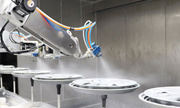

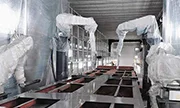
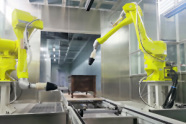



"How much does a coating line cost?" This is the most common question manufacturers ask when making investment decisions. However, the answer is not simple. The cost of a coating line depends on dozens of variables, including process type, automation level, capacity scale, and environmental configuration. A small manual coating line may cost only tens of thousands of dollars, while a large fully automatic intelligent coating line may require millions. Based on 2026 market conditions, this article systematically outlines the price ranges, cost components, and influencing factors for various types of coating lines, helping you make an informed investment budget.

I. Main Types of Coating Lines and Price Ranges
1.1 Manual Coating Lines (Entry Level)
Applications: Small batch production, pilot lines, startups with limited budgets
| Type | Price Range (USD) | Typical Configuration |
|---|---|---|
| Manual Powder Coating Line | 83,000 | Manual spray booth + single gun + small oven |
| Manual Liquid Coating Line | 70,000 | Water-curtain booth + manual gun + simple tunnel oven |
Features: Low investment threshold, but high labor dependency and quality fluctuation. Suitable for annual output below 100,000 pieces.
1.2 Semi-Automatic Coating Lines
Applications: Medium batch production, frequent product changeover
| Type | Price Range (USD) | Typical Configuration |
|---|---|---|
| Semi-Automatic Powder Line | 278,000 | Reciprocator with automatic guns + manual touch-up + power-and-free chain |
| Semi-Automatic Liquid Line | 250,000 | Automatic rotary bell + PLC control + automatic color change |
Features: Balances investment and efficiency. Suitable for annual output of 100,000-500,000 pieces.
1.3 Fully Automatic Coating Lines
Applications: High-volume production, stringent quality requirements, 24/7 continuous operation
| Type | Price Range (USD) | Typical Configuration |
|---|---|---|
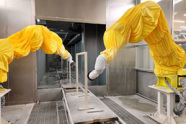
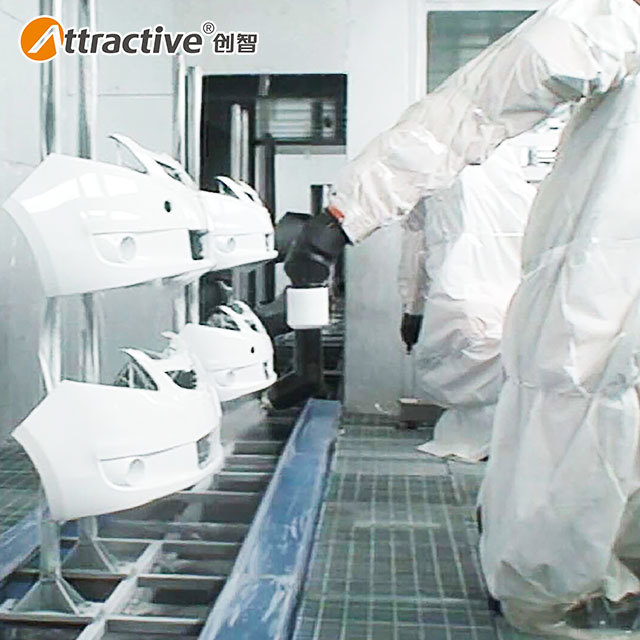
| Fully Automatic Powder Line | 1,667,000 | Robotic spraying + quick-color-change powder center + intelligent control system |
| Fully Automatic Liquid Line | 2,083,000 | Robots + automatic paint mixing + AI vision inspection + RTO |
| Fully Automatic E-Coating Line | 2,778,000 | Fully automatic hoist + ultrafiltration + anode system |
Features: Higher investment but lower long-term operating costs. Suitable for annual output above 500,000 pieces.
1.4 Smart Coating Lines (Industry 4.0)
Applications: High-end manufacturing, EU exports, carbon footprint traceability
| Type | Price Range (USD) | Typical Configuration |
|---|---|---|
| Smart Powder/Liquid Line | 4,167,000 | Full robotics + digital twin + MES integration + AI inspection + EMS |
Features: Payback period typically 2-4 years. Suitable for companies with extreme requirements for quality, efficiency, and environmental protection.
II. Core Factors Affecting Coating Line Cost
2.1 Capacity and Cycle Time
- Faster cycle times require more equipment and higher automation, multiplying costs
- Example: reducing cycle time from 30 seconds/piece to 15 seconds/piece may double spraying equipment
2.2 Workpiece Size and Weight
- Small workpieces (<1m): standard equipment, lower cost
- Medium workpieces (1-3m): longer ovens and larger booths needed, cost increase 30-50%
- Large workpieces (>3m): custom conveying, robot rails, heavy-duty ovens needed, cost increase 100-200%
2.3 Coating System Complexity
- Single coat (powder or single color): simple process, lower investment
- Two coats (primer + topcoat): requires double spraying stations or robots, cost increase 40-60%
- Three or more coats (E-coat + surfacer + basecoat + clearcoat): highest investment, common in automotive
2.4 Environmental Configuration
- Basic (VOC compliance): dry booth + activated carbon, adds 70,000
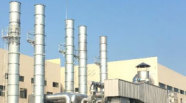
- High-standard (RTO/CO): adds 417,000, meets strictest regulations
- Zero wastewater discharge: adds 208,000
2.5 Automation and Intelligence Level
- Manual / semi-automatic: lowest entry
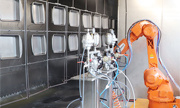
- Robots replacing manual labor: 111,000 per robot
- AI vision inspection: adds 111,000
- MES/SCADA system: adds 83,000
- Digital twin: adds 139,000 (high-end projects)
III. Typical Investment Reference by Industry (2026)
| Industry | Recommended Type | Investment Range (USD) | Notes |
|---|---|---|---|
| Hardware processing | Semi-auto powder line | 208,000 | Annual output 100k-300k pieces |
| Aluminum profiles | Fully auto powder line | 833,000 | Includes quick color change |
| Appliance housings | Fully auto liquid/powder | 1,111,000 | High appearance requirements |
| Automotive parts | Fully auto E-coat + powder | 2,083,000 | Heavy corrosion protection |
| Construction machinery | Custom liquid line | 1,667,000 | Large workpieces |
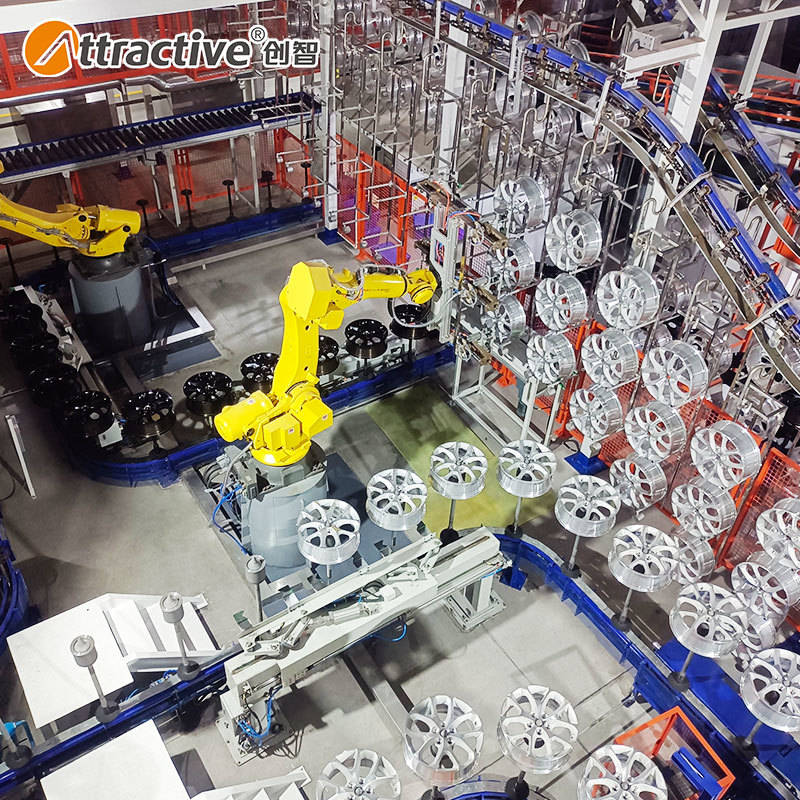
| Wheel manufacturing | Fully auto powder line | 2,778,000 | Three-coat process |
| Aerospace | Smart liquid line | 4,167,000 | High precision + traceability |
IV. Total Cost of Ownership (TCO): Don't Just Look at Initial Investment
Many companies only compare equipment quotes, neglecting long-term operating costs. A more scientific evaluation method is to calculate TCO over 5-10 years:
| Cost Item | Low-End Line (Semi-Auto) | High-End Line (Auto+Smart) |
|---|---|---|
| Initial Investment | $139,000 | $1,111,000 |
| 5-Year Labor | 13,900/year × 5) | 13,900/year × 5) |
| 5-Year Coating | $694,000 (50% utilization) | $347,000 (85% utilization) |
| 5-Year Energy | $208,000 | $139,000 |
| 5-Year Rework Loss | $278,000 (88% yield) | $70,000 (97% yield) |
| 5-Year Total Cost | $1,875,000 | $1,806,000 |
Although the high-end line has a higher initial investment, its 5-year total cost is actually lower. This is why more companies are choosing to invest directly in automated coating lines.
V. How to Develop a Reasonable Coating Line Budget
Step 1: Clarify Requirements
- Annual output target (pieces/year or m²/year)
- Maximum workpiece size and weight
- Coating performance standards (salt spray hours, appearance level)
- Environmental compliance requirements
Step 2: Select Process Route
- Powder / Liquid / E-coat / Hybrid
- Manual / Semi-auto / Fully auto / Smart
Step 3: Obtain Quotes from 2-3 Suppliers
- Request detailed equipment lists and itemized quotes
- Ask whether installation, commissioning, and training are included
Step 4: Calculate Lifecycle Cost
- Not just equipment price, but also labor, coating, energy, maintenance, rework
Step 5: Reserve 10-15% Contingency
- For civil works, utility connections, unforeseen expenses
VI. 2026 Cost Trends and Procurement Recommendations
- Rising raw material costs: Steel and electrical component prices have increased 30-50% from 2020; equipment prices have risen accordingly
- Mature domestic alternatives: Domestic robots, PLCs, and sensors now perform close to imported equivalents at 30-40% lower cost
- Environmental equipment as standard: RTO and dry booths are no longer "options" — include them in budget
- Recommended procurement timing: Q2-Q3 of each year, when supplier capacity is relatively abundant and negotiation room is larger
VII. Conclusion
In 2026, the investment cost for a coating line ranges from tens of thousands to several million dollars, depending on your product, capacity, quality, and environmental requirements. The most expensive is not necessarily the best fit, and the cheapest often hides higher operating costs. The scientific approach is to clarify requirements first, then compare options based on total cost of ownership.
As a professional turnkey integrator of coating lines, Attractivechina provides full-process services from process planning and budget evaluation to equipment delivery, helping customers achieve the best coating results within a reasonable investment range. Whether you need an economical semi-automatic line or a future-ready intelligent fully automatic line, Attractivechina can provide you with customized coating solutions.