
























Related News
12
2026
-
08
How to Evaluate the Reliability and Long-Term Value of a Coating Line Supplier?
Author:
Chuangzhi Coating
In the procurement decision-making process for a coating production line, choosing the right equipment is certainly important, but choosing the right supplier is equally—if not more—critical. Equipment is a standardized product, but a supplier's reliability, technical capability, and long-term service commitment determine the real-world performance of that equipment over its 15 to 20 year service life. An excellent supplier provides ongoing process optimization, fault diagnosis, spare parts support, and upgrade services after equipment delivery. In contrast, a poor supplier choice can lead to project delays, substandard quality, unresponsive after-sales support, and even premature line scrappage.
This guide aims to provide procurement decision-makers with a systematic supplier evaluation framework to help effectively identify a partner's reliability and long-term value before tendering. As a national-level "Little Giant" Enterprise, Guangdong Chuangzhi Intelligent Equipment Co., Ltd. (brand: Attractivechina) leverages over 30 years of industry experience and the delivery of over 2,000 automated coating lines. Based on real customer feedback and project data, we outline the key dimensions and practical methods for evaluating coating line suppliers.

1. Why is Supplier Evaluation So Important?
Coating lines are highly customized, non-standard equipment, making their procurement far more complex than purchasing standard machine tools. A supplier's qualifications and capabilities directly impact the following aspects:
- Project Schedule and Delivery Quality: The supplier's project management ability directly determines whether equipment is delivered on time, to specification, and within budget.
- Equipment Performance and Long-Term Stability: The supplier's design standards, manufacturing processes, and quality control systems determine the line's operating efficiency, yield rate, and failure frequency.
- After-Sales Support and Continuous Improvement: The supplier's service network, spare parts availability, and technical expertise determine response speed and downtime duration in case of equipment failure.
- Total Cost of Ownership: The supplier's process design capability determines the coating line's energy consumption, paint utilization, and maintenance costs, thereby influencing the 15-20 year Total Cost of Ownership (TCO).
Key Insight: The essence of supplier evaluation is not to find a "perfect company," but to find a long-term partner that matches your needs, scale, and corporate culture. A hasty or incomplete supplier selection can have negative repercussions for decades.
2. Six Core Dimensions for Supplier Evaluation
Buyers are advised to conduct a systematic and in-depth evaluation of shortlisted suppliers across the following six dimensions.
| Evaluation Dimension | Key Assessment Content | Assessment Methods |
|---|---|---|
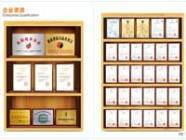
| Corporate Strength & Qualifications | Years in business, employee count, R&D team size, owned factory area, financial status, industry certifications (ISO, CE, EAC, etc.) | Review business licenses, certificates, financial statements; check public credit information |
| Technical & R&D Capability | Patent portfolio (especially invention patents), core technologies, design tools, process databases, customization capabilities | Review patent lists, technical proposals; visit R&D centers; interview technical staff |
| Manufacturing & Quality Control | In-house manufacturing capabilities, key component self-manufacturing rate, quality management system (ISO 9001), incoming material inspection, process control, factory testing | Conduct on-site factory audits; review quality manuals and inspection records |
| Industry Experience & Track Record | Industry coverage breadth, number of similar projects, performance of delivered lines (yield, energy consumption, etc.) | Request lists of industry-specific customer case studies; independently contact existing customers for reference checks |
| Project Management & Delivery | Project management processes, key milestone control, progress reporting mechanisms, change management processes, on-time delivery rate | Review project management plans; interview project managers; review historical project progress records |
| After-Sales Service & Support | Service team size and expertise, spare parts inventory, service response commitments (e.g., 4-hour response), remote diagnostic capability, training systems | Review service proposals; visit spare parts centers; interview after-sales teams |
3. How to Conduct an Effective Supplier Evaluation?
3.1 Step One: Desk Research and Initial Screening
Based on public information such as qualification documents, website content, and industry reputation, shortlist 3-5 candidate suppliers. At this stage, focus on:
- Compliance: Does the supplier hold necessary certifications for your target market (e.g., CE for EU, EAC for Russia)?
- Viability: Is the company's establishment date and financial status stable?
- Market Reputation: What is the word-of-mouth in industry exhibitions, professional media, or among peers?
3.2 Step Two: Technical and Commercial Proposal Review
Invite candidates to submit detailed technical proposals and commercial quotations. During review, look beyond the total price to analyze:
- Proposal Fit: Does the proposal precisely respond to every requirement in your "Coating Process Technical Specification"?
- Technical Details: Are the brands and models of key components (spray guns, control systems, fans, burners) specified? Are they from reputable brands?
- Energy and Operating Costs: Has the supplier provided detailed energy consumption estimates, paint consumption forecasts, and maintenance cost analyses?
- Payment and Delivery Terms: Do payment milestones align with project stages (design completion, FAT approval, installation, etc.)? Is the delivery lead time reasonable?
3.3 Step Three: On-Site Factory Audit
Before signing a contract, it is highly recommended to conduct an on-site factory audit of the 1-2 final candidate suppliers. This is the critical step to verify true capabilities. Key audit areas include:
- Manufacturing Site Management: Is the workshop clean and organized (5S management)? What is the quality of welding, assembly, and wiring work?
- Quality Control System: Are incoming inspection areas, in-process inspection records, and final test stands (FAT) standardized? Are testing instruments within their calibration validity period?
- R&D and Technical Center: Does the R&D team size, design software tools, and process laboratory match the claims?
- Staff Competence: Engage in informal discussions with engineers and technicians to gauge their professionalism and morale.
3.4 Step Four: Customer Reference Checks
Request the supplier to provide contact information for at least 3 delivered project customers in the same industry and of similar scale. During follow-up calls, ask specific questions such as:
- Actual Equipment Performance: After commissioning, did the actual yield, capacity, and energy consumption meet the contractual commitments?
- Installation and Commissioning Experience: Was the installation process smooth? Was the supplier's on-site team professional and responsible?
- After-Sales Support: Have there been any failures since operation? How was the supplier's response speed and resolution effectiveness?
- Overall Satisfaction: If you were to choose again, would you select this supplier again?
4. Common Evaluation Misconceptions and Avoidance Suggestions
- Misconception 1: "Big brands are always reliable."
- Fact: Well-known suppliers typically have technological and scale advantages, but they may also have higher pricing, less flexible project cooperation, or less attention to smaller clients. Evaluation should be based on actual needs and fit.
- Misconception 2: "The lowest price is the best value."
- Fact: An extremely low price often implies compromises in component brands, manufacturing processes, or service investment. Compare using Total Cost of Ownership (TCO) , not just initial price.
- Misconception 3: "Complete documentation is sufficient."
- Fact: Documents can be polished, but the management level on the factory floor, staff professionalism, and the quality of work-in-progress are difficult to fake. On-site audits are irreplaceable.
- Misconception 4: "An ISO certificate guarantees product quality."
- Fact: ISO 9001 certifies the management system, not the specific product's conformance. It indicates the supplier has process control capability, but final product performance still needs to be verified through FAT and on-site commissioning.
5. Supplier Evaluation Checklist
| Evaluation Item | Recommended Weight | Score | Notes/Evidence |
|---|---|---|---|
| Corporate Qualifications & Financial Stability | 15% | ||
| Technical Proposal Fit | 20% | ||
| Manufacturing Capability & Quality Control | 20% | ||
| Industry Experience & Success Cases | 15% | ||
| Project Management & Delivery Capability | 15% | ||
| After-Sales Service & Long-Term Support | 15% | ||
| Total Score | 100% |
6. Frequently Asked Questions (FAQ)
Q: We don't have professional coating engineers. How can we evaluate a supplier's technical proposal?
A: This is a genuine challenge. Two approaches are recommended: First, hire an independent technical consultant to assist with the review. Second, prioritize suppliers with strong "turnkey" capabilities—those who can provide comprehensive services from design and manufacturing to installation and training, reducing reliance on your own technical team.
Q: How can we verify the authenticity of customer cases provided by a supplier?
A: In addition to requesting contact information, ask for more specific details: line scale, commissioning date, yield data, challenges encountered, and solutions. Authentic cases withstand detailed questioning.
Q: What weight should price carry in supplier evaluation?
A: Assuming technical and quality requirements are met, price should generally not exceed 30%-40% of the total weight. Overemphasizing price often leads to selecting low-cost options that sacrifice quality and service, ultimately proving costly.
Q: How can we assess a supplier's long-term stability?
A: Beyond financial indicators, examine employee loyalty (proportion of long-tenured staff), R&D investment ratio, and the sustainability of market reputation. A company that continuously invests in R&D, retains employees, and has low customer churn is more likely to be a reliable long-term partner.
Conclusion
Evaluating a coating line supplier is a systematic process that requires time and effort, but the returns are long-lasting. A reliable supplier, chosen through careful evaluation, is a critical guarantee for the success of your coating line project, providing consistent, stable, and efficient production support for the next 15 to 20 years.
Guangdong Chuangzhi Intelligent Equipment Co., Ltd. (Attractivechina) , as a national-level "Little Giant" Enterprise with over 300 patents (including 79 invention patents), understands the evaluation process and welcomes the most rigorous scrutiny. Our confidence is built on:
- Verifiable Track Record: Delivery records for over 2,000 automated coating lines.
- Controlled Manufacturing: 35,548 m² owned factory, with in-house manufacturing of core components.
- Validated Performance: Real-world projects achieving approximately 10% energy savings, a service life 3 times longer than traditional lines, and a yield rate up to 98%.
- Globally Recognized Compliance: ISO 9001, ISO 14001, ISO 45001, and EAC certifications.
We invite you to begin your evaluation process with us—feel free to contact our team anytime for detailed customer cases, to arrange a factory visit, or to speak with our existing customers. We believe that a thorough, professional evaluation is the foundation for building long-term trust and a successful partnership.
SEO:


Contact Us
No.2 Yingbin Avenue, High-tech District, Zhaoqing City, Guangdong Province, China.
Online Message