











Related News
10
2026
-
09
How Metal Coating Systems Improve Production Efficiency and Coating Quality
Author:
Chuangzhi Coating
Metal manufacturers are facing increasing pressure to improve surface quality, production efficiency, energy management, and consistency while keeping operating costs under control. For companies processing aluminum panels, metal profiles, steel cabinets, hardware components, doors, windows, lighting parts, and other fabricated metal products, traditional manual painting methods can become a bottleneck as production volumes increase. This is where modern metal coating systems provide a more integrated approach to surface finishing.
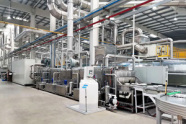
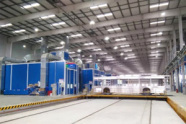
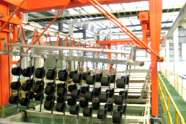
A complete metal coating system is more than a spray booth or a group of painting machines. It is an integrated production line that can combine pretreatment, conveying, spraying, curing, cooling, inspection, and process control into one coordinated workflow. By matching the equipment configuration with the workpiece material, dimensions, coating requirements, and production capacity, manufacturers can achieve a more stable and repeatable finishing process.

Why Modern Metal Coating Systems Matter
Metal products often require coatings for two primary reasons: protection and appearance. A suitable coating can help protect a metal surface against corrosion, wear, moisture, chemicals, and environmental exposure while also providing the required color, texture, and surface finish.
However, coating quality depends on many factors. Surface preparation, spray distance, coating thickness, curing temperature, conveyor speed, humidity, and operator consistency can all influence the final result. If these variables are controlled manually, production quality may vary from batch to batch.
An automated coating system can coordinate these processes more effectively. Programmed equipment can maintain stable operating parameters, while mechanical conveying reduces unnecessary manual handling. This helps manufacturers create a repeatable production environment and makes it easier to manage high-volume orders.
For industrial buyers, the objective is not simply to purchase a painting machine. The objective is to build a coating process that fits the entire production operation.
Applications for Different Metal Products
One of the major advantages of customized metal coating systems is their flexibility. Different metal products have different shapes, dimensions, surface conditions, and coating requirements.
For aluminum panels and profiles, the system can be designed around long and relatively large workpieces. Typical applications include doors, windows, building materials, aluminum sheets, cabinet components, and other architectural or industrial products.
For steel cabinets and sheet metal components, automated powder or wet-paint processes can be integrated with pretreatment and curing equipment. This is particularly useful when manufacturers need stable coating quality across large production batches.
Metal hardware and lighting components may require a different conveying and spraying arrangement because of their smaller dimensions and more complicated geometries. The equipment configuration can therefore be adjusted according to product characteristics rather than forcing every product through the same standardized process.
The broader application range also includes household appliances, cookware, automotive components, furniture, industrial equipment, rail transit products, and other metal products. Attractivechina states that its coating solutions are designed for multiple industries and can be customized according to customer requirements.
Pretreatment Is the Foundation of Coating Quality
A coating system cannot achieve reliable results if the metal surface is not properly prepared. Oil, dust, oxidation, and other contaminants may reduce coating adhesion and create defects.
For this reason, pretreatment is an important part of many metal coating systems. Depending on the application, the process may include degreasing, rinsing, alkaline treatment, neutralization, pure-water rinsing, drying, cooling, or other surface preparation stages.
The exact pretreatment sequence should be determined by the workpiece material and coating technology. Aluminum profiles, steel cabinets, stainless steel components, and other metal products may require different processes.
A properly designed pretreatment section creates a more suitable surface for subsequent powder or liquid coating. It also helps improve coating consistency and reduce the risk of defects caused by inadequate surface preparation.
Automated Spraying for More Consistent Results
Spraying is another critical stage of a metal finishing line. Manual spraying can provide flexibility, but it also depends heavily on operator experience. Differences in spray angle, distance, movement speed, and overlap can affect coating thickness and appearance.
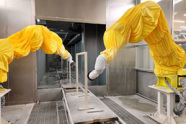
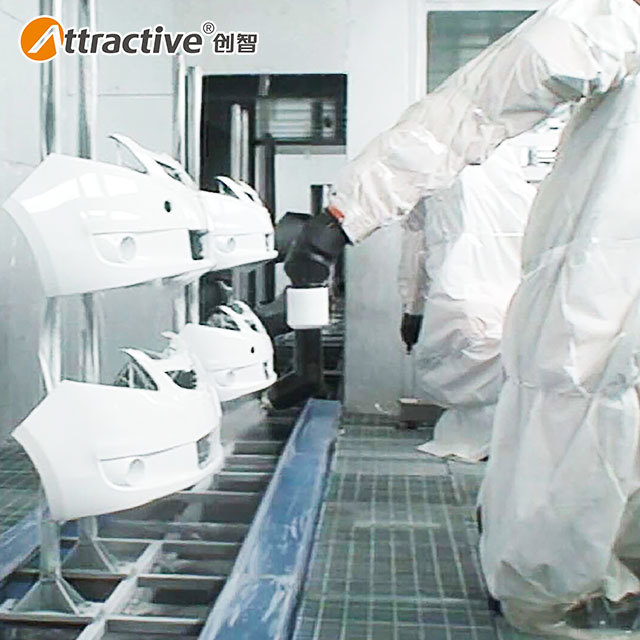
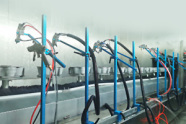
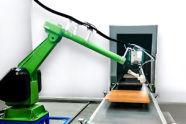
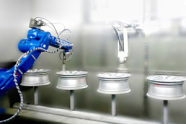
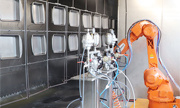
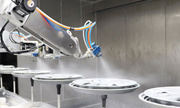
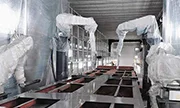
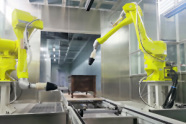
Modern metal coating systems can use automated spraying equipment, reciprocators, robotic systems, fixed spray guns, or combinations of automatic and manual stations. The correct configuration depends on the product geometry, coating material, production volume, and required flexibility.
For products with relatively consistent dimensions, automated spraying can provide repeatable movement and stable coverage. For complicated components or products requiring special treatment, manual stations can remain part of the overall system.
This combination allows manufacturers to balance automation with flexibility. Instead of pursuing maximum automation regardless of the application, the line can be engineered around the actual production requirements.
Conveyor Design and Production Flow
A coating line must also move workpieces smoothly from one process to another. Conveyor design therefore has a direct influence on production efficiency.
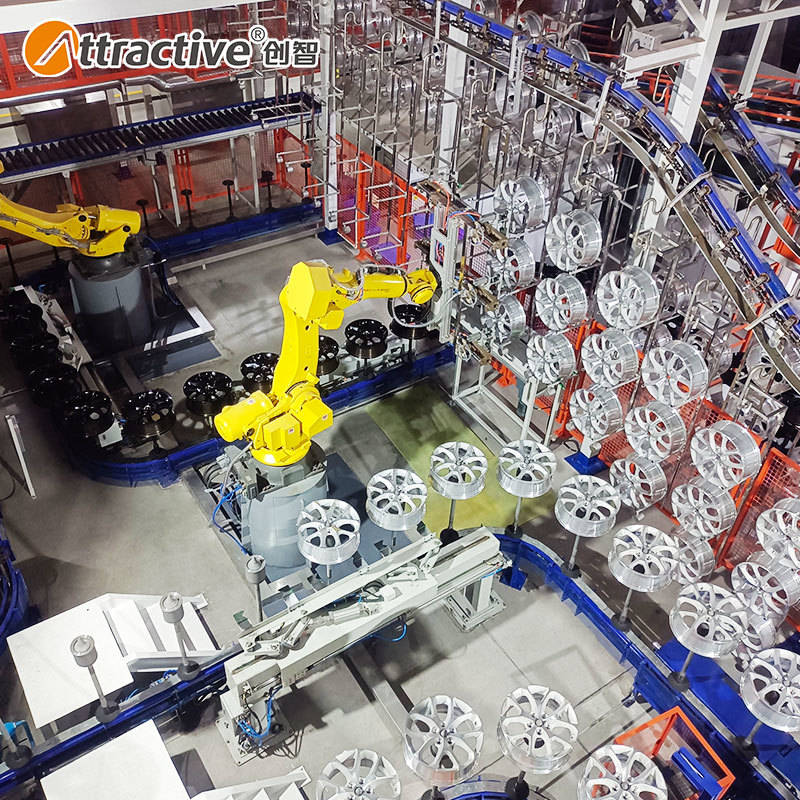
Power-and-free conveyor systems, overhead conveyors, floor-supported conveyors, and other transport methods can be selected according to workpiece weight, dimensions, factory layout, and process requirements.
A well-designed conveying system can connect pretreatment, spraying, drying, curing, cooling, and unloading into a continuous workflow. Adjustable conveying speed can also help manufacturers coordinate production with spraying and curing requirements.
For large metal products, the available loading space and hanger capacity are especially important. The Metal Coating Line information published by Attractivechina indicates that certain configurations can accommodate workpieces up to 7,000 mm in length, 2,000 mm in width, and 2,200 mm in height, with a maximum daily capacity of up to 5,000 square meters for the referenced system. Actual specifications should be calculated according to the customer's products and factory conditions.
Powder Coating and Wet Painting Options
Different metal products may require different coating technologies. Powder coating is widely used when manufacturers need a durable and efficient finish, while liquid painting can be preferred for certain appearance requirements, materials, or specialized applications.
A flexible coating line can therefore be configured around the selected coating technology. Pretreatment, spray equipment, curing ovens, ventilation, exhaust treatment, and conveying systems must work together rather than being considered as independent machines.
The curing process is particularly important for powder coating. The oven must provide suitable temperature control and heat distribution so that the coating can achieve the required performance. For liquid coatings, drying conditions and process timing also need to be considered.
The objective is to create a stable process window that supports consistent coating quality while avoiding unnecessary energy consumption.
Digital Control and Intelligent Manufacturing
Modern production requirements are moving beyond basic automation. Manufacturers increasingly want production data, equipment monitoring, process traceability, and remote technical support.
The referenced Attractivechina coating system incorporates an MES intelligent manufacturing management system and a remote maintenance system based on SD-WAN technology. These functions are intended to provide greater visibility into equipment operation and support more responsive maintenance.
Digital control can help production managers monitor operating conditions and identify potential problems before they develop into major interruptions. It can also provide a foundation for improving production planning and equipment utilization.
For factories running long production schedules, these capabilities can become particularly valuable because even a relatively short unplanned shutdown may affect delivery schedules and downstream processes.
Energy Efficiency and Operating Cost
Energy consumption is an important consideration when selecting a coating line. Heating, drying, curing, compressed air, ventilation, and other auxiliary systems can contribute significantly to operating costs.
An efficient coating system should therefore be designed around the actual production schedule. Heat recovery, suitable insulation, optimized oven operation, controlled spraying, and appropriate conveyor speed can all contribute to better energy management.
The product information provided for the referenced system lists a design target of 300 operating days per year and 20 hours per day, while also specifying process conditions such as spray booth temperature and humidity. These parameters demonstrate why coating equipment should be engineered according to the customer's production environment rather than selected only by nominal machine capacity.
Why Customization Is Important
There is no universal metal coating system that is ideal for every manufacturer. A factory producing aluminum window profiles has different requirements from a company coating steel cabinets, automotive components, or large industrial structures.
Important design inputs include:
- Workpiece material
- Maximum and minimum workpiece dimensions
- Product weight
- Required coating type
- Desired coating thickness
- Daily and hourly output
- Factory floor space
- Conveyor arrangement
- Heating energy
- Compressed air conditions
- Environmental requirements
- Automation level
- Future production expansion
A professional supplier should evaluate these factors before proposing the final equipment configuration.
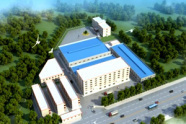
Attractivechina provides turnkey services covering plant planning, independent R&D, system design, manufacturing, installation, commissioning, and after-sales support. This integrated approach allows the coating line to be developed as a complete production solution rather than as a collection of individual machines.
Building a More Reliable Metal Finishing Process
For manufacturers investing in a new finishing line, the most important consideration is long-term production performance. A coating system should not only meet today's output target but also provide sufficient flexibility for product changes and future capacity requirements.
A well-designed metal coating system can connect pretreatment, spraying, conveying, curing, cooling, and quality control into a coordinated production process. Automation can reduce process variation, while digital monitoring can improve visibility and maintenance management. Customized equipment can also help manufacturers adapt the system to different workpieces and factory layouts.
The right solution ultimately depends on the specific production scenario. Instead of choosing equipment based only on price or a single machine specification, manufacturers should evaluate the complete process, including coating technology, workpiece characteristics, throughput, energy consumption, automation, maintenance, and after-sales support.
For companies looking to modernize metal finishing operations, a customized coating line can provide a practical path toward higher production efficiency, more consistent surface quality, and better control of long-term operating costs.


Contact Us
No.2 Yingbin Avenue, High-tech District, Zhaoqing City, Guangdong Province, China.
Online Message