











Related News

13
2026
-
10
Auto Bumper Coating Line for Efficient Automotive Plastic Parts Finishing
Author:
Chuangzhi Coating
Automotive bumpers require more than an attractive surface finish. They need a coating system that provides consistent appearance, reliable adhesion, weather resistance, and stable production quality. Because bumper components are usually made from plastic substrates with complex curves and large surface areas, manual painting can make it difficult to maintain uniform coating thickness and repeatable quality. An auto bumper coating line integrates surface preparation, spraying, drying, curing, conveying, and inspection into a coordinated production process, providing a more efficient solution for automotive plastic parts manufacturers.
Why Is an Auto Bumper Coating Line Important?
Automobile bumpers are exposed to sunlight, rain, road dust, temperature changes, and minor impacts during daily operation. The coating therefore needs to perform both decorative and protective functions. At the same time, bumper shapes often include curved surfaces, corners, recesses, and different structural transitions, making stable spray coverage particularly important.
A professional auto bumper coating line is designed around these production requirements. Instead of treating spraying as an independent operation, the complete system connects each stage into a continuous workflow. Workpieces can be transported between pretreatment, drying, surface activation, spraying, leveling, curing, and inspection areas according to the selected process.
This integrated approach can reduce unnecessary handling and improve production consistency. It also allows manufacturers to configure the line according to bumper dimensions, coating materials, required output, factory layout, and automation level.
Surface Preparation Is the Foundation of Coating Quality
Before paint is applied, the bumper surface must be properly prepared. Plastic parts can carry dust, oil, release agents, moisture, or other contaminants from molding, storage, and transportation. If these substances are not effectively removed, they may interfere with coating adhesion and lead to defects such as poor wetting, peeling, pinholes, or uneven appearance.
A bumper coating process may therefore include several pretreatment and cleaning stages, followed by water removal and drying. The exact configuration depends on the substrate, coating system, production requirements, and factory conditions.
After cleaning, the surface may require additional preparation to improve its suitability for painting. For plastic automotive parts, surface activation can be particularly important because the surface energy of the substrate directly affects how the coating spreads and adheres.
Proper pretreatment does more than improve appearance. It creates a more stable foundation for subsequent primer, color coat, and clear coat applications, helping manufacturers achieve consistent coating performance across different batches.
Flame Treatment and Electrostatic Dust Removal
Plastic bumpers can require specialized surface treatment before spraying. Flame treatment is one possible process used to modify the surface characteristics of suitable plastic substrates. By controlled treatment of the surface, the process can improve wettability and help the coating form a more reliable bond with the substrate.
The treatment parameters must be carefully controlled according to the material and production requirements. Excessive or inappropriate treatment may damage the substrate, while insufficient treatment may fail to deliver the desired surface condition.
Electrostatic dust removal can also be incorporated before painting. Plastic components can easily attract fine particles because of static electricity. Removing these particles before spraying helps create a cleaner surface and reduces the risk of visible defects in the finished coating.
For automotive manufacturers where appearance standards are high, controlling contamination before spraying is an essential part of the overall coating strategy.

Automatic Spraying for Consistent Coverage
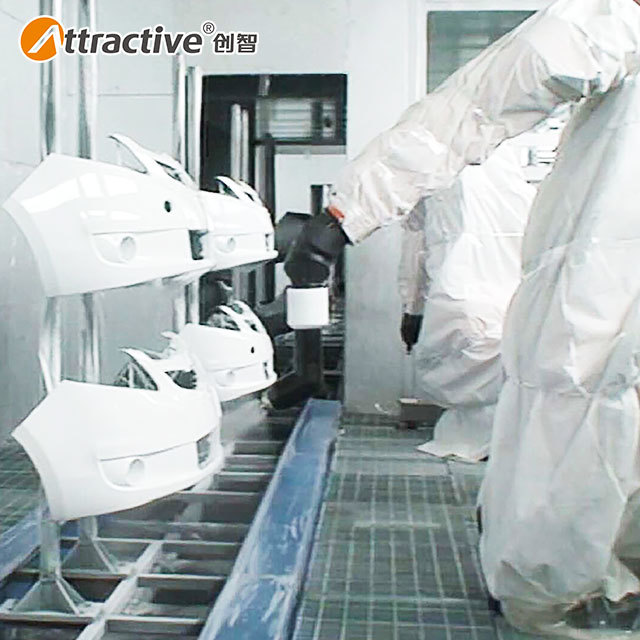
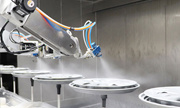
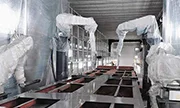
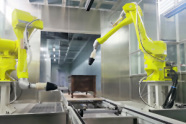
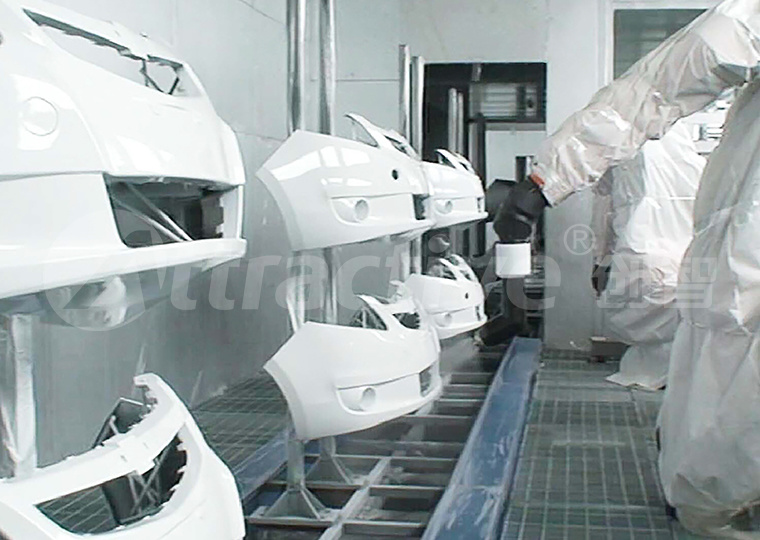
The spraying stage is the core of an auto bumper coating line. Depending on the production requirements, the system can be configured with automatic spraying equipment, reciprocating systems, or robotic spraying solutions.
Automation is particularly useful for bumpers because their surfaces are not flat. A bumper may include wide exterior areas, curved corners, recesses, and edges. A properly designed spray system can maintain controlled movement and coverage across these different areas.
The coating process may include primer, base coat, topcoat, and clear coat stages. Each layer performs a different function. Primer can help improve adhesion and provide a uniform foundation. The color or topcoat provides the required appearance and additional protection. A clear coat can improve surface gloss and resistance to environmental exposure.
The specific number of coating stages depends on the customer's paint system and final product requirements. A customized coating line can therefore be designed around the selected coating materials instead of applying one fixed configuration to every bumper manufacturer.
Leveling and Curing Affect the Final Finish
After spraying, the coating needs sufficient time and suitable environmental conditions for leveling. During this stage, solvents or moisture within the coating evaporate and the wet film gradually develops its final surface characteristics.
If leveling conditions are poorly controlled, problems such as orange peel, sagging, dry spray, uneven gloss, or inconsistent color may occur. For this reason, the coating line should provide a controlled environment between spraying and curing.
The bumper then enters the drying or curing section. Depending on the coating system, the curing process may involve controlled heating and airflow. The curing temperature and time need to match the coating material. Insufficient curing can affect adhesion, hardness, weather resistance, and overall coating performance, while excessive heating may negatively affect the coating or substrate.
A well-designed curing system therefore needs to balance temperature, airflow, residence time, energy consumption, and production speed.
Conveyor System and Production Flow
A complete auto bumper coating line is not only a collection of spray machines and ovens. The conveying system is equally important because it connects individual processes and determines how smoothly the workpieces move through the production line.
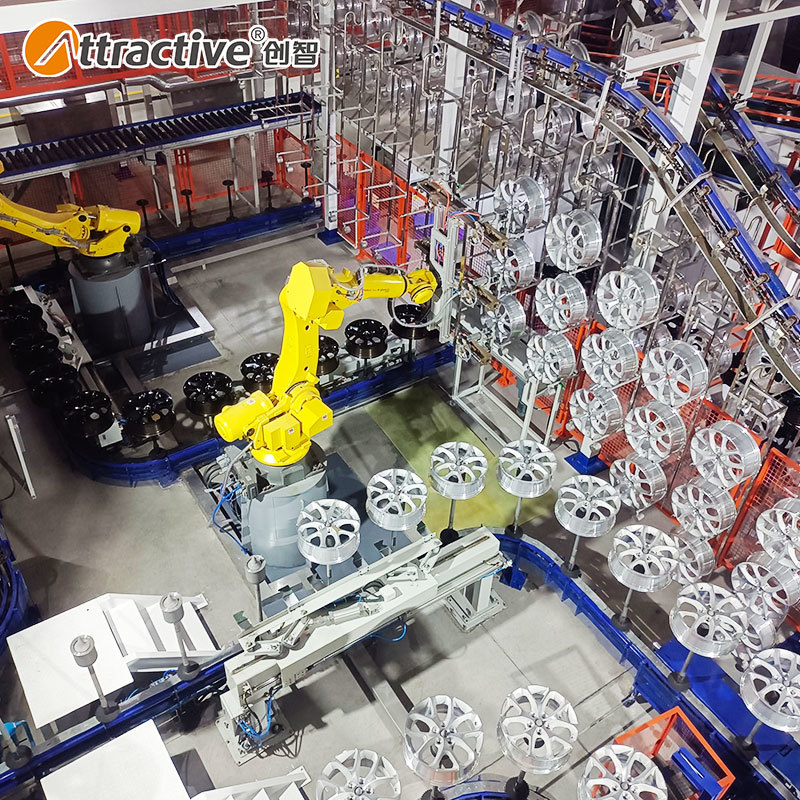
Depending on the factory layout and process design, the line can use suitable conveying solutions to transport bumpers between pretreatment, drying, spraying, leveling, curing, and inspection stations. The conveyor design should consider workpiece dimensions, loading method, production rhythm, available floor space, and required automation.
Stable conveying reduces unnecessary manual handling and helps maintain a consistent distance and orientation between the workpiece and spraying equipment. This is particularly important for automated painting, where repeatable positioning can directly influence coating quality.
For high-volume automotive component production, a coordinated conveying system can also make production scheduling and capacity management easier.
Automation Can Improve Production Consistency
An automated auto bumper coating line can combine multiple technologies into one coordinated production system. Depending on the project, automation may include automatic conveying, spraying equipment, robotic systems, workpiece recognition, paint supply, automatic color change, process control, and production monitoring.
The appropriate automation level should be determined by actual production needs. A manufacturer producing several bumper models with different colors may prioritize flexible color change and workpiece recognition. A high-volume production facility may place greater emphasis on cycle time, automated handling, and continuous operation.
Automation is not simply about replacing manual labor. Its greater value lies in improving process repeatability. When spraying movement, conveyor speed, drying conditions, and curing parameters can be controlled more consistently, the production process becomes easier to manage and quality variations can be reduced.
Environmental and Energy Considerations
Modern coating projects increasingly need to consider environmental performance alongside production efficiency. Paint spraying can generate exhaust gases and overspray, while drying and curing processes consume energy. A complete coating project should therefore consider ventilation, exhaust collection, waste gas treatment, and energy management as part of the overall system design.
The configuration of environmental equipment depends on the coating materials, production capacity, local regulations, factory conditions, and process technology. Integrating these requirements during the initial design stage can make the production line easier to operate and maintain after installation.
Energy efficiency is another important consideration. Proper oven insulation, optimized airflow, suitable heating systems, and reasonable curing parameters can help control operating costs without compromising coating quality.
How to Select the Right Auto Bumper Coating Line
Before purchasing an auto bumper coating line, manufacturers should evaluate several factors rather than focusing only on the equipment price.
First, determine the bumper material, dimensions, weight, and surface characteristics. Next, identify the required coating system, including primer, color coat, clear coat, or other specialized materials. Production capacity and takt time should also be defined because these parameters influence conveyor speed, spray equipment configuration, oven size, and the number of processing stations.
Factory space is another important consideration. The line should be designed around the available workshop dimensions and material flow instead of forcing an unsuitable standard layout into the facility.
Finally, consider automation requirements, environmental equipment, maintenance accessibility, spare parts, installation, commissioning, and technical support. A coating line is a long-term production investment, so the overall solution should be evaluated according to lifecycle performance rather than the initial purchase price alone.
A Customized Solution for Automotive Bumper Production
Every automotive component manufacturer has different requirements. Production volume, bumper models, coating materials, factory layout, labor conditions, and quality standards can all influence the final equipment configuration.
A customized auto bumper coating line can integrate pretreatment, surface preparation, automatic spraying, leveling, drying, curing, conveying, exhaust treatment, and inspection according to the actual production process. This approach allows manufacturers to build a coating system that matches their products and production targets.
For companies looking to improve the consistency and efficiency of automotive plastic parts finishing, an integrated coating line provides a practical foundation for modern production. By controlling the process from surface preparation through final curing, manufacturers can establish a more stable workflow, improve coating quality, reduce unnecessary manual handling, and support scalable automotive component production.


Contact Us
No.2 Yingbin Avenue, High-tech District, Zhaoqing City, Guangdong Province, China.
Online Message