












Related News

18
2026
-
10
Alloy Wheel Painting Line for Consistent Finishes and Efficient Automotive Production
Author:
Chuangzhi Coating
Why an Alloy Wheel Painting Line Matters
Alloy wheels play an important role in vehicle appearance, durability, and overall product quality. A high-quality surface finish helps improve corrosion resistance, supports long-term use, and gives wheels an attractive appearance. For automotive parts manufacturers, choosing a suitable alloy wheel painting line is essential for maintaining consistent coating quality while improving production efficiency.
An automated wheel painting system integrates material handling, surface pretreatment, spraying, drying, curing, and quality inspection into a coordinated production process. Compared with a production setup that relies heavily on manual operations, an automated line can help reduce process variation, improve coating consistency, and support stable large-volume manufacturing.

Key Processes in an Alloy Wheel Painting Line
1. Surface Pretreatment
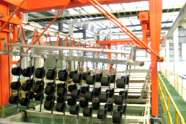
Proper pretreatment creates a suitable foundation for coating adhesion. Depending on the wheel material and coating requirements, the process may include degreasing, rinsing, pure water washing, and drying. Effective cleaning helps remove surface contaminants that could affect paint adhesion or cause visible defects.
Additional treatment steps can be incorporated according to the selected coating system and workpiece specifications. A well-designed pretreatment stage helps improve the reliability of subsequent spraying operations.
2. Automated Spraying and Multi-Layer Coating
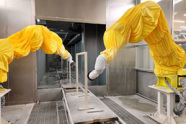
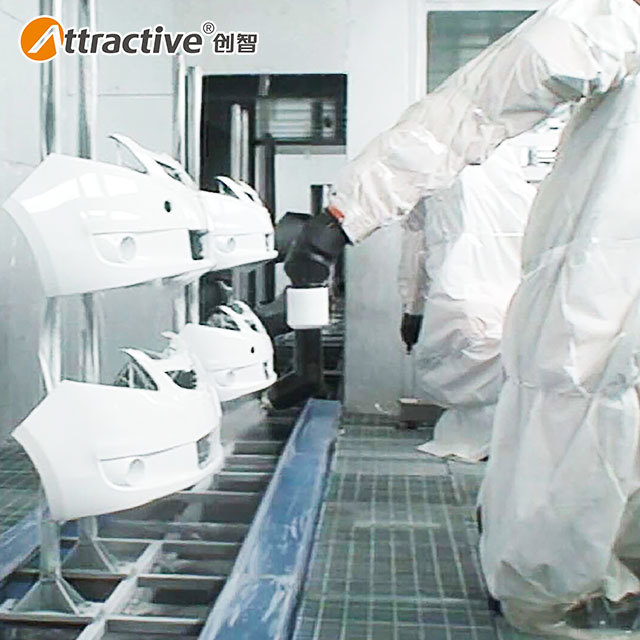
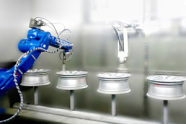
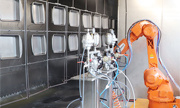
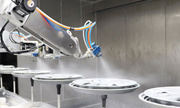
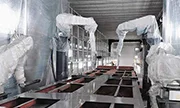
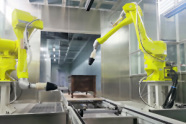
An alloy wheel painting line can use robotic spraying equipment to improve application consistency and repeatability. Automated positioning and controlled spray paths help distribute paint more evenly across complex wheel surfaces, including curved spokes and recessed areas.
Depending on the required appearance and performance, the coating process may include primer, intermediate coating, and topcoat. Customers can select suitable coating structures, colors, and process parameters according to product design and production objectives. Appropriate process configuration helps balance surface appearance, coating protection, material consumption, and manufacturing efficiency.
3. Drying and Curing
After spraying, the workpieces pass through drying and curing stages designed for the selected coating materials. Controlled heating helps the coating develop the required finish and performance characteristics. Conveyor speed, oven temperature, and curing time should be coordinated to achieve stable results without unnecessary energy consumption.
Cooling sections can be arranged after curing to support safe handling and prepare finished wheels for inspection.
Improving Production Efficiency and Quality Control
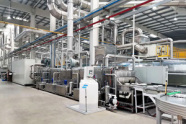
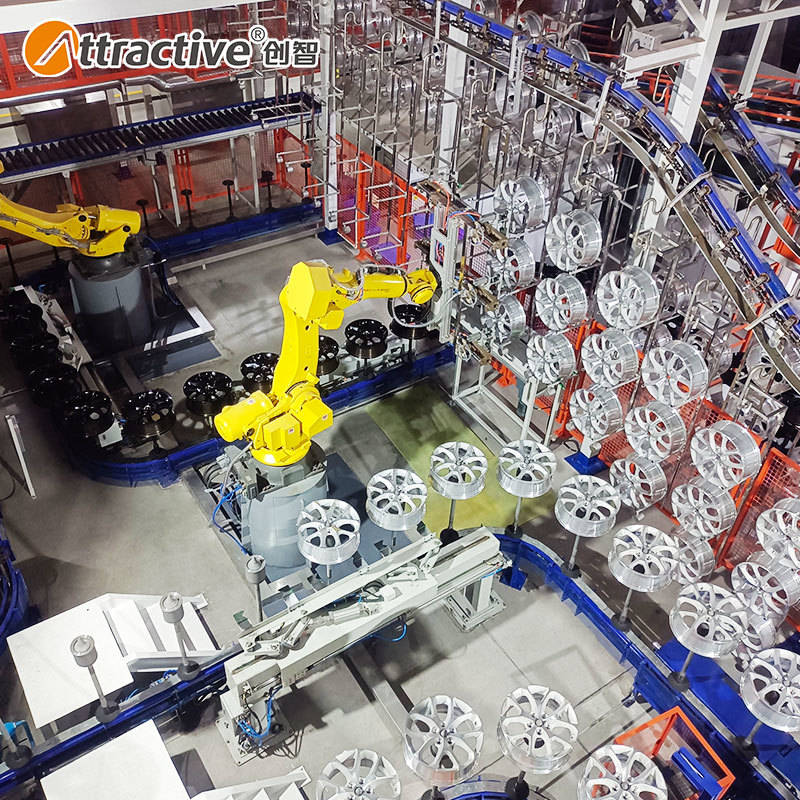
A complete alloy wheel painting line connects loading, pretreatment, spraying, drying, curing, cooling, unloading, and inspection. Conveyor equipment transfers workpieces between stations, helping maintain an organized production flow and reduce unnecessary handling.
Online inspection can support visual checks and coating-thickness measurement. Detecting uneven finishes or other defects earlier helps manufacturers manage rework, maintain product consistency, and improve process control.
Actual coating quality depends on wheel geometry, paint formulation, equipment settings, and operating conditions.
Energy efficiency and maintenance also influence the total cost of ownership. Heat recovery, an appropriately designed curing oven, and accessible maintenance points can help reduce operating expenses. Automated handling may lower repetitive manual workload, while planned maintenance and spare-parts support help minimize unplanned downtime.

Customized Solutions for Different Production Requirements
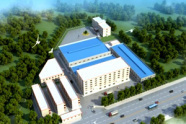
Every wheel manufacturer has different requirements for production capacity, wheel dimensions, coating materials, colors, and factory layout. A customized alloy wheel painting line should therefore be planned around the actual workpiece range, target output, available floor space, and environmental requirements.
Important considerations include conveyor configuration, spray booth conditions, robotic reach, oven capacity, utility supply, and the integration of pretreatment and environmental protection equipment. These factors should be evaluated together rather than selecting individual machines in isolation.
Attractivechina provides customized coating-line solutions and turnkey project support. Its aluminum alloy wheel spraying line features automated loading and positioning, integrated surface treatment, multi-layer spraying options, drying and curing equipment, and quality inspection functions. The company also provides technical support, maintenance services, spare-parts supply, and process upgrades according to project requirements.
Choosing the Right Alloy Wheel Painting Line
Before investing in an alloy wheel painting line, manufacturers should clarify their production targets, coating specifications, quality standards, and future capacity plans. Reviewing the complete process helps identify potential bottlenecks and ensures that the equipment configuration matches real manufacturing needs.
A properly planned system can help automotive suppliers achieve repeatable finishes, organized production flow, and more effective resource utilization. By combining automation with suitable pretreatment, spraying, curing, and inspection processes, manufacturers can build a coating operation that supports consistent product quality and long-term production goals.
Previous


Contact Us
No.2 Yingbin Avenue, High-tech District, Zhaoqing City, Guangdong Province, China.
Online Message