











Related News

18
2026
-
10
How an Industrial Coating System Improves Surface Quality and Production Efficiency
Author:
Chuangzhi Coating
What Is an Industrial Coating System?
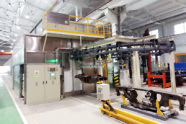
An industrial coating system is an integrated solution designed to prepare, coat, and finish metal components and industrial equipment. It combines surface treatment, spraying, drying, curing, and material handling into a coordinated production process. For manufacturers of heavy machinery, construction equipment, vehicle bodies, and metal structures, a well-designed system helps achieve consistent coating quality while improving production efficiency.
Unlike a standalone spray booth, an integrated coating system considers the entire workflow, from incoming workpieces to finished products. Equipment configuration can be customized according to workpiece dimensions, material characteristics, coating requirements, and production capacity.

Surface Preparation for Reliable Coating Adhesion
Surface preparation is essential for obtaining a durable coating. Rust, oxide layers, oil, dust, and other contaminants can reduce paint adhesion and affect the final appearance. An automatic sandblasting line helps remove surface impurities and create a suitable surface profile for subsequent coating operations.
For iron and aluminum workpieces, the pretreatment process should match the material and its condition. Depending on the production requirements, the system may incorporate rust removal, polishing, dust blowing, preheating, and dehumidification. Effective preparation provides a cleaner foundation for primer application and helps reduce defects caused by residual contamination.
Automated Spraying and Controlled Drying
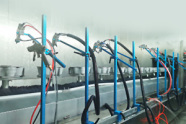
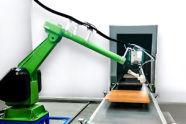
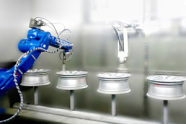
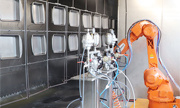
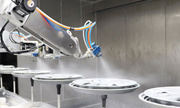
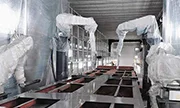
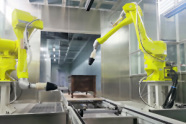
After pretreatment, workpieces move through the spraying and drying stages. An industrial coating system can integrate automatic spraying equipment, robotic application, manual touch-up stations, and dedicated drying booths to meet different product requirements.
Primer is generally applied first to support adhesion and corrosion protection, while the topcoat provides the specified color, finish, and additional surface protection. Controlled drying between stages helps prepare the coating for the next operation. Cooling sections can also be arranged to support handling and maintain a suitable process sequence.
For large or irregularly shaped workpieces, the balance between automated spraying and manual operation is particularly important. Robots can improve repeatability in programmed areas, while trained operators can address complex surfaces and special details. The final configuration depends on the workpiece geometry, coating material, and required finish.
Conveyor Design and Production Planning
A suitable conveyor system connects each processing stage and keeps workpieces moving through the production line. Conveyor speed, fixture spacing, loading methods, and unloading arrangements should be planned according to product size and target output.
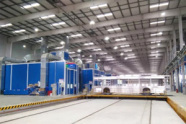
For heavy industrial equipment, the design must also consider maximum workpiece weight, lifting and handling requirements, available factory space, and maintenance access. A properly coordinated layout reduces unnecessary transfers and helps prevent bottlenecks between pretreatment, spraying, and drying.
Manufacturers should evaluate the complete production cycle rather than selecting equipment based on spraying speed alone. A balanced line helps maintain stable throughput and makes daily production planning more predictable.
Energy Efficiency, Quality Control, and Maintenance
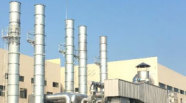
Operating costs depend on more than paint consumption. Energy use, compressed air demand, labor requirements, equipment downtime, and maintenance frequency all affect the total cost of ownership. Appropriate oven insulation, heat recovery where suitable, efficient air handling, and well-planned operating procedures can help reduce resource consumption.
Quality control should cover surface cleanliness, coating thickness, appearance, adhesion, and curing conditions. Regular inspections help identify process deviations before they lead to extensive rework. Accessible maintenance points and reliable spare-parts support also contribute to long-term equipment availability.

Customized Industrial Coating Solutions
Every factory has different workpieces, floor-space limitations, and production targets. A customized industrial coating system should therefore be designed around actual operating conditions instead of relying on a standard configuration for every application.
Attractivechina provides coating-line solutions for industrial equipment and other manufacturing applications, with customized equipment layouts and turnkey project support. When evaluating a system, buyers should clarify workpiece dimensions and materials, required coating processes, target capacity, available utilities, and factory layout.
By integrating surface preparation, spraying, drying, conveying, and quality control, manufacturers can establish a more coordinated finishing process. The right industrial coating system supports consistent product appearance, efficient material flow, and dependable long-term production.
Next Page


Contact Us
No.2 Yingbin Avenue, High-tech District, Zhaoqing City, Guangdong Province, China.
Online Message