














Related News

20
2026
-
10
How to Choose a Non-Stick Coating Line for Efficient Industrial Production
Author:
Chuangzhi Coating
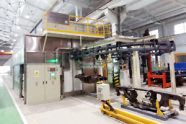
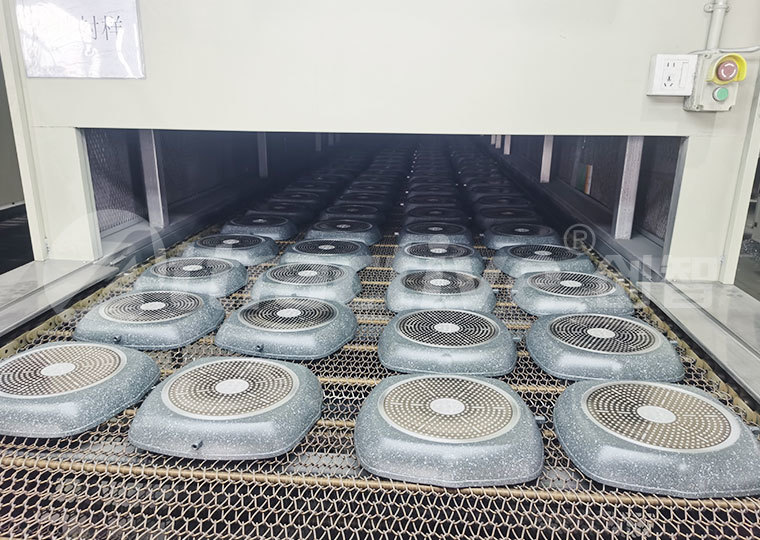
A reliable non-stick coating line is essential for cookware manufacturers seeking consistent surface quality, efficient production, and durable coating performance. Used for aluminum pots, frying pans, rice cooker inner pots, and other household products, an automated coating system integrates surface pretreatment, spraying, drying, and high-temperature curing into a coordinated workflow.
Why Automation Matters in Non-Stick Coating
Non-stick cookware requires more than an attractive finish. The coating must adhere firmly to the substrate, provide reliable release performance, and withstand repeated heating and cleaning. Manual spraying can lead to inconsistent film thickness, uneven coverage, and unnecessary coating material consumption.
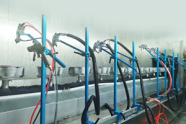
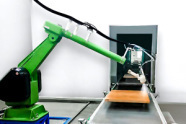
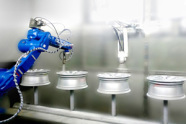
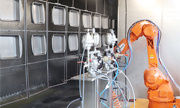
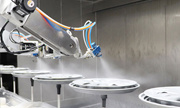
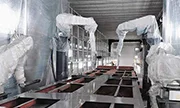
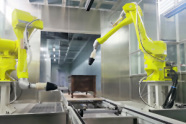
An automated non-stick coating line helps standardize production through controlled workpiece transfer, accurate spraying, and stable temperature management. Depending on the product design and factory requirements, fixed spray guns or robotic spraying systems can be selected to improve coverage on curved surfaces and reduce repetitive manual operations.
Key Processes in a Complete Coating Line
1. Surface Pretreatment
Pretreatment establishes the foundation for coating adhesion. Typical processes may include degreasing, rinsing, drying, sandblasting, and other surface treatments selected according to the substrate and coating system. Effective cleaning removes contaminants, while suitable surface preparation helps the coating bond securely to the cookware.
2. Primer and Topcoat Application
After pretreatment, the workpieces enter the spraying section. A typical inner-pot process includes automatic dust removal, preheating, primer spraying, primer drying, cooling, and subsequent coating operations. Depending on the product design, additional steps such as water-level marking or powder application may be incorporated.
For exterior cookware surfaces, the process may include primer spraying, intermediate drying, topcoat application, and final curing. A properly configured spraying system helps maintain consistent coverage across different areas of each workpiece.
3. Drying and High-Temperature Curing
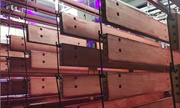
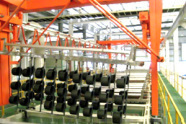
Drying and curing are critical to the final coating properties. Temperature profiles and processing times must match the coating manufacturer's specifications. Stable heating, appropriate cooling intervals, and coordinated conveyor movement help reduce defects associated with incomplete curing or inconsistent thermal conditions.
How to Improve Production Efficiency and Quality
When selecting a non-stick coating line, manufacturers should evaluate production capacity, workpiece dimensions, coating requirements, and available factory space. The system should accommodate the actual product range rather than rely on a standard configuration that may not suit every pot or pan.
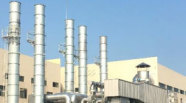
Automation can reduce repetitive labor and improve process consistency. Efficient spray control also helps limit overspray and material waste, while appropriate ventilation and exhaust treatment support a cleaner production environment. Maintenance access, spare-part availability, and control-system reliability should also be considered because unplanned downtime can affect delivery schedules and operating costs.
Quality control should cover surface cleanliness, coating appearance, adhesion, film thickness, and curing conditions. For cookware intended for food contact, manufacturers must also ensure that the coating materials and finished products comply with applicable regulations in their target markets.

Customized Solutions for Different Cookware Products
Attractivechina's automatic non-stick spray paint line is designed for aluminum cookware, including pots, pans, and rice cooker inner pots. The published solution combines pretreatment, automated spraying, drying, and curing processes, with configuration options based on workpiece dimensions, production targets, and coating requirements.
Before purchasing equipment, manufacturers should confirm the required output, workpiece handling method, heating source, utility conditions, and whether interior and exterior coating need separate process routes. These details help determine a practical equipment layout and avoid unnecessary investment.
A well-designed non-stick coating line is not simply a spraying machine. It is an integrated production system that connects surface preparation, precise coating application, thermal processing, and quality management. By matching equipment configuration to real manufacturing needs, cookware producers can improve consistency, control operating costs, and build a more dependable production process.
Previous


Contact Us
No.2 Yingbin Avenue, High-tech District, Zhaoqing City, Guangdong Province, China.
Online Message