












Related News

20
2026
-
10
Spray Painting System: Efficient Coating Solutions for Modern Manufacturing
Author:
Chuangzhi Coating
1. What Is a Spray Painting System?
A spray painting system is an integrated coating solution designed to apply paint evenly to product surfaces while improving production efficiency and finish consistency. It is widely used in industries such as automotive components, metal fabrication, furniture manufacturing, household appliances, and general industrial production.
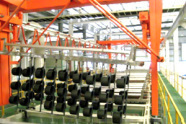
Compared with manual painting, an automated or semi-automated spray painting system can provide more consistent coating thickness, better material control, and a more organized production process. Depending on the workpiece, coating material, and required output, the system can be configured with spray booths, conveying equipment, paint application devices, drying ovens, and exhaust treatment facilities.
For manufacturers handling large production volumes or products with complex surface shapes, selecting the right spray painting equipment is an important step toward improving product quality and maintaining stable manufacturing operations.

2. Key Components of a Spray Painting System
A complete spray painting system consists of several coordinated components. Their configuration depends on the production environment, workpiece dimensions, coating requirements, and factory layout.
Spray Booth and Ventilation
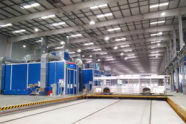
The spray booth provides a controlled area for paint application. Its design helps contain overspray and supports effective airflow management. Suitable ventilation and filtration equipment can help capture airborne paint particles and maintain a cleaner working environment.
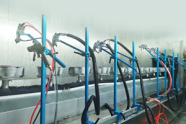
Spray Equipment
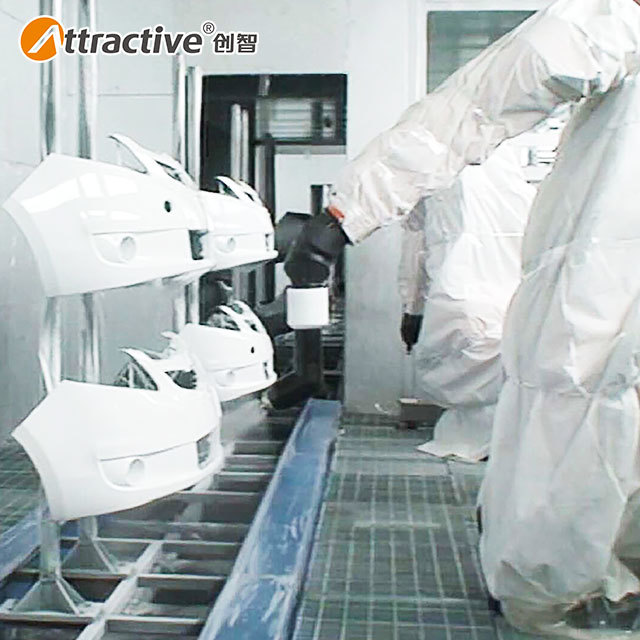
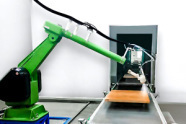
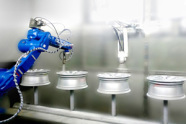
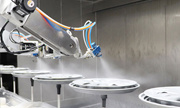
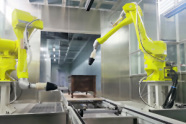
Spray guns, automatic spray units, and paint delivery equipment determine how the coating material is applied. The appropriate setup depends on paint viscosity, workpiece geometry, surface finish requirements, and production speed. Automated spray equipment is particularly useful when manufacturers need repeatable results across large batches.
Conveyor System
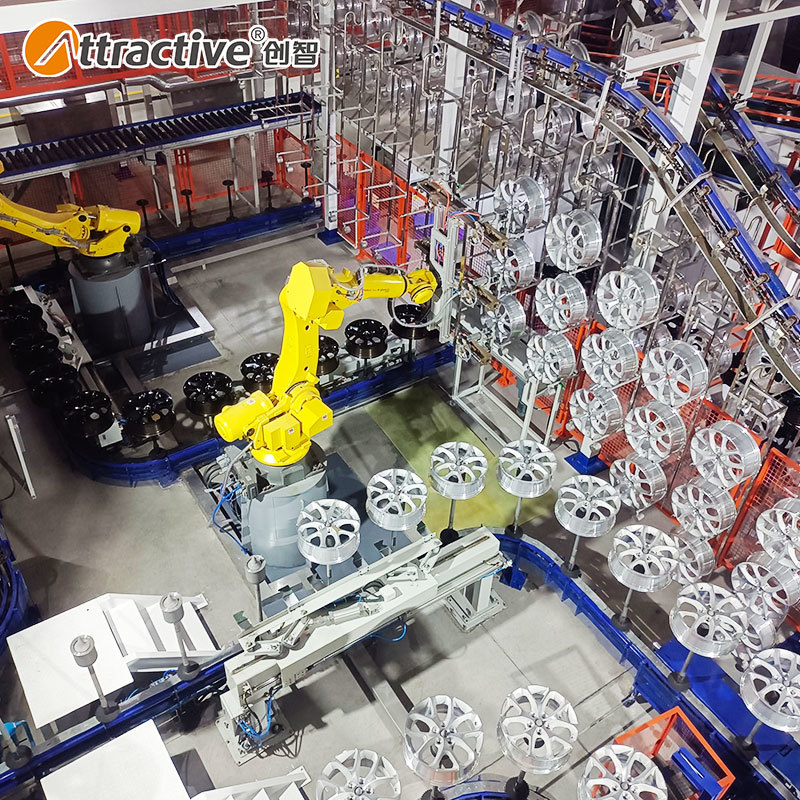
A conveyor system transfers workpieces through different coating stages. Overhead conveyors, floor conveyors, and customized transport solutions can be selected according to product weight, shape, and workshop layout. Stable conveying helps maintain consistent spacing and processing time between workpieces.
Drying and Curing Equipment
After spraying, the coating may require drying or curing under controlled conditions. The suitable process depends on the coating formulation and substrate. Integrating the drying stage into the production line can reduce unnecessary handling and support a more continuous workflow.
3. Benefits of an Integrated Spray Painting System
More Consistent Surface Quality
Consistent spray distance, application speed, and coating parameters help reduce visible differences between products. A properly configured system can improve finish uniformity and help manufacturers meet customer requirements for appearance and coating performance.
Improved Production Efficiency
An integrated system connects surface preparation, spraying, flash-off, drying, and unloading into a coordinated process where applicable. Reducing repeated manual handling can shorten production cycles and make output easier to manage.
Better Paint Utilization
Appropriate spray technology, controlled application parameters, and efficient booth design can help reduce unnecessary overspray and material waste. Actual paint savings depend on the coating material, transfer efficiency, equipment configuration, and operator practices.
Reduced Dependence on Manual Operations
Automation can take over repetitive spraying and workpiece transportation tasks. This helps manufacturers standardize production procedures while allowing operators to focus on monitoring, quality inspection, and equipment maintenance.
Support for Cleaner Production
Ventilation, filtration, and suitable waste-management measures can help control overspray and airborne contaminants. Depending on the paint and process, additional measures may be required to manage volatile organic compounds and other emissions in accordance with local environmental and workplace safety regulations.
4. Applications Across Different Industries
A spray painting system can be designed for a wide range of products. In automotive manufacturing, it can coat components that require consistent appearance and corrosion protection. In furniture production, it can support the application of decorative finishes to wooden or engineered surfaces. Metalworking factories may use spray painting lines for cabinets, frames, panels, and fabricated parts.
Manufacturers of household appliances and industrial equipment can also benefit from dedicated coating systems. For products with irregular shapes, multiple surfaces, or different coating specifications, customized spray paths and conveyor arrangements can help accommodate changing production requirements.
The final configuration should reflect the actual product range rather than relying on a standard layout for every application.

5. How to Choose the Right Spray Painting System
Before purchasing a spray painting system, manufacturers should evaluate several practical factors.
First, define the workpiece dimensions, material, weight, and surface geometry. These details influence conveyor selection, booth size, spray-gun arrangement, and equipment accessibility.
Second, identify the coating material and finish requirements. Water-based paints, solvent-based coatings, and other specialized materials may require different application methods, ventilation provisions, and drying conditions.
Third, calculate the target production capacity. Workpiece loading intervals, conveyor speed, spraying time, and curing time must be coordinated to avoid bottlenecks. A system designed around realistic output requirements is generally more useful than one selected solely by its maximum rated speed.
Fourth, consider factory space, energy consumption, maintenance access, and future expansion. A well-planned layout can simplify daily operation and reduce disruption during servicing.
Finally, confirm the scope of automation and the availability of technical support. Manufacturers should clarify which processes are included, what utilities are required, and whether the equipment can accommodate future product changes.
6. Customized Spray Painting Solutions
Every factory has different coating objectives, production volumes, and site conditions. A customized spray painting system can be developed around the product dimensions, coating process, desired automation level, and available workshop space.
Depending on project requirements, the solution may combine spray booths, automatic application equipment, conveying systems, drying ovens, and supporting ventilation facilities. The goal is to establish a coordinated coating process that balances finish quality, production efficiency, material utilization, and operating costs.
When evaluating a supplier, manufacturers should review the proposed process flow, equipment specifications, safety provisions, installation requirements, and maintenance arrangements. Clear technical communication before production-line design helps reduce configuration mismatches and supports smoother commissioning.
Conclusion
A well-designed spray painting system helps manufacturers achieve consistent coating results, improve production flow, and manage material consumption more effectively. By matching the equipment configuration to the workpiece, coating material, and production target, businesses can build a practical coating solution for their specific manufacturing needs.
For companies planning a new coating line or upgrading an existing facility, evaluating the complete process—from workpiece loading and spraying to drying and final inspection—is essential to selecting a system that delivers reliable long-term value.
Next Page


Contact Us
No.2 Yingbin Avenue, High-tech District, Zhaoqing City, Guangdong Province, China.
Online Message