












Related News

14
2024
-
09
Enhancing Efficiency: Key Components of a Modern Non-Stick Paint Coating Production Line
Author:
Chuangzhi Coating
Introduction to Non-Stick Paint Coating Production
In today's fast-paced industrial landscape, efficiency is paramount. Manufacturers are constantly seeking ways to enhance their production lines, particularly in specialized sectors such as non-stick paint coatings. These coatings are vital for various applications, including cookware, industrial equipment, and automotive parts. This article explores the key components that contribute to a modern non-stick paint coating production line, ensuring high efficiency, quality, and sustainability.

Understanding Non-Stick Paint Coatings
Non-stick paint coatings are designed to provide a smooth, low-friction surface that resists sticking and friction. Commonly used in cookware, these coatings are also pivotal in various industrial applications, enhancing the performance and durability of components. The primary materials used in these coatings include polytetrafluoroethylene (PTFE), silicone, and ceramic compounds. Understanding the chemistry and application of these materials is essential for optimizing the production line's effectiveness.
Key Components of a Non-Stick Paint Coating Production Line
To ensure a streamlined and efficient production process, several key components work in unison within the non-stick paint coating production line:
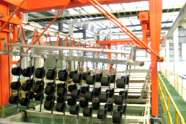
Coating Application Systems
The coating application system is the heart of the production line. It determines how the non-stick paint is applied to the substrates. Various methods are employed, including:
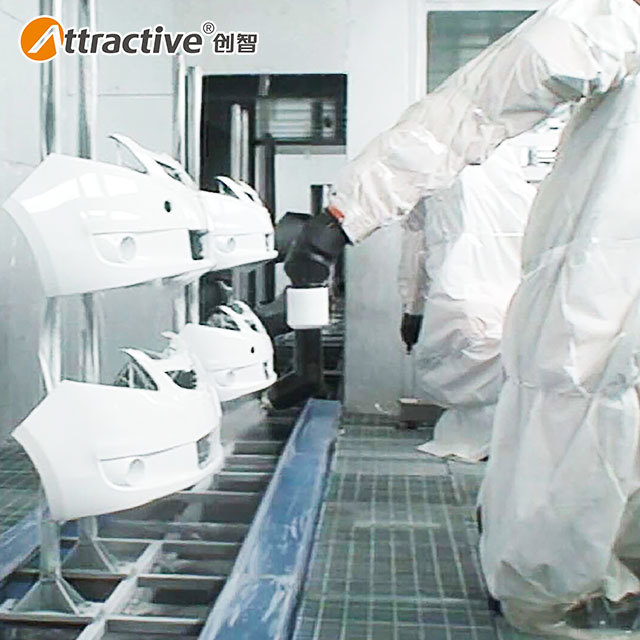
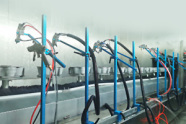
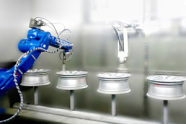
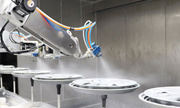
- Spray Coating: Ideal for complex geometries, spray coating offers a uniform application but requires precise control to minimize overspray and ensure coverage.
- Dip Coating: This involves immersing the substrate in the coating solution. While it provides an even layer, it may lead to excessive coating and requires rework.
- Roller Coating: Suitable for flat surfaces, roller coating allows for high-speed applications and is often used for large-scale production.
Investing in advanced application systems can significantly reduce waste, enhance coverage, and improve overall efficiency.
Drying and Curing Systems
After the application of non-stick coatings, drying and curing are crucial steps. These systems ensure that the coatings achieve their desired properties and adhere effectively to the substrate. Two main technologies are common in this phase:
- Convection Drying: Utilizing hot air, convection drying is efficient for quick drying but may not be suitable for all materials.
- Infrared Drying: This method uses infrared radiation to penetrate the coating, promoting faster drying and curing. It is particularly effective for heat-sensitive materials.
An optimized drying and curing system not only enhances productivity but also improves the final product's performance.
Quality Control Measures
Maintaining high-quality standards is non-negotiable in manufacturing. Implementing rigorous quality control measures throughout the production process ensures that the non-stick coatings meet industry specifications. Key practices include:
- In-Process Inspections: Regular checks during each stage of production to detect any inconsistencies or defects.
- Final Product Testing: Comprehensive assessments of the finished products, including adhesion tests, surface finish evaluations, and performance tests.
Integrating automated quality control systems can significantly streamline this process and reduce human error.
Advanced Technologies in Production
Incorporating advanced technologies is vital for optimizing the efficiency of non-stick paint coating production lines. Automation, machine learning, and IoT (Internet of Things) are reshaping the manufacturing landscape. For instance, predictive maintenance tools can anticipate equipment failures, minimizing downtime and maintenance costs. Similarly, machine learning algorithms can analyze production data to identify trends and optimize processes in real-time.
The Role of Automation in Enhancing Efficiency
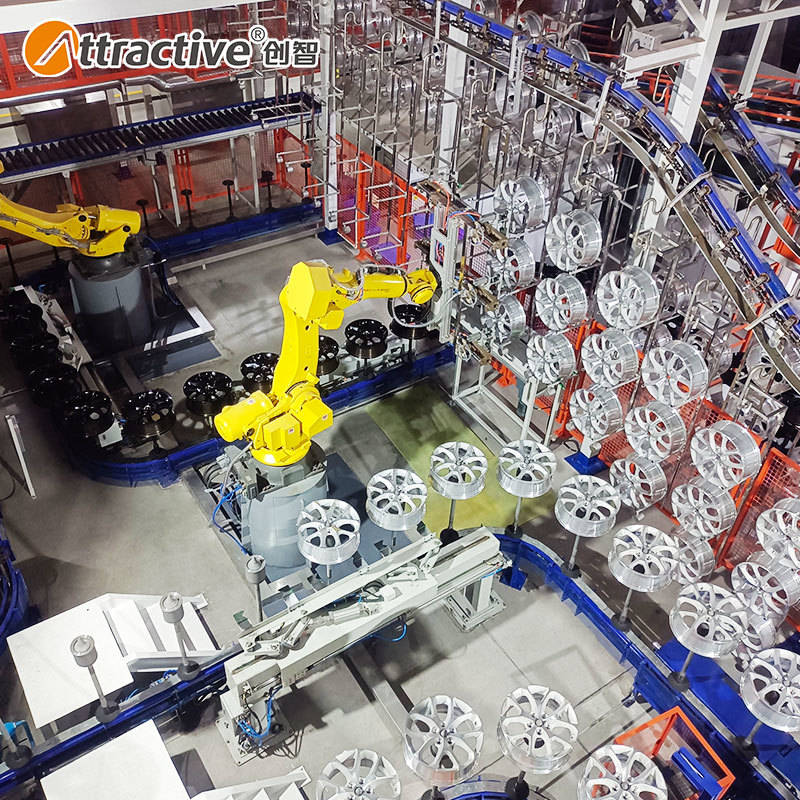
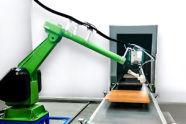
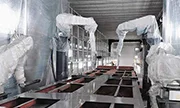
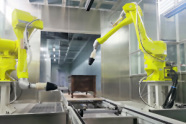
Automation plays a pivotal role in enhancing the efficiency of non-stick paint coating production lines. Automated systems can execute repetitive tasks with precision, reducing labor costs and enhancing productivity. Key areas where automation has made significant strides include:
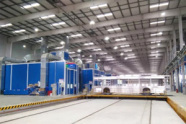
- Material Handling: Automated guided vehicles (AGVs) can transport materials and products throughout the production facility without human intervention.
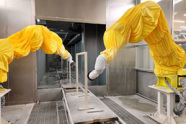
- Coating Application: Automated spray systems ensure consistent application thickness and reduce material waste.
- Data Collection: Automated systems collect real-time data on production metrics, allowing for quick adjustments to maintain optimal performance.
By leveraging automation, manufacturers can achieve greater efficiency, reduced operational costs, and improved product quality.
Sustainability Practices in Non-Stick Coating Production
As environmental concerns grow, integrating sustainability practices into non-stick paint coating production has become essential. Manufacturers can adopt several strategies to reduce their ecological footprint:
- Water-Based Coatings: Transitioning from solvent-based to water-based non-stick coatings can significantly reduce volatile organic compound (VOC) emissions.
- Recycling Programs: Implementing recycling initiatives for waste materials ensures that resources are utilized efficiently and minimizes landfill contributions.
- Energy Efficiency: Utilizing energy-efficient machinery and optimizing production schedules to minimize energy consumption are effective ways to enhance sustainability.
Adopting these practices not only benefits the environment but can also improve operational efficiencies and reduce costs.
Challenges Faced in Non-Stick Paint Coating Production
While there are numerous ways to enhance efficiency, challenges invariably arise during the production of non-stick paint coatings. Some common obstacles include:
- Material Compatibility: Ensuring that different substrates and coatings work well together can be challenging, requiring extensive testing and adjustment.
- Production Consistency: Maintaining uniformity in coating thickness and quality across batches is crucial for product performance.
- Regulatory Compliance: Adhering to stringent regulations regarding materials and emissions can complicate processes, requiring constant monitoring and adaptation.
Addressing these challenges proactively can lead to a more efficient and successful production operation.
Future Trends in Non-Stick Coating Technology
The future of non-stick paint coating production is bright, with several trends poised to shape the industry:
- Smart Manufacturing: The rise of smart factories, where machines communicate and adapt in real-time, is set to revolutionize production lines.
- Biodegradable Coatings: As sustainability becomes more critical, the development of biodegradable non-stick coatings is on the horizon.
- Enhanced Coating Technologies: Ongoing research into new materials and coating methods promises even better performance and durability.
Embracing these trends will enable manufacturers to stay competitive in a rapidly evolving market.
Conclusion
In conclusion, enhancing the efficiency of a modern non-stick paint coating production line involves understanding its key components and integrating advanced technologies and sustainable practices. By investing in state-of-the-art coating application systems, drying and curing technologies, and automation, manufacturers can optimize their production processes, reduce costs, and deliver high-quality products. As the industry continues to evolve, staying ahead of trends and addressing challenges will ensure long-term success in the competitive landscape of non-stick coatings.
FAQs
1. What are the benefits of non-stick coatings in industrial applications?
Non-stick coatings enhance performance, reduce friction, and improve the durability of various industrial components, leading to longer lifespans and less maintenance.
2. How can I ensure the quality of non-stick coatings?
Implementing rigorous quality control measures, such as in-process inspections and final product testing, can help maintain high standards.
3. What role does automation play in production efficiency?
Automation minimizes human error, reduces labor costs, and enhances productivity by executing repetitive tasks with precision.
4. Are there environmentally friendly alternatives to traditional non-stick coatings?
Yes, water-based coatings and biodegradable alternatives are emerging as sustainable options that reduce environmental impact.
5. What challenges are faced in non-stick paint coating production?
Common challenges include material compatibility, maintaining production consistency, and regulatory compliance. Addressing these proactively can enhance operational efficiency.


Contact Us
No.2 Yingbin Avenue, High-tech District, Zhaoqing City, Guangdong Province, China.
Online Message