














Related News

20
2024
-
10
Efficient Production Lines for Non-Stick Pan Coating: A Comprehensive Guide
Author:
Chuangzhi Coating
When it comes to manufacturing non-stick pans, the coating production line plays a crucial role in determining the quality and performance of the final product. A non-stick pan coating production line is specifically designed to apply a high-performance, durable coating to cookware, ensuring that food does not stick during cooking. This process involves several stages, each employing specialized equipment to ensure optimal results.
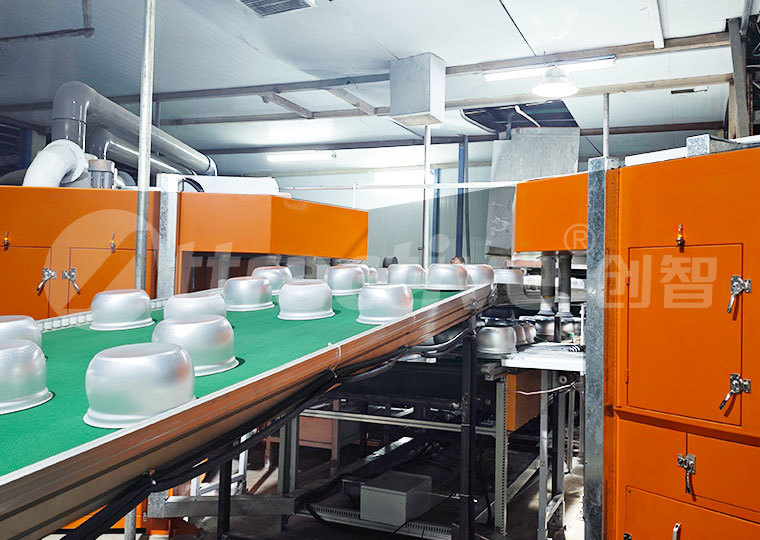
The first stage of a non-stick pan coating production line typically involves surface preparation. This step is essential as it ensures that the pan surface is clean, free from contaminants, and ready to accept the coating. Methods such as sandblasting, cleaning with solvents, or even chemical etching may be utilized to achieve a suitable surface profile for coating adhesion.
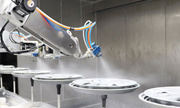
Once the surface is adequately prepared, the next step is to apply the coating. There are various methods for this, including spray coating, dip coating, and roller coating. Each method has its advantages depending on the production scale and desired finish. Spray coating, for instance, allows for even application and is suitable for complex geometries, whereas dip coating can deliver a thicker layer more easily.
After the coating is applied, curing is crucial for ensuring the durability and effectiveness of the non-stick surface. This process typically involves heating the coated pans in an oven, allowing the coating to harden and bond effectively to the substrate. The curing temperature and time will vary depending on the specific coating materials used.
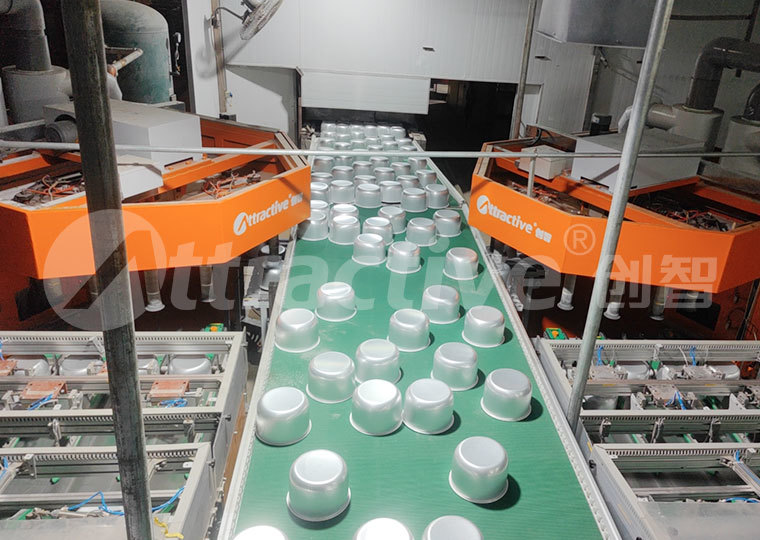
Quality control is another vital aspect of the non-stick pan coating production line. Regular inspections and tests are necessary to ensure that the coating meets the required standards for non-stick performance, durability, and safety. This can include adhesion tests, hardness tests, and evaluations of the coating's resistance to scratching and wear.
Furthermore, environmental considerations are increasingly important in the design and operation of coating production lines. Manufacturers are exploring eco-friendly coatings and processes that minimize waste and reduce the environmental impact of production. Implementing water-based coatings, for example, can significantly lower solvent emissions and promote a safer working environment.
In conclusion, a non-stick pan coating production line is a complex amalgamation of processes that requires careful planning and execution. Understanding each stage, from surface preparation to quality control, can help manufacturers optimize their operations and produce high-quality non-stick cookware. By investing in advanced technology and sustainable practices, companies can ensure their production lines are efficient, effective, and environmentally responsible.


Contact Us
No.2 Yingbin Avenue, High-tech District, Zhaoqing City, Guangdong Province, China.
Online Message