











Related News

17
2025
-
03
Unmatched Quality: Non-Stick Painting Line Performance Insights
Author:
Chuangzhi Coating
1. Introduction to Non-Stick Painting Lines
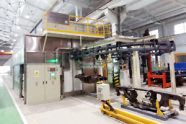
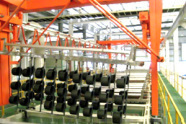
The non stick painting line is a pivotal innovation in the industrial coating sector, designed to enhance the efficiency and quality of painted surfaces. Unlike traditional methods, non-stick systems leverage advanced technology to achieve a flawless finish while minimizing material waste. By understanding how these lines operate, businesses can significantly boost their production efficiency and product quality.
2. The Importance of Quality in Industrial Coating
In the competitive landscape of industrial manufacturing, the quality of coatings directly influences product performance and customer satisfaction. A superior coating not only provides aesthetic appeal but also enhances durability, resistance to wear, and environmental protection. Maintaining high standards in industrial coating processes is essential for businesses aiming to secure their market position and foster customer loyalty.

3. Key Components of Non-Stick Painting Lines
To grasp the efficiency and effectiveness of non-stick painting lines, it's crucial to understand their core components. These elements work in synergy to deliver outstanding results.
3.1. Advanced Spray Technology
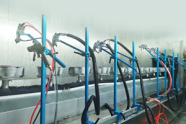
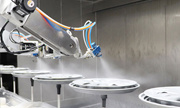
At the heart of every non-stick painting line is its advanced spray technology. This technology employs precision nozzles and airflow optimization to ensure an even application of coating materials. The use of electrostatic spray mechanisms can further enhance adhesion, allowing for uniform coverage even on complex geometries. This technology minimizes overspray and maximizes transfer efficiency, leading to significant cost savings.
3.2. Efficient Drying Systems
An effective drying system is essential for maintaining the integrity of the non-stick coating. Infrared and convection drying methods are commonly employed to ensure rapid moisture removal while preserving the coating’s quality. The integration of smart temperature controls allows for adaptive drying processes, catering to varying batch sizes and coating materials.
3.3. Innovative Conveying Systems
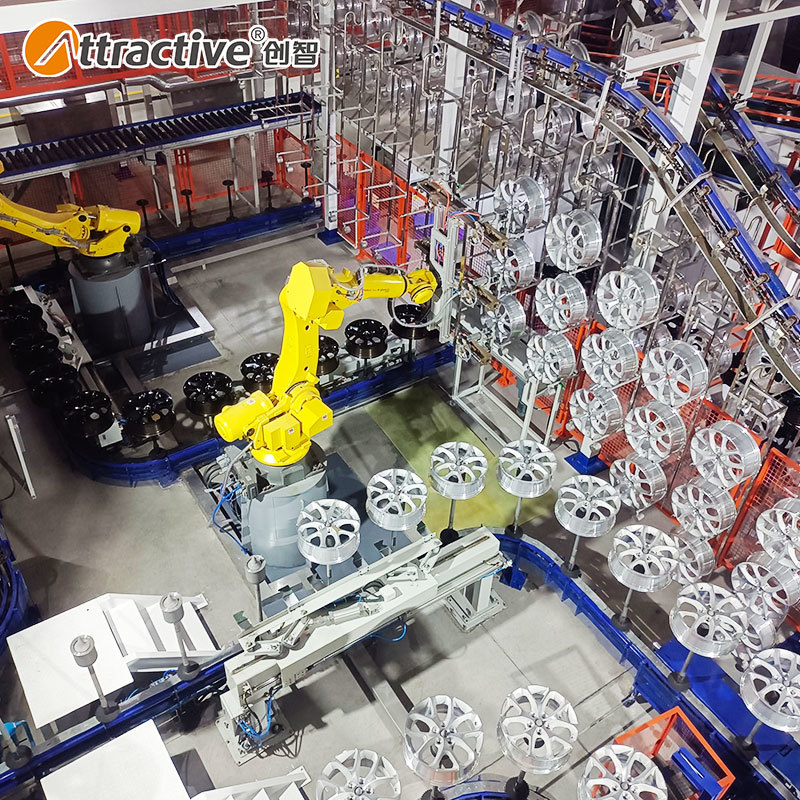
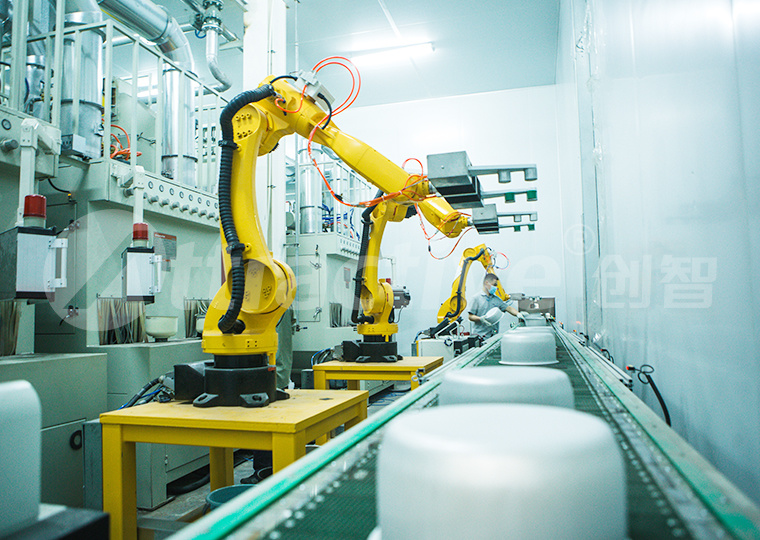
A reliable conveying system facilitates seamless movement of items through the painting line. Automated conveyors can be equipped with sensors to monitor speed and positioning, ensuring that each item receives optimal coverage. The use of modular conveying systems allows for flexibility in line configurations, accommodating different production requirements without compromising efficiency.
4. Performance Metrics for Non-Stick Coating
Measuring the performance of non-stick coatings involves various metrics, which are essential for maintaining quality assurance.
4.1. Adhesion Quality
Adhesion is a critical performance metric for non-stick coatings. It determines how well the coating adheres to the substrate material, influencing durability and resistance to peeling. Rigorous testing methods such as cross-hatch adhesion tests and pull-off adhesion tests help in assessing adhesion quality, ensuring that the final product meets industry standards.
4.2. Surface Finish and Aesthetics
The visual appeal of coated products plays a significant role in customer acceptance. Evaluating the surface finish involves examining factors such as gloss, texture, and color uniformity. Advanced imaging technologies can facilitate quality checks, ensuring that the coatings meet aesthetic benchmarks without defects.
5. Enhancing Productivity Through Automation
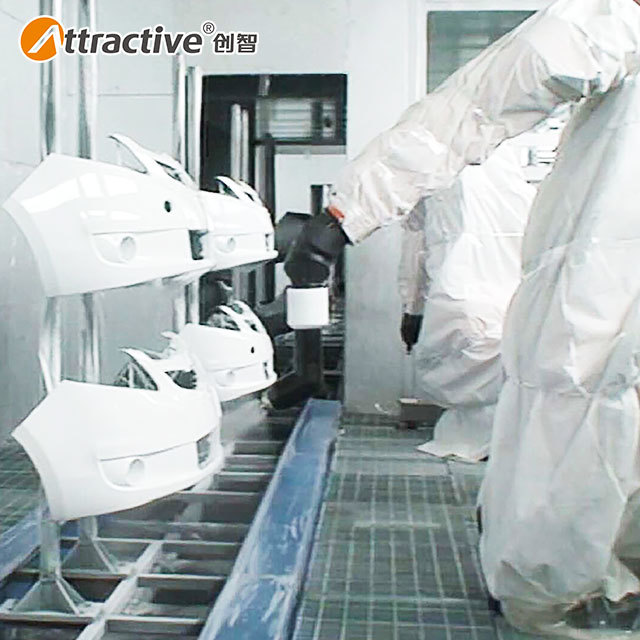
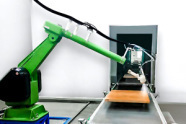
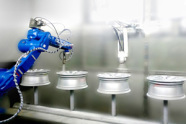
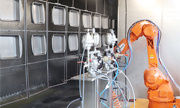
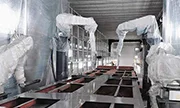
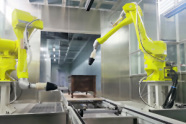
Automation is a game-changer in the production line, particularly for non-stick painting processes. Implementing automated systems reduces manual labor, increases consistency, and enhances safety. Technologies such as robotic arms and artificial intelligence (AI) can optimize spray patterns, predict maintenance needs, and streamline operations, leading to substantial productivity gains.
6. Maintenance Practices for Optimal Performance
Regular maintenance is vital for ensuring the longevity and efficiency of non-stick painting lines. A proactive maintenance strategy includes routine inspections, cleaning of spray nozzles, and calibration of drying systems. Developing a comprehensive maintenance schedule can prevent unexpected downtimes and maintain consistent quality throughout production runs.
7. Future Trends in Non-Stick Painting Technologies
As technology evolves, non-stick painting lines are set to witness groundbreaking advancements. Innovations such as nanotechnology-based coatings promise enhanced performance characteristics, including improved chemical resistance and self-cleaning properties. Additionally, the integration of Industry 4.0 concepts will enable smarter factories where data analytics drive decision-making processes, leading to optimized production and customer satisfaction.
8. Frequently Asked Questions
What materials are typically used in non-stick coatings?
Non-stick coatings are often made from polymers such as polytetrafluoroethylene (PTFE) or silicone-based compounds, known for their excellent non-stick properties and durability.
How can I ensure high-quality adhesion on my painted surfaces?
To achieve superior adhesion, ensure proper surface preparation, select suitable primers, and maintain optimal application conditions during the painting process.
What are the advantages of automated painting lines?
Automated painting lines enhance consistency, reduce labor costs, and improve safety while increasing overall production efficiency.
How often should I perform maintenance on my painting line?
A regular maintenance schedule should be established based on the manufacturer's recommendations, typically involving monthly inspections and more comprehensive maintenance every six months.
What trends should we watch for in the industrial coating industry?
Upcoming trends include advancements in eco-friendly coatings, the integration of AI for quality control, and improved automation technologies that enhance production efficiency.
9. Conclusion
In the world of industrial coatings, non stick painting lines stand out for their unmatched quality and performance. By understanding their essential components, performance metrics, and maintenance strategies, businesses can leverage these systems to enhance their production capabilities. Embracing automation and staying abreast of future trends will further ensure that manufacturers remain competitive in an ever-evolving market. Investing in the right technology and practices will lead to superior products, satisfied customers, and long-term success in the industrial painting arena.


Contact Us
No.2 Yingbin Avenue, High-tech District, Zhaoqing City, Guangdong Province, China.
Online Message