













All categories
Related News

03
2025
-
09
Cost-Effective Spray Painting Systems for Metal Parts
Author:
Chuangzhi Coating
As core components of mechanical equipment, home appliances, and auto parts, sheet metal parts require coatings that not only meet basic anti-corrosion and scratch-resistant requirements but also adapt to the production characteristics of "multi-variety, small-to-medium batch" — over-pursuing fully automated equipment easily leads to cost waste, while pure manual spraying struggles to ensure quality stability. The core of a cost-effective spray painting system lies in "accurately matching sheet metal needs": with reasonable equipment investment, it achieves qualified coating quality, reduced material waste, optimized labor costs, and simultaneously meets environmental compliance. As a professional manufacturer of coating line equipment, we create a cost-effective spray solution for sheet metal parts from three dimensions: process design, equipment configuration, and cost control.
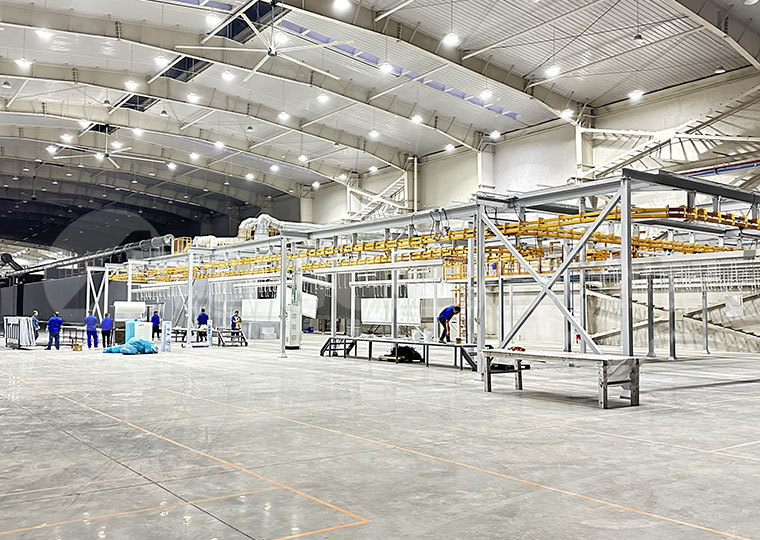
1. Process Flexibility: Meeting Diverse Sheet Metal Needs
Differences in sheet metal materials (cold-rolled steel sheets, galvanized sheets, aluminum alloys) and shapes (flat sheets, bent parts, punched parts) determine that the spray system must have "flexible adjustment" capabilities, avoiding quality defects or cost waste caused by a single process.
Differentiated pretreatment process design is the first step in cost control: for the oxide scale problem of cold-rolled steel sheets, a simplified "degreasing + phosphating" process is adopted (tank volume is designed on demand; small-to-medium enterprises can choose 5-8m³ compact tanks, saving 30% of floor space and 20% of chemical consumption compared to standard tanks); for the easy passivation characteristics of galvanized sheets, it is replaced with a "chromium-free passivation" process, which only requires 1 spray pass to form a protective film, reducing 2 water washing processes and saving 30% water per hour; for aluminum alloy sheet metal, the phosphating link is omitted, directly adopting "degreasing + silane treatment", reducing chemical costs by 15%.
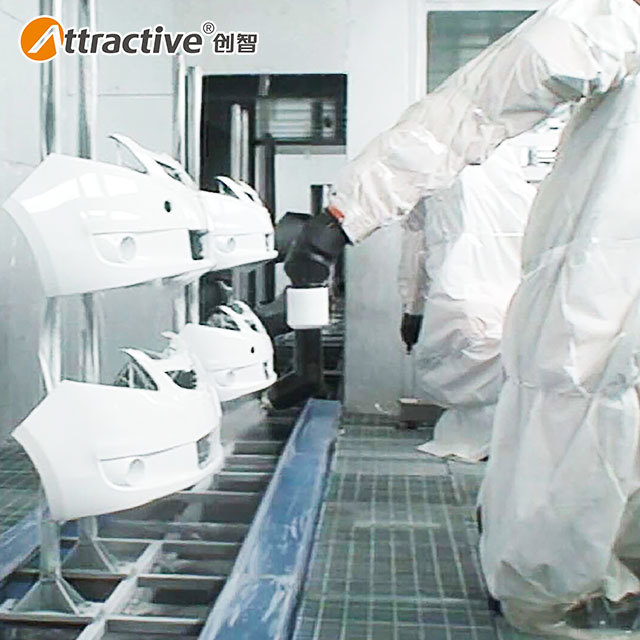
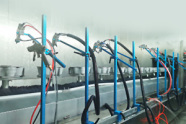
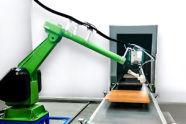
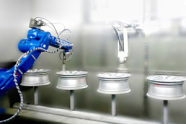
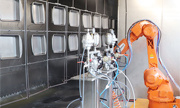
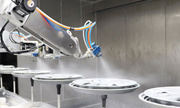
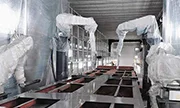
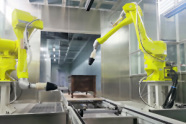
Flexible switching of spray modes adapts to batch fluctuations: for small-to-medium batch production of 500-2000 pieces per day, a "semi-automatic spraying + robot assistance" mode is adopted — flat sheet metal parts are conveyed via rollers (speed adjustable 1-3m/min), with fixed electrostatic spray guns (voltage 60-80kV) for automated spraying; for special-shaped parts such as bent or punched parts, manual auxiliary positioning is used (equipped with a rotatable workbench, load ≤50kg), and robots (6-axis, repeat positioning accuracy ±0.1mm) complete dead-angle spraying. This reduces investment by 40% compared to fully automated equipment while ensuring a spray coverage rate of over 95%.
2. Precise Equipment Configuration: Choosing "Suitable" Over "High-End"
The core of cost-effectiveness is not "low-cost equipment", but optimizing equipment combination to improve comprehensive efficiency while controlling investment.
Core spray equipment selection focuses on "cost-effectiveness first": electrostatic spray guns are preferred (rather than traditional air spray guns). Although the cost per gun is slightly higher, the paint utilization rate increases from 40%-50% to 70%-80%. Calculated based on daily consumption of 100kg of paint, annual paint cost savings exceed 100,000 yuan; small-to-medium enterprises can choose a "1 gun + 1 robot" combination (instead of multi-gun configuration). Through multi-station design of the workbench (which can hold 4-6 sheet metal parts at the same time), "equipment non-stop, manual part replenishment" is realized, with a spray efficiency of 80-120 pieces per hour, meeting small-to-medium batch needs.
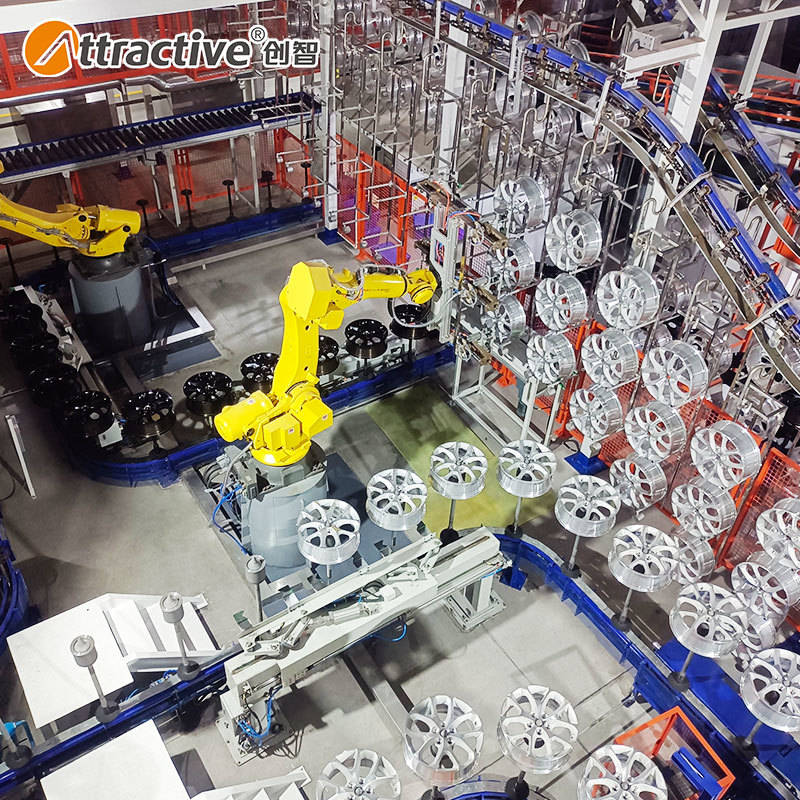
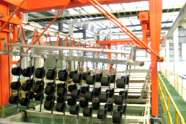
Streamlined design of conveying and curing equipment: The conveying system adopts a combination of "lightweight overhead chain + ground roller". The overhead chain load is ≤20kg (suitable for small-to-medium sheet metal parts), reducing costs by 50% compared to heavy-duty conveyor chains; the curing oven adopts an "electric heating + waste heat recovery" design, with a heating rate of 5-8℃/min (temperature adjustable 120-180℃). The waste heat recovery device uses exhausted heat to preheat fresh air, reducing energy consumption by 25%, and the oven length is customized on demand (8-15m, adapting to different cycles), avoiding energy waste caused by "large oven for small use".
3. Full-Cycle Cost Optimization: Extending from "Equipment Investment" to "Operating Costs"
A cost-effective spray system needs to focus on long-term operating costs, achieving "one-time investment, long-term savings" through multi-dimensional optimization of materials, energy consumption, and labor.
Material waste control: Equipped with a simple powder recovery system (for powder spraying) or solvent recovery device (for liquid spraying) — powder recovery uses a two-stage "cyclone separation + filter cartridge filtration" system, with a recovery rate of over 90%, reducing the cost per kilogram of powder by 15-20 yuan; liquid spraying is equipped with a solvent condensation recovery device, recovering 1-3 tons of solvent annually, saving 20,000-50,000 yuan in material costs.
Labor cost optimization: Reduce manual intervention through equipment automation — the pretreatment link is equipped with an automatic chemical feeding system (automatically replenishing chemicals according to tank concentration, no manual monitoring required), reducing 1 inspection personnel; the spray link adopts a "quick tooling change" design (changeover time ≤5 minutes), allowing 1 operator to manage both spraying and part replenishment, reducing labor input by 50% compared to pure manual spraying.
Maintenance cost reduction: The equipment uses universal accessories (such as spray gun nozzles and filter cartridges are standardized specifications), reducing procurement costs by 20%; the control system has a built-in fault early warning function (such as automatic alarm for spray gun blockage or abnormal oven temperature), reducing downtime for maintenance, and annual maintenance costs are controlled within 5% of equipment investment.
4. Environmental Compliance: Meeting Emission Requirements at Low Cost
Environmental protection is not just an "additional cost"; a cost-effective system achieves a balance between compliance and cost through an "economically applicable environmental protection plan".
For VOC emissions (liquid spraying), a miniaturized "activated carbon adsorption + catalytic combustion (RCO)" device is adopted — the investment in equipment with a treatment capacity of 5000-10000m³/h is 60% lower than that of large RCO, and it can use waste heat from the curing oven to provide heat for RCO, saving 30% energy; for dust emissions (powder spraying), a pulse bag filter (filtration accuracy 1μm) is configured, with a treatment efficiency of over 99%, and the equipment cost is only 40% of that of a large central dust removal system.
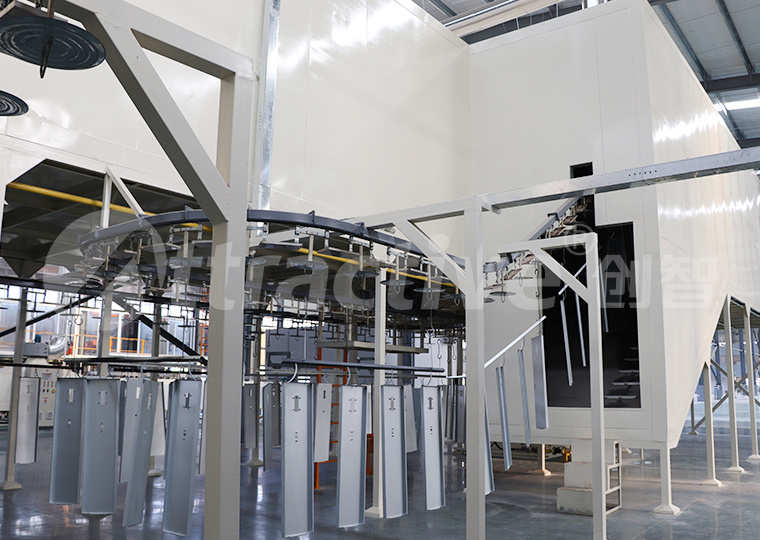
Application Case: Cost-Effectiveness Practice of a Small-to-Medium Sheet Metal Enterprise
A company producing distribution box sheet metal parts (daily output 800 pieces, mainly cold-rolled steel sheets) adopted the above cost-effective spray system: total equipment investment was reduced by 55% compared to the fully automated plan; paint utilization rate increased from 45% to 75%, saving over 120,000 yuan in annual paint costs; labor was reduced from 6 to 3 people, saving 240,000 yuan in annual labor costs; VOC emission concentration was stably below 25mg/m³, meeting environmental requirements. At the same time, the coating qualification rate increased from 88% to 99%, and the after-sales repair rate decreased by 80%.
Conclusion
A cost-effective spray painting system for sheet metal parts is essentially "accurate matching of needs and configuration" — not blindly pursuing full automation or high configuration, but optimizing process links, streamlining equipment investment, and controlling operating costs according to the material, batch, and quality requirements of sheet metal parts. This "demand-centered" design can not only meet the basic coating needs of sheet metal parts but also help enterprises focus limited resources on core production, achieving the dual advantages of "controllable costs and reliable quality" in competition.


Contact Us
No.2 Yingbin Avenue, High-tech District, Zhaoqing City, Guangdong Province, China.
Online Message