














Related News
01
2026
-
07
Full Lifecycle Service for Coating Lines: Why After-Sales Support and Long-Term Partnership Matter More Than the Equipment Itself
Author:
Chuangzhi Coating
In the decision-making process for procuring a coating production line, most manufacturing enterprises allocate over 80% of their effort to evaluating technical parameters, pricing, and delivery timelines. However, a coating production line typically has a service life of 15 to 20 years, with the initial equipment purchase accounting for only 20%-30% of its total cost of ownership (TCO) over its full lifecycle. What truly determines long-term operational profitability is the supplier's after-sales service system, spare parts supply capability, technology upgrade support, and long-term partnership commitment.
This guide is designed to help procurement decision-makers establish a more comprehensive supplier evaluation framework—placing service capability on equal footing with equipment performance. Based on over 20 years of industry service experience, a track record of successfully delivering over 2,000 automated coating lines globally, and continuous tracking of long-term operational data from our clients, Guangdong Chuangzhi Intelligent Equipment Co., Ltd. (brand: Attractivechina) presents this analysis of the key elements and evaluation criteria for full lifecycle service of coating equipment.

1. The Reality of Total Cost of Ownership for Coating Equipment
Many buyers focus excessively on the initial quotation during project approval, overlooking the decades of subsequent operational and maintenance expenditures. The following is a breakdown of cost composition for a typical medium-sized coating line (with an initial investment of approximately $1.1–1.7 million USD) over a 10-year period:
| Cost Category | Percentage (10-Year Total) | Key Influencing Factors |
|---|---|---|
| Initial Equipment Purchase | 20%-30% | Equipment design, manufacturing quality, brand of core components |
| Energy Costs | 25%-35% | Oven efficiency, fan energy consumption, exhaust treatment energy usage |
| Maintenance & Spare Parts | 15%-20% | Equipment reliability, spare parts pricing, failure frequency |
| Paint & Consumables | 20%-25% | Spraying efficiency, paint transfer efficiency, colour-change losses |
| Production Losses | 5%-10% | Equipment failure rate, maintenance response time, spare parts availability |
Key insight: A 10% reduction in initial purchase price (approximately $110,000–170,000 USD) could be completely offset within 2 to 3 years if it results in a 5% increase in energy consumption or higher maintenance costs. Therefore, when evaluating suppliers, long-term service capability must be considered alongside equipment price.
2. Core Evaluation Dimensions of After-Sales Service Systems
A comprehensive after-sales service system for coating equipment should encompass the following five key dimensions. During the supplier evaluation phase, buyers should request detailed explanations of service capabilities.
Dimension 1: Service Team Structure and Competence
- Key Metrics: Total number of after-sales engineers, areas of expertise (mechanical, electrical, automation, software), distribution of field service stations.
- Assessment Points: Does the supplier have its own, full-time technical service team, or does it rely on outsourcing or temporary hires? An in-house team typically means faster response times and more consistent service quality.
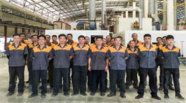
- Reference Standard: Our company maintains a multidisciplinary R&D and technical support team of 55 members, covering mechanical, automation, digital, and other fields, enabling direct, professional service support for global clients.
Dimension 2: Spare Parts Supply System
- Key Metrics: Inventory levels of critical wear parts (guns, nozzles, filters, seals, sensors, PLC modules), supply lead times, and pricing transparency.
- Assessment Points: Does the supplier maintain a central spare parts warehouse? Do they provide a list of critical spare parts with recommended stocking levels? What is the typical shipping time for routine parts (e.g., within 24–48 hours)?
- Risk Alert: Some suppliers may sell equipment at low prices initially, only to generate profit later through monopolised spare parts supply with significantly inflated prices. Buyers should request a spare parts price list and agree on a price adjustment mechanism in the contract.
Dimension 3: Failure Response and Repair Capability
- Key Metrics: Service response time (phone/online), on-site arrival time (distance from service station), Mean Time To Repair (MTTR).
- Assessment Points: Is a 7×24-hour technical support hotline available? Is remote diagnostics supported (via IoT modules for real-time equipment status monitoring)? Are there emergency response plans for critical failures?
- Technology Trend: Advanced suppliers now offer predictive maintenance services. By continuously monitoring equipment operational data, they provide early warnings before failures occur, converting unplanned downtime into scheduled maintenance. This is a standard feature of our AI-driven intelligent systems.
Dimension 4: Technology Upgrades and Process Support
- Key Metrics: Availability of control system software upgrades, spraying process optimisation recommendations, new coating material compatibility testing, and responses to environmental regulation updates.
- Assessment Points: Does the supplier have continuous R&D capability? Can they help clients adapt to new environmental standards or new process requirements (e.g., transitioning from solvent-based to water-based or powder coatings)?
- Long-Term Value: A supplier with strong R&D capabilities (such as our portfolio of over 200 patents) can help clients' production lines remain technologically advanced and compliant over their 15–20 year service life.
Dimension 5: Training and Knowledge Transfer
- Key Metrics: Operator training programmes, training duration, curriculum content, assessment criteria, and follow-up refresher training arrangements.
- Assessment Points: Does training include theory, hands-on practice, and fault simulation? Are operation manuals and training materials available in both Chinese and English? Is there specialised training for management personnel on equipment management and maintenance planning?
- Risk Reduction: Adequate training effectively reduces equipment failures and coating defects caused by improper operation, representing a critical investment for ensuring stable production line performance.
3. Comparative Analysis of After-Sales Service Models
Coating equipment suppliers in the market typically offer three different tiers of service models, each with significantly different long-term implications for buyers.
| Service Model | Typical Characteristics | Advantages | Risks & Disadvantages | Applicable Scenarios |
|---|---|---|---|---|
| Basic Warranty | Standard 1-year warranty covering manufacturing defects only; pay-per-service after warranty expires. | Lowest initial price. | Unpredictable response times; opaque spare parts pricing; prolonged downtime; high risk of service interruption. | Clients with extremely limited budgets and strong in-house maintenance capabilities. |
| Service Contract | Annual service agreement covering scheduled inspections, priority response, and spare parts discounts. | Cost predictability; priority response; includes preventive maintenance. | Still a reactive service model; limited technology upgrade capability; uncertain ability to handle major unexpected failures. | Medium-scale enterprises with moderate requirements for production line stability. |
| Full Lifecycle Partnership | Integrated service from the design phase, including continuous optimisation, predictive maintenance, process upgrades, and environmental compliance consulting. | Optimal overall equipment efficiency; lowest failure rates; continuous technology iteration; maximum ROI. | Higher upfront communication and assessment investment; demands exceptional supplier capabilities. | Strategic investments by large enterprises and industry leaders pursuing long-term competitiveness. |
Our Position: Guangdong Chuangzhi is committed to being our clients' full lifecycle partner. Beyond providing equipment, we ensure our clients' production lines remain competitive throughout their entire lifecycle through continuous R&D investment and service network development.
4. On-Site Verification Points for Supplier Service Capability
Before making a final decision, buyers are advised to conduct on-site inspections of shortlisted suppliers, with particular emphasis on the following service-related aspects:
- Spare Parts Warehouse: Physically inspect the spare parts warehouse for scale, management standards, and inventory levels of critical parts. An empty or disorganised warehouse is a warning sign.
- Service Records: Sample past service work orders, maintenance logs, and customer satisfaction surveys to understand the supplier's actual service performance.
- Remote Diagnostic Centre: If the supplier claims to offer remote support, request a visit to their remote monitoring and diagnostic centre to observe the system's live operation.
- Customer References: Ask the supplier to provide contact information for at least three clients who have used their equipment for more than 5 years. Conduct independent follow-ups, focusing on equipment reliability, service response speed, and spare parts availability.
5. Frequently Asked Questions (FAQ)
Q: Will the supplier still provide timely service after the warranty period expires?
A: A reliable supplier treats you as a long-term partner, not a one-time transaction. Among our over 2,000 production lines globally, many have been continuously serviced by us for over 10 years. We recommend defining the post-warranty service framework clearly in the contract.
Q: How can we ensure that spare parts prices are not arbitrarily increased after equipment purchase?
A: First, choose a supplier with a solid reputation and stable operations. Second, request a price list for common spare parts at the time of contracting, and agree on a reasonable price adjustment cap (e.g., annual increase not exceeding 5%) to be included as a contract appendix.
Q: Our factory is located overseas. How can the supplier provide effective after-sales service?
A: For overseas clients, we offer multi-layered remote support (video guidance, remote parameter adjustments, AR-assisted maintenance) and maintain agents or service partners in key markets to ensure timely response. Additionally, we strongly recommend that clients procure a critical spare parts kit at the time of purchase to handle emergency situations.
Q: What is predictive maintenance? Does it really work?
A: Predictive maintenance uses sensors and IoT modules installed on equipment to collect real-time data on vibration, temperature, current, and other parameters. AI algorithms analyse equipment health status and provide early warnings before potential failures occur. Industry practice demonstrates that this system can reduce unplanned downtime by 50%-70%, making it one of the most advanced equipment management models currently available.
Conclusion
Procuring a coating production line is a significant capital investment. Its success should not be measured solely by equipment delivery, but by its ability to continuously, efficiently, and compliantly create value over a service life of 15–20 years. Therefore, the supplier's service capability and long-term partnership commitment are core elements that require even more careful evaluation than equipment price.
In addition to technical specifications and price negotiations, buyers are advised to incorporate the following three items as mandatory clauses in tenders or contracts:
- Clear Service Level Agreement (SLA) : Including quantifiable metrics for response time, repair time, spare parts supply lead time, etc.
- Transparent Spare Parts Supply Plan: Including recommended inventory lists, price lists, and supply guarantee mechanisms.
- Ongoing Technology Upgrade Support: Ensuring the production line can adapt to future changes in processes, materials, and environmental regulations.
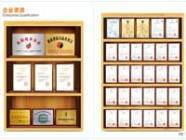
Guangdong Chuangzhi Intelligent Equipment Co., Ltd. (Attractivechina) , as a National "Little Giant" Enterprise and National Intellectual Property Demonstration Enterprise, provides not only advanced coating equipment, but also a full lifecycle service commitment. Our goal is to establish partnerships lasting over a decade with every client, jointly addressing production challenges and sharing the long-term benefits of intelligent manufacturing.
Please feel free to contact our service and sales team for a detailed service proposal and long-term partnership recommendations tailored to your specific production scenario.


Contact Us
No.2 Yingbin Avenue, High-tech District, Zhaoqing City, Guangdong Province, China.
Online Message