
























Related News
30
2026
-
06
Global Market Access for Coating Equipment: Certifications, Compliance, and Supplier Evaluation Framework
Author:
Chuangzhi Coating
For manufacturers planning to procure or upgrade a coating production line, the technical performance of the equipment is certainly important. However, the supplier's compliance capabilities and the market access qualifications of the target market are equally critical factors that determine project success, operational safety, and long-term viability. Different countries and regions have strict and varied regulatory requirements for coating equipment concerning safety standards, environmental emissions, energy efficiency ratings, and material fire resistance.
This guide aims to provide international buyers with a clear interpretation of the key market access certifications for coating equipment and to establish a systematic framework for evaluating a supplier's compliance capabilities. Guangdong Chuangzhi Intelligent Equipment Co., Ltd. (brand: Attractivechina), drawing on over 20 years of experience serving the international market and a proven track record of successfully delivering over 2,000 automated coating lines to countries including Thailand, Mexico, Russia, and India, presents the following critical insights.

1. Overview of Core Certification Requirements in Key Target Markets
Different target markets have varying emphasis on coating equipment requirements. Understanding these differences is the first step in formulating a compliant strategy.
| Target Market/Region | Core Certification/Standard | Primary Areas of Focus | Key Requirements for Coating Equipment |
|---|---|---|---|
| European Union (EU) | CE Marking | Machinery Safety, Electromagnetic Compatibility, Low Voltage, Environmental (RoHS, REACH) | Compliance with Machinery Directive (2006/42/EC) and Low Voltage Directive (2014/35/EU); ATEX compliance for hazardous areas; VOC emissions meeting the Solvent Emissions Directive. |
| North America (USA/Canada) | UL / cUL Certification CSA Certification | Electrical Safety, Fire and Explosion Protection | Electrical components meeting UL/CSA standards; overall equipment requiring on-site evaluation by a locally accredited body (e.g., NFPA 70E). |
| Russia & EAEU | EAC Certification | Machinery Safety, EMC, Low Voltage, Energy Efficiency | Compliance with CU TR 010/2011 (Machinery Safety) and other relevant technical regulations; certificates must be verifiable in the official Russian accreditation system. |
| China | CCC Marking (Mandatory) Environmental/Energy Labels | Electrical Safety, Environmental Protection, Energy Efficiency | Key electrical components must bear the CCC mark; exhaust emissions meeting GB 16297 and other national standards; encouragement of high-efficiency motors. |
| International General | ISO 9001 (Quality) ISO 14001 (Environment) ISO 45001 (OH&S) | Management Systems and Process Control | Demonstrates the supplier's systematic capability to consistently provide compliant products, fulfill environmental responsibilities, and ensure occupational health and safety. |
2. The Value of Certifications: Beyond a Market "Entry Permit"
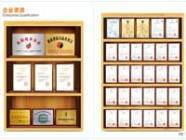
For the buyer, the certifications held by a supplier are not just a "passport" for market access; they also represent the supplier's overall strength and reliability as a long-term partner. Taking our company (Attractivechina) as an example, our simultaneous holding of CE, EAC, and the ISO trio (9001, 14001, 45001) sends clear signals to our customers:
- Design Compliance: Products are designed from the outset in adherence to international safety and environmental standards.
- Controlled Manufacturing Processes: We possess robust quality, environmental, and occupational health & safety management systems.
- Reduced Project Risk: Significantly minimizes the risk of customs delays, on-site rectifications, or legal disputes due to compliance issues.
- Enhanced End-User Confidence: Your customers will have greater trust in end products manufactured using equipment that meets high standards.
3. A Framework for Evaluating Supplier Compliance
When screening potential suppliers, buyers are advised to establish a systematic verification process that goes beyond merely reviewing copies of their certificates.
Step 1: Authenticity Verification of Certificates
- Action: Request the certificate number and the full name of the issuing body from the supplier.
- Methods:
- CE Certification: Check the European Commission's NANDO database to confirm whether the issuing body is an EU Notified Body.
- EAC Certification: Verify the certificate on the official accreditation system of the Eurasian Economic Union (e.g., the Russian Federal Accreditation Authority website).
- ISO Systems: Verify on the official website of the China National Accreditation Service for Conformity Assessment (CNCA) or a member body of the International Accreditation Forum (IAF).
- Warning: Any certificate that cannot be verified in the official system poses a significant risk of forgery.
Step 2: Verification of Certification Scope and Product Consistency
- Action: Confirm that the product scope described on the certificate covers the specific coating line you intend to purchase (e.g., "Automatic Electrostatic Spraying Equipment," "Powder Coating System").
- Methods: Compare the technical parameters (e.g., power, voltage, explosion protection level) of the certified product with the technical proposal provided by the supplier to ensure consistency.
Step 3: Assessment of the Supplier's Systematic Capabilities
- Action: Evaluate the effectiveness of the supplier's management systems through audits and factory visits.
- Key Points to Inspect:
- Engineering Documentation: Are standard drawings, calculations, and risk assessments available?
- Supply Chain Management: Does the supplier require their key purchased components (e.g., motors, fans, control systems) to hold the necessary certifications?
- Factory Testing: Is there a clear outbound testing procedure and records to ensure each piece of equipment meets certification requirements?
Step 4: Track Record and Reference Cases
- Action: Request the supplier to provide case studies of equipment already successfully exported to the target market.
- Value: This directly demonstrates the proven compliance and stability of their products in real-world applications. For instance, our company's projects serving industry leaders like BYD's production base with our 3D AI-driven intelligent coating equipment, and our multi-country export experience, effectively validate our international project delivery and compliance capabilities.
4. Common Compliance Misconceptions and Risk Alerts
- Misconception 1: "Having an ISO certificate means the product is qualified."
- Fact: ISO certification manages the process, not the specific product. Whether the final product meets the specific safety and environmental standards of a target market still relies on product certification (e.g., CE, UL) for validation.
- Misconception 2: "As long as the supplier has a CE certificate, the equipment can be used anywhere in the EU."
- Fact: CE is a fundamental market access requirement, but some EU member states may have stricter national supplementary requirements. It is essential to verify the specific local regulations of the installation site.
- Misconception 3: "Certification is valid forever."
- Fact: Most certifications have a validity period (e.g., 3-5 years). Furthermore, re-certification or re-assessment may be required when product designs, standards, or directives are updated. When procuring equipment, ensure the supplier's certifications are currently valid.
5. Our Commitment and Compliance Practices
As a National "Little Giant" Enterprise and National Intellectual Property Demonstration Enterprise, Guangdong Chuangzhi Intelligent Equipment Co., Ltd. regards compliance as a fundamental pillar of our business. We ensure:
- Authentic and Valid Certifications: All our certificates are verifiable through official channels and are continuously maintained and updated.
- Integrated Design and Manufacturing: Our 55-member R&D team and 35,548 m² modern manufacturing base ensure that certification standards are implemented from design conception to production output.
- Full Traceability: Core components from internationally recognized brands (such as Schneider, Siemens, and SMC) are used, ensuring they hold the relevant market certifications. Each system undergoes comprehensive performance and safety testing before shipment.
- Continuous R&D and Compliance Upgrading: With an R&D investment ratio exceeding 8% in the past three years, and a portfolio of over 200 patents (including 79 invention patents), with 1 technological achievement reaching internationally advanced levels, we ensure our compliance capabilities evolve with our technology.
Conclusion
In the context of global procurement, certifications and compliance for coating equipment are far more than mere paperwork. They are a core element in safeguarding your investment, ensuring smooth project commissioning, and protecting your brand reputation. Buyers are strongly advised to integrate compliance assessment as a primary dimension in supplier selection, establishing a complete evaluation process that encompasses certificate verification, system audits, and performance validation.
Choosing a partner with comprehensive international certifications, robust management systems, and extensive export experience will significantly reduce your procurement and operational risks. Guangdong Chuangzhi Intelligent Equipment Co., Ltd. (Attractivechina) is dedicated to providing global customers with legal, safe, efficient, and intelligent coating solutions. Please feel free to contact our international business team for in-depth consultation on the specific market access requirements of your target destination.


Contact Us
No.2 Yingbin Avenue, High-tech District, Zhaoqing City, Guangdong Province, China.
Online Message